general relativity tagged posts

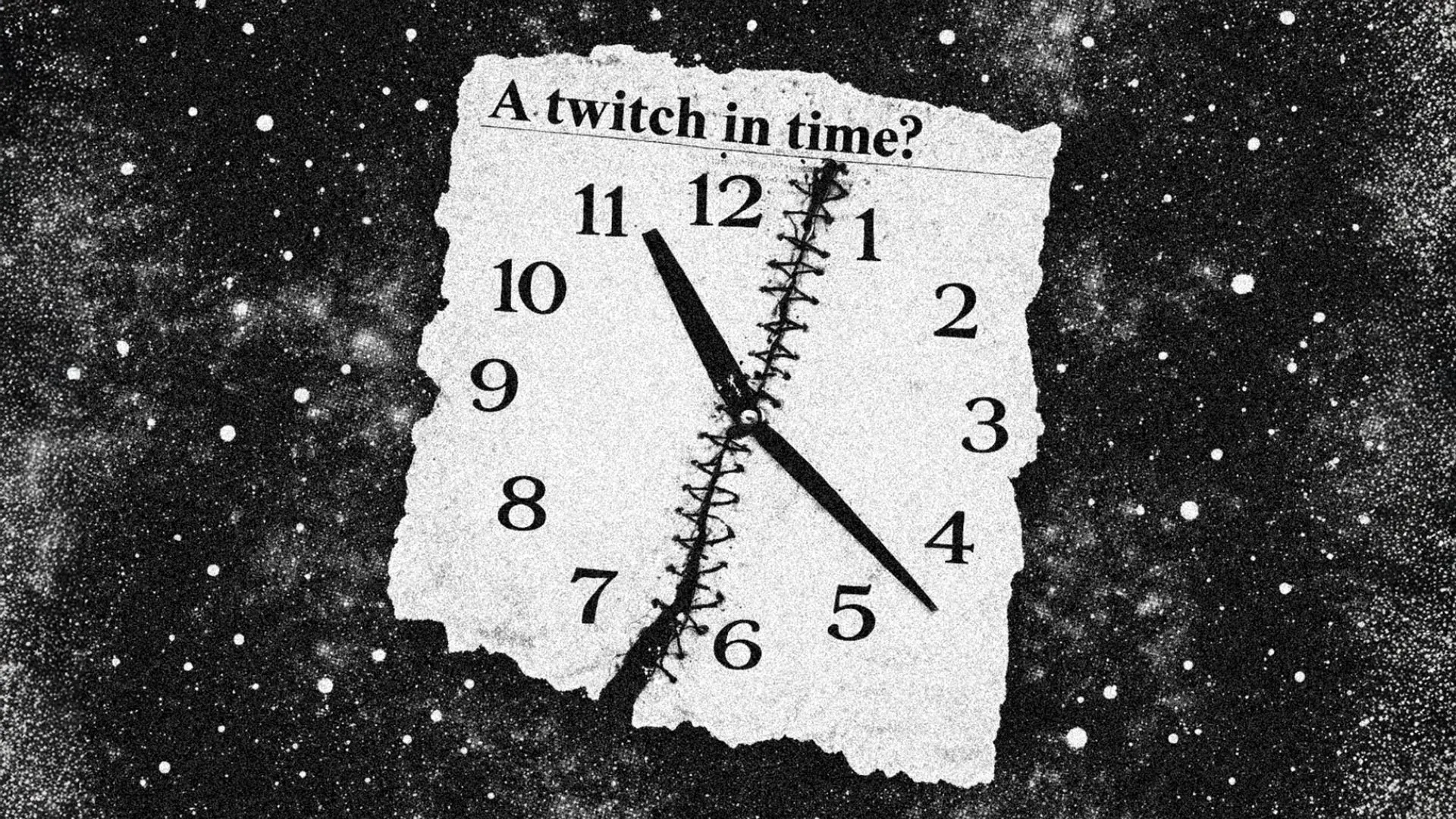
Physicists just found a tiny glitch in time itself

Quantum physics may place a fundamental limit on clock precision, hinting that time itself is not perfectly precise. Unconventional quantum theories may imply that time itself has a tiny fundamental uncertainty, placing an ultimate limit on how precisely any clock could measure it. The effect is far beyond current detection, but it could reveal a hidden connection between quantum mechanics, gravity, and spacetime.

Quantum mechanics has always challenged our everyday understanding of reality. In the quantum world, particles can exist in a superposition of states, meaning they can occupy multiple possible positions or configurations at the same time. Physicists describe these possibilities mathematically using a wavefunction.

That picture is very different from ordinary life, wher...

Read More
General relativity could make life possible on planets orbiting white dwarfs

General relativity could make life possible on planets orbiting white dwarfs
Parameter space showing the effect of GR on eccentricity oscillations due to an exterior planetary companion for a variety of combinations of the mass ratio m2/m1 and semi-major axis ratio a2/a1. Credit: arXiv (2025). DOI: 10.48550/arxiv.2509.26421

In the hunt for extraterrestrial life, we usually look for planets orbiting sun-like stars and icy moons. But there is another possible candidate—planets circling white dwarfs, the hot, dense remnants of dead stars.

A white dwarf is what is left when a star like our sun runs out of fuel and sheds its outer layers...

Read More

Researcher Suggests that Gravity can exist Without Mass, Mitigating the need for hypothetical Dark Matter

gravity
Credit: CC0 Public Domain

Dark matter is a hypothetical form of matter that is implied by gravitational effects that can’t be explained by general relativity unless more matter is present in the universe than can be seen. It remains virtually as mysterious as it was nearly a century ago when first suggested by Dutch astronomer Jan Oort in 1932 to explain the so-called “missing mass” necessary for things like galaxies to clump together.

Now Dr. Richard Lieu at The University of Alabama in Huntsville (UAH) has published a paper in the Monthly Notices of the Royal Astronomical Society that shows, for the first time, how gravity can exist without mass, providing an alternative theory that could potentially mitigate the need for dark matter.

“My own inspiration came from my pursuit fo...

Read More

AI reveals unsuspected Math underlying Search for Exoplanets

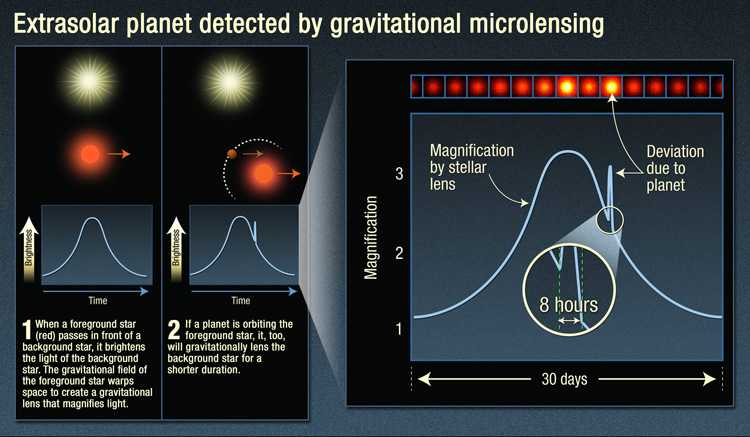
chart explaining gravitational microlensing
This infographic explains the light curve astronomers detect when viewing a microlensing event, and the signature of an exoplanet: an additional uptick in brightness when the exoplanet lenses the background star. (Image Credit: NASA / ESA / K. Sahu / STScI)

Artificial intelligence (AI) algorithms trained on real astronomical observations now outperform astronomers in sifting through massive amounts of data to find new exploding stars, identify new types of galaxies and detect the mergers of massive stars, accelerating the rate of new discovery in the world’s oldest science.

But AI, also called machine learning, can reveal something deeper, University of California, Berkeley, astronomers found: Unsuspected connections hidden in the complex mathematics arising from general relativity—...

Read More