
glutamate tagged posts

New Class of Highly Effective Inhibitors protects against Neurodegeneration

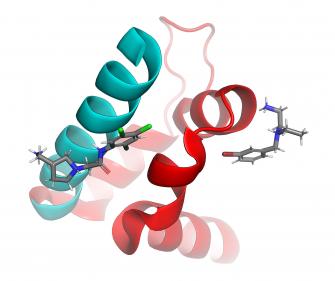
Interaction of interface inhibitors compound 8 and compound 19 within their binding pockets of the protein contact surface.
Interaction of interface inhibitors compound 8 and compound 19 within their binding pockets of the protein contact surface. | © Hilmar Bading

Neurobiologists at Heidelberg University have discovered how a special receptor at neuronal junctions that normally activates a protective genetic programme can lead to nerve cell death when located outside synapses. Their fundamental findings on neurodegenerative processes simultaneously led the researchers at the Interdisciplinary Center for Neurosciences (IZN) to a completely new principle for therapeutic agents. In their experiments on mouse models, they discovered a new class of highly effective inhibitors for protecting nerve cells. As Prof...

Read More

Broccoli Sprout compound may Restore Brain Chemistry Imbalance linked to Schizophrenia


Sedlak’s daughter grows broccoli sprouts Credit: Thomas Sedlak

In a series of recently published studies using animals and people, Johns Hopkins Medicine researchers say they have further characterized a set of chemical imbalances in the brains of people with schizophrenia related to the chemical glutamate. And they figured out how to tweak the level using a compound derived from broccoli sprouts.

They say the results advance the hope that supplementing with broccoli sprout extract, which contains high levels of the chemical sulforaphane, may someday provide a way to lower the doses of traditional antipsychotic medicines needed to manage schizophrenia symptoms, thus reducing unwanted side effects of the medicines.

“It’s possible that future studies could show sulforaphane to ...

Read More

Experimental Alzheimer’s Drug Reverses Genetic changes thought to spur the disease

After treatment with riluzole, the brains of old rats showed more of a transporter molecule that removes excess glutamate, (green fluorescence, right) as compared to untreated rats (left). Credit: Harold and Margaret Milliken Hatch Laboratory of Neuroendocrinology at The Rockefeller University/Molecular Psychiatry

After treatment with riluzole, the brains of old rats showed more of a transporter molecule that removes excess glutamate, (green fluorescence, right) as compared to untreated rats (left). Credit: Harold and Margaret Milliken Hatch Laboratory of Neuroendocrinology at The Rockefeller University/Molecular Psychiatry

In new research a drug, riluzole, is capable of reversing key genetic changes associated with these conditions. “In aging and Alzheimer’s, the chemical signal glutamate can accumulate between neurons, damaging the circuitry,” Pereira says. “When we treated rats with riluzole, we saw a suite of changes. Perhaps most significantly, expression of molecules responsible for clearing excess glutamate returned to more youthful levels...

Read More

Vigorous Exercise Boosts Critical Neurotransmitters, may help Restore Mental Health

Richard Maddock and his team conducted MRI exams of people before and after vigorous exercise to determine the effect of exercise on neurotransmitters. Credit: Image courtesy of University of California - Davis Health System

Richard Maddock and his team conducted MRI exams of people before and after vigorous exercise to determine the effect of exercise on neurotransmitters. Credit: Image courtesy of University of California – Davis Health System

Intense exercise increases levels of 2 common neurotransmitters – glutamate and GABA The finding offers new insights into brain metabolism and why exercise could become an important part of treating depression and other neuropsychiatric disorders linked with deficiencies in neurotransmitters, which drive communications between the brain cells that regulate physical and emotional health.

“Major depressive disorder is often characterized by depleted glutamate and GABA, which return to normal when mental health is restored,” said Prof. Richard Maddock...

Read More