Gut bacteria tagged posts

Gut bacteria leave intestinal ‘memory,’ protecting against inflammation

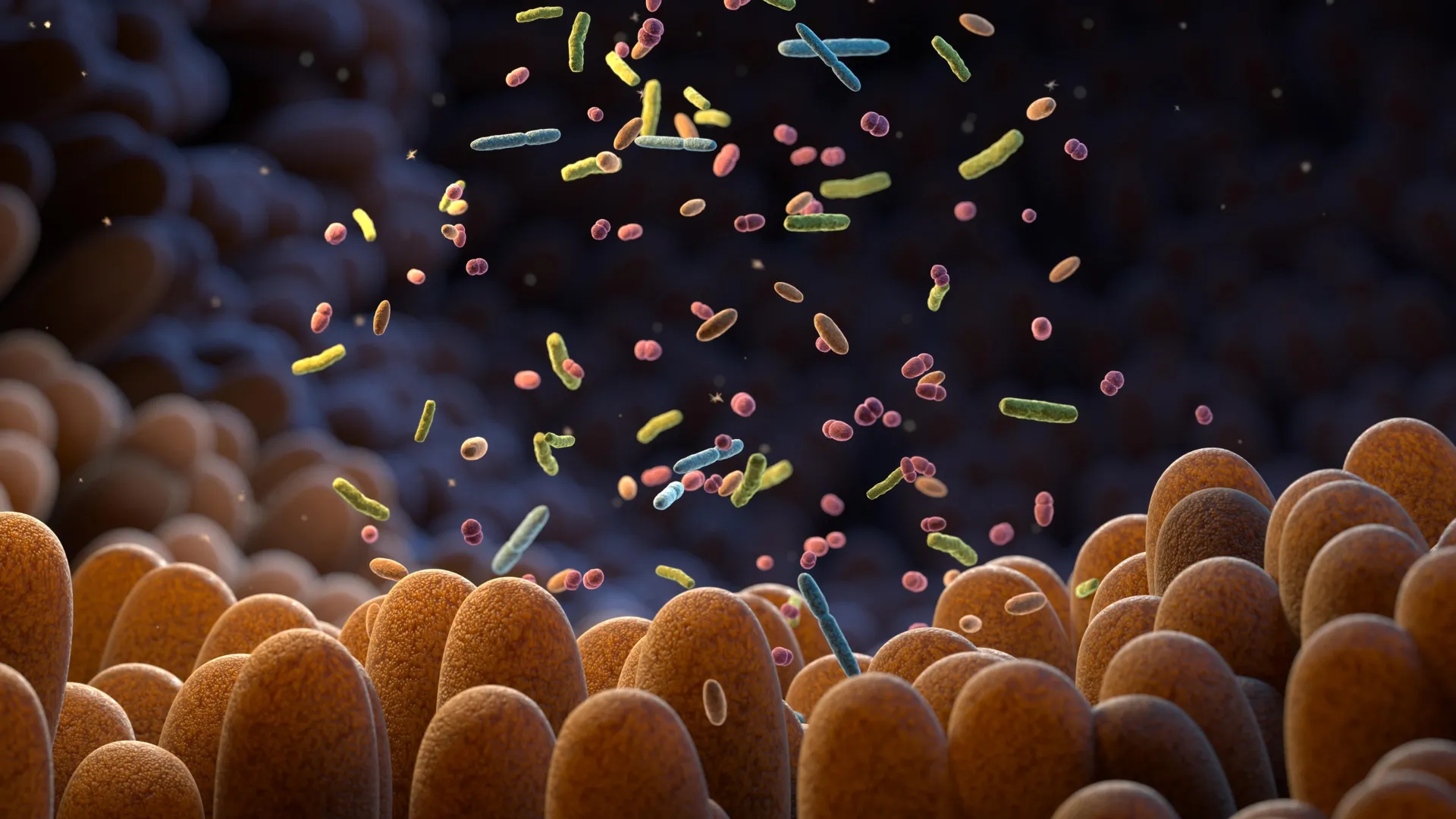
Image generated by the editorial team using DALL·E for illustrative purposes.

New Northwestern Medicine research published in Nature Communications suggests that a metabolite produced by gut bacteria when they digest dietary fiber can leave a lasting molecular imprint on intestinal cells, promoting immune tolerance and protecting against inflammatory bowel disease-like conditions long after exposure ends.

Yingzi Cong, Ph.D., the Stanley Gradowski Professor of Gastroenterology and a professor of Microbiology-Immunology and Pathology, was the senior and co-corresponding author of the study.

Investigators describe the findings as evidence that beneficial microbial metabolites may be able to “train” the intestinal lining to maintain immune tolerance over time.

“Our laboratory has...

Read More

Gut bacteria can sense their environment and it’s key to your health

Gut Bacteria Can Sense Their Environment
Researchers discovered that beneficial gut bacteria can sense a wide array of nutrients and chemical signals, guiding them toward the best food sources. Credit: Shutterstock

Your gut bacteria are chemical detectives—sniffing out nutrients and even feeding each other to keep your microbiome thriving. Your gut is home to trillions of bacteria that constantly “sense” their surroundings to survive and thrive. New research shows that beneficial gut microbes, especially common Clostridia bacteria, can detect a surprisingly wide range of chemical signals produced during digestion, including byproducts of fats, proteins, sugars, and even DNA. These microbes use specialized sensors to move toward valuable nutrients, with lactate and formate standing out as especially important fuel sources...

Read More

Gut-derived metabolite hippuric acid ‘turns up’ immune inflammation, study finds

Scientists discover how gut-derived metabolite acts as immune 'Volume knob' via macrophages
Graphical abstract. Credit: Cell Reports (2026). DOI: 10.1016/j.celrep.2025.116749

Scientists at The Wistar Institute have identified a previously overlooked mediator in the body’s response to life-threatening infections: hippuric acid, a metabolite produced when gut bacteria break down polyphenols from berries, tea, and other plant-based foods. The research reveals that this molecule acts as an immune-system amplifier, boosting the body’s inflammatory defenses during early infection but elevating them to deadly levels when infections progress to sepsis.

Published in Cell Reports, the study demonstrates that elevated hippuric acid levels correlate with increased mortality in sepsis patients, while also uncovering the molecular mechanisms by which this metabolite modifies immune re...

Read More

Gut bacteria’s hidden toxin acts as DNA glue, fueling colorectal cancer risk

Discovery of how a gut toxin damages DNA gives scientists new clues to fight colorectal cancer
Structure and specificity of the colibactin-DNA interstrand cross-link. Credit: Science (2025). DOI: 10.1126/science.ady3571

Colibactin is a powerful toxin produced by Escherichia coli and other bacteria living in the human gut. This highly unstable bacterial product causes mutations in DNA that have been linked to colorectal cancer. Because it breaks down quickly, isolating and studying it has been difficult, but now scientists in the U.S. have discovered exactly how colibactin attacks DNA.

Using advanced tools such as mass spectrometry (MS) and nuclear magnetic resonance (NMR) spectroscopy, the team studied the toxin at the atomic level, as reported in a paper published in the journal Science...

Read More