Gut bacteria tagged posts

Gut bacteria’s hidden toxin acts as DNA glue, fueling colorectal cancer risk

Discovery of how a gut toxin damages DNA gives scientists new clues to fight colorectal cancer
Structure and specificity of the colibactin-DNA interstrand cross-link. Credit: Science (2025). DOI: 10.1126/science.ady3571

Colibactin is a powerful toxin produced by Escherichia coli and other bacteria living in the human gut. This highly unstable bacterial product causes mutations in DNA that have been linked to colorectal cancer. Because it breaks down quickly, isolating and studying it has been difficult, but now scientists in the U.S. have discovered exactly how colibactin attacks DNA.

Using advanced tools such as mass spectrometry (MS) and nuclear magnetic resonance (NMR) spectroscopy, the team studied the toxin at the atomic level, as reported in a paper published in the journal Science...

Read More

Serotonin produced by gut bacteria provides hope for a novel IBS treatment

Newly revealed role of gut bacteria provides hope for a novel IBS treatment
Graphical abstract. Credit: Cell Reports (2025). DOI: 10.1016/j.celrep.2025.116434

Research from the University of Gothenburg, Sweden, clarifies the complex interaction between gut bacteria and irritable bowel syndrome (IBS). Experiments demonstrate that gut bacteria can produce the important substance serotonin. The finding may lead to future treatments.

IBS is a common gastrointestinal disorder, more common in women, with symptoms such as abdominal pain, constipation or diarrhea. The cause of the disease is not clear, but the intestinal environment, including the gut microbiota and serotonin, appear to be important factors.

Serotonin is best known as a neurotransmitter in the brain, but over 90% of the body’s serotonin is produced in the gut, where it controls bowel movements...

Read More

Gut bacteria and acetate team up to cut fat in mice without muscle loss

Gut bacteria and acetate, a great combination for weight loss
Credit: Cell Metabolism (2025). DOI: 10.1016/j.cmet.2025.04.013

Researchers led by Hiroshi Ohno at the RIKEN Center for Integrative Medical Sciences (IMS) in Japan have discovered a new way to reduce obesity. Their study shows that supplying the gut with extra acetate reduces fat and liver mass in both normal and obese mice, as long as bacteria of the Bacteroides species are also present in the gut.

When both these conditions are met, gut bacteria can eliminate more sugars from the gut and promote the burning of fats for energy in the host. The findings were published in Cell Metabolism.

Affecting hundreds of millions of people around the world, obesity constitutes a global epidemic...

Read More

Protein in Soy may Reduce the Risk of Heart Failure by Affecting Gut Bacteria

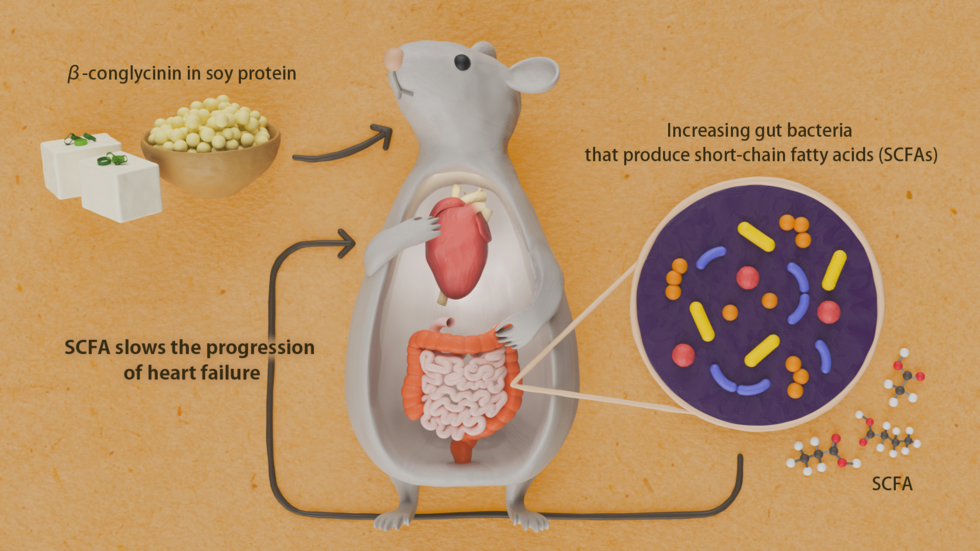
A research team from the Nagoya University Graduate School of Medicine has discovered a promising way to slow the progression of heart failure in mice. They fed mice a diet rich in the soybean protein, β-conglycinin (β-CG), which can support heart health by influencing gut bacteria. Their analysis revealed that the soybean protein rich diet increased the production of the short-chain fatty acids (SCFAs) in the intestine that play a role in protecting the heart. Their findings were published in Clinical Nutrition.

Many people with heart problems try to eat a nutritious diet to reduce their risk of disease. As part of a healthy diet, soybeans have long been recognized for their antioxidant and anti-inflammatory properties...

Read More