
helioseismology tagged posts

Physicists trace the sun’s magnetic engine, 200,000 kilometers below its surface

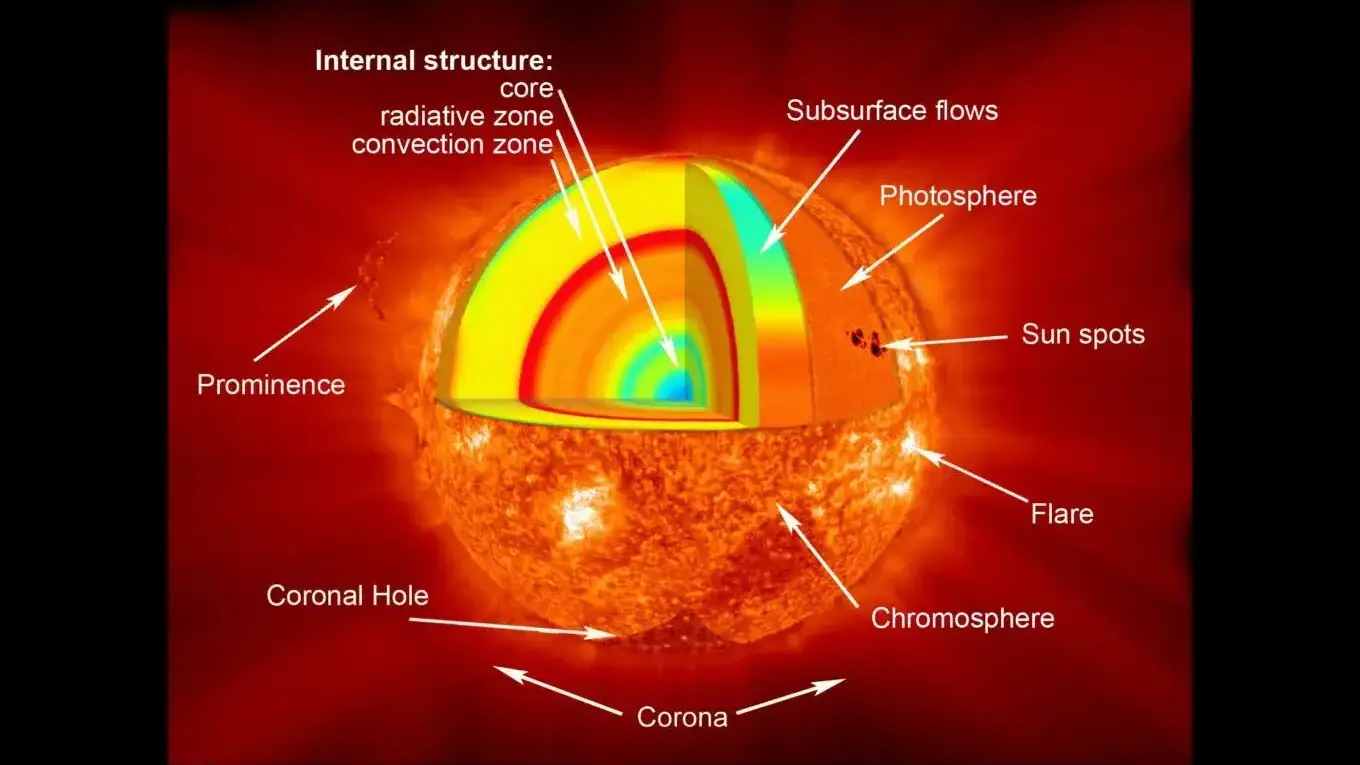
Above: Diagram of the Sun’s interior and outer atmosphere, showing the core, radiative and convection zones — separated by the tachocline — and surface features such as sunspots, flares, the chromosphere and corona. Credit: NASA

Every eleven years, the sun’s magnetic field flips. Sunspots—dark, cooler regions on the sun’s surface that mark intense magnetic activity and often trigger solar eruptions—appear at mid-latitudes and migrate toward the star’s equator in a butterfly-shape pattern before fading as the cycle resets. While this spectacle on the star’s surface has long been visible to astronomers, where this powerful cycle begins inside the star has remained hidden until now.

Researchers at the New Jersey Institute of Technology (NJIT) have analyzed nearly three dec...

Read More
New Theoretical Model accounts for Sun’s Rotation and Magnetic Field

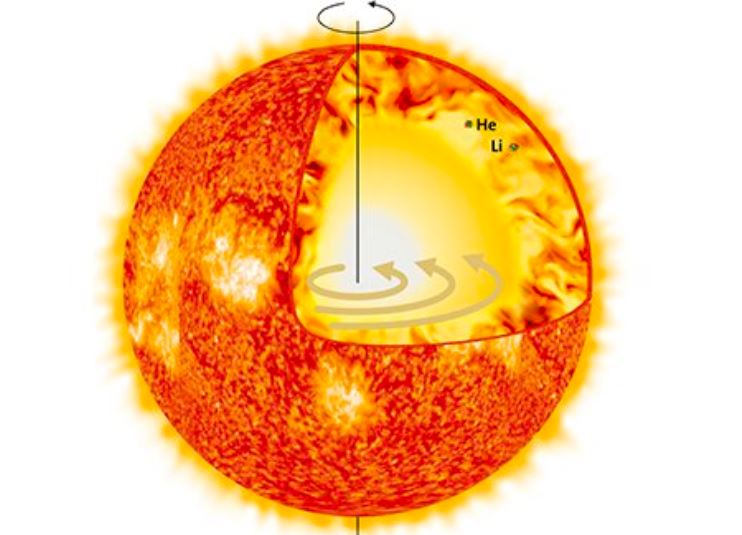
The model developed by the scientists includes the history of the rotation of the sun but also the magnetic instabilities that it generates. (c) Sylvia Ekström / UNIGE

In the early 2000s, a new set of data revised the chemical abundances at the surface of the sun, contradicting the values predicted by the standard models used by astrophysicists. Often challenged, these new abundances made it through several new analyses. As they seemed to prove correct, it was thus up to the solar models to adapt, especially since they serve as a reference for the study of stars in general...

Read More

Solving Solar Puzzle could help save Earth from Planet-wide Blackouts

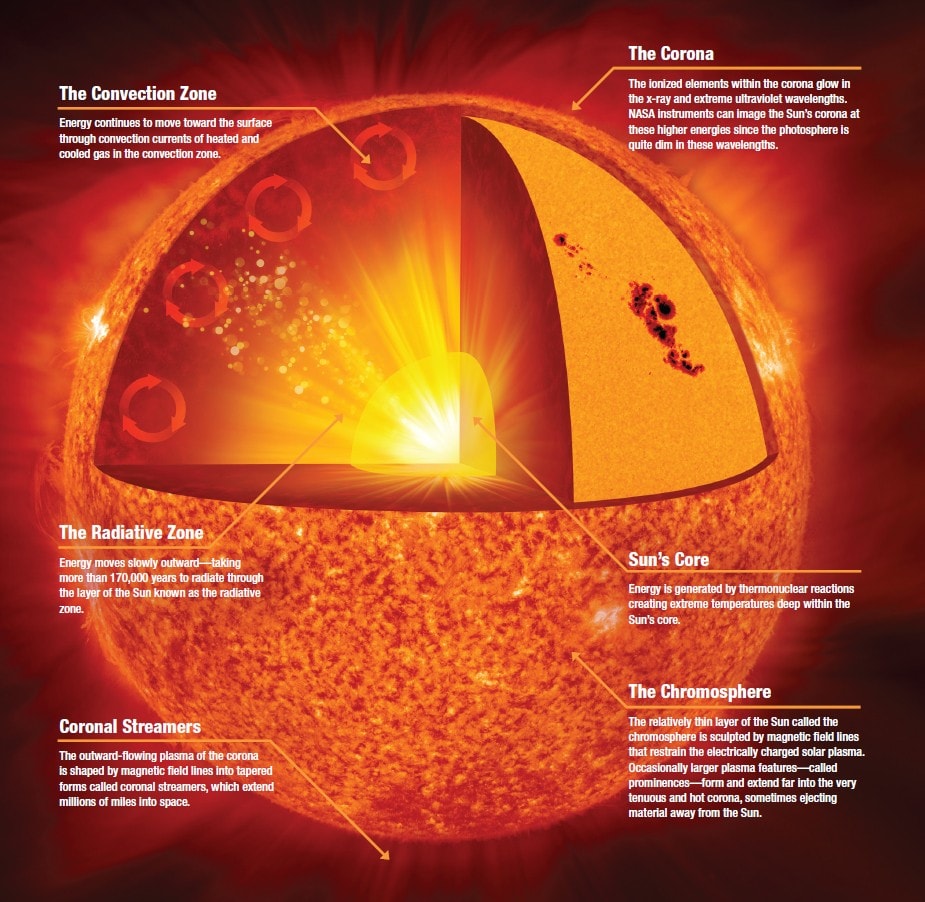
Artist's image of the internal structure of the Sun. NASA
Diagram showing the internal structure of the Sun based on existing theory that assumes circular convection cells near the solar surface. Dr Vasil’s new model suggests thinner, spinning ‘cigar-shaped’ convection cells driving the Sun’s magnetic dynamo. Image: NASA

Scientists in Australia and in the USA have solved a long-standing mystery about the Sun that could help astronomers predict space weather and help us prepare for potentially devastating geomagnetic storms if they were to hit Earth.

The Sun’s internal magnetic field is directly responsible for space weather — streams of high-energy particles from the Sun that can be triggered by solar flares, sunspots or coronal mass ejections that produce geomagnetic storms...

Read More