



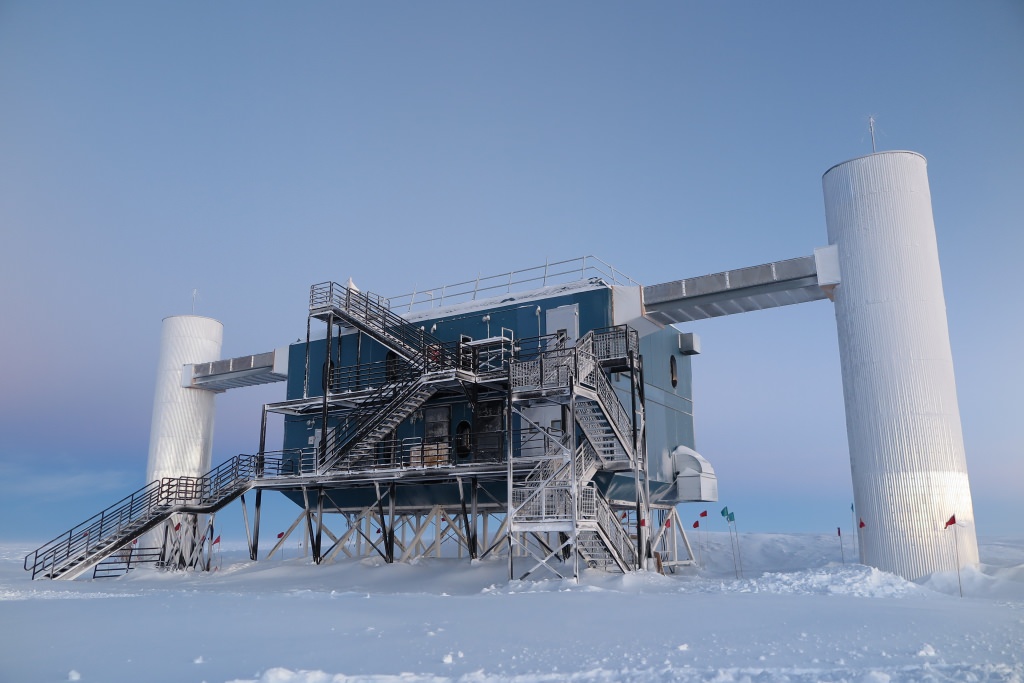
IceCube is a neutrino detector composed of 5,160 optical modules embedded in a gigaton of crystal-clear ice a mile beneath the geographic South Pole. PHOTO COURTESY OF NATIONAL SCIENCE FOUNDATION
For a decade, astronomers have puzzled over fast radio bursts, FRBs, which were first detected in 2007 by astronomers scouring archival data from Australia’s Parkes Telescope, a 64-meter diameter dish best known for its role receiving live televison images from the Apollo 11 moon landing in 1969. But the antenna’s detection of the first FRB – and the subsequent confirmed discovery of nearly two dozen more powerful radio pulses across the sky by Parkes and other radio telsescopes – has sent astrophysicists scurrying to find more of the objects and to explain them.
“It’s a new class of astronomical ...
Read More
Recent Comments