insulin tagged posts

Implantable islet cells could control diabetes without insulin injections

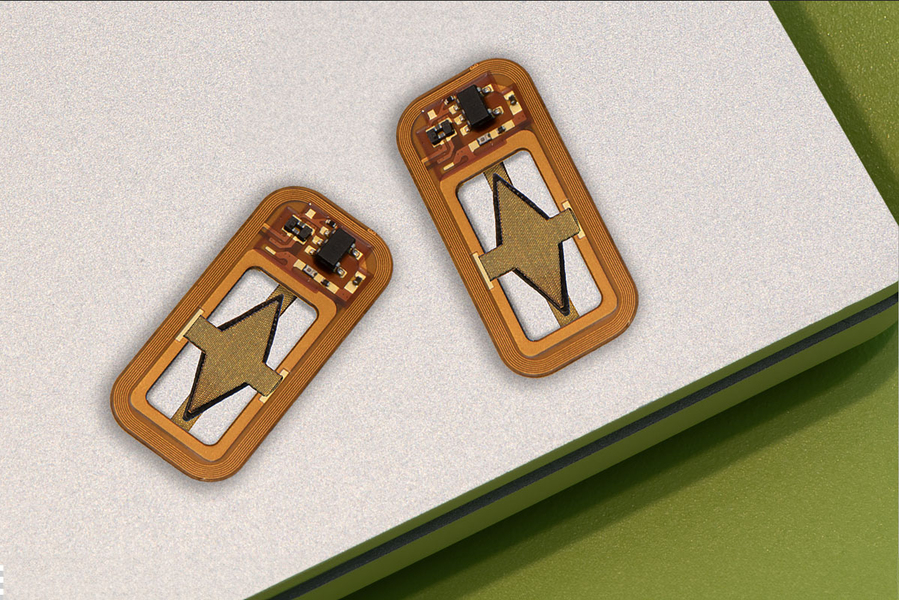
Two tiny rectangular devices have curved edges. The devices are orange-yellow and are made of a circuit board and soldered pieces, including a diamond-shaped piece of material in the middle.
Caption:MIT engineers designed an implantable device that carries hundreds of thousands of islet cells along with its own on-board oxygen factory to keep the cells healthy.
Credits:Image: Felice Frankel

Most diabetes patients must carefully monitor their blood sugar levels and inject insulin multiple times per day, to help keep their blood sugar from getting too high. As a possible alternative to those injections, MIT researchers are developing an implantable device that contains insulin-producing cells. The device encapsulates the cells, protecting them from immune rejection, and it also carries an onboard oxygen generator to keep the cells healthy.

This device, the researchers hope, could offer a way to achieve long-term control of type 1 diabetes...

Read More

Self-regulating living implant could end daily insulin injections

Self-regulating living implant could end daily insulin injections
Crystal Capsules. Credit: Technion – Israel Institute of Technology

A pioneering study marks a major step toward eliminating the need for daily insulin injections for people with diabetes. The study was led by Assistant Professor Shady Farah of the Faculty of Chemical Engineering at the Technion—Israel Institute of Technology, in co-correspondence with MIT, and in collaboration with Harvard University, Johns Hopkins University, and the University of Massachusetts. The findings are published in the journal Science Translational Medicine.

The research introduces a living, cell-based implant that can function as an autonomous artificial pancreas, essentially a living drug that is long-term, thanks to a novel crystalline shield-protecting technology...

Read More

New gene switch activates with simple skin patch and could help treat diabetes

New gene switch activates with simple skin patch
A skin patch with nitroglycerine is the switch that controls an implant underneath (symbolic image). Credit: Josef Kuster / ETH Zurich

ETH researchers have developed a new gene switch that can be activated using a commercially available nitroglycerine patch applied to the skin. One day, researchers want to use switches of this kind to trigger cell therapies for various metabolic diseases.

The body regulates its metabolism precisely and continuously, with specialized cells in the pancreas constantly monitoring the amount of sugar in the blood, for example. When this blood sugar level increases after a meal, the body sets a signal cascade in motion in order to bring it back down.

In people suffering from diabetes, this regulatory mechanism no longer works exactly as it should...

Read More

Researchers Map the Brain during Blood Sugar Changes

Researchers at UTEP have successfully mapped specific regions in the brain that are activated in association with changes in blood sugar — also known as glucose — providing fundamental location information that could ultimately lead to more targeted therapies for people who struggle with conditions like diabetes.

Researchers at The University of Texas at El Paso have successfully mapped specific regions in the brain that are activated in association with changes in blood sugar—also known as glucose—providing fundamental location information that could ultimately lead to more targeted therapies for people who struggle with conditions like diabetes.

The landmark 13-year study, published in the Journal of Clinical Medicine, describes how the team used careful microscopic analys...

Read More