
ISRU tagged posts

New study assesses Titan’s resources and their potential uses

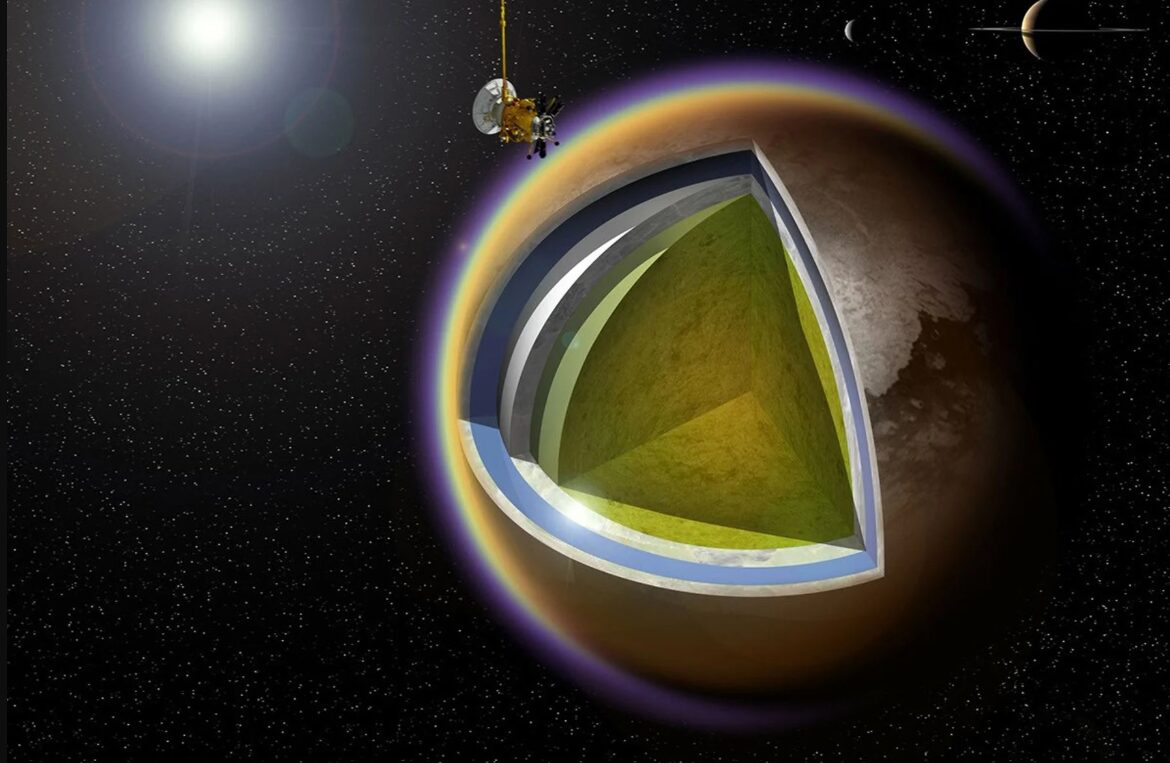
Artist’s rendering of Titan’s interior, with the Cassini spacecraft in orbit and Saturn in the distance. Credit: NASA

Saturn’s largest moon, Titan, is a unique environment in our solar system. It is the only moon (or body beyond Earth) to have a dense, nitrogen-rich atmosphere, and its methane cycle is very similar to Earth’s hydrological cycle, in which solid and liquid methane evaporate to form clouds and return to the surface as precipitation. In addition, its prebiotic surface environment and rich organic chemistry make it a prime destination for astrobiology missions, such as NASA’s Dragonfly mission (set to launch no earlier than July 2028).

And as Robert Zubrin said in his book, “Entering Space: Creating a Spacefaring Civilization,” Saturn’s moons could become the “Persian Gu...

Read More
Designing in situ power stations for future Mars missions

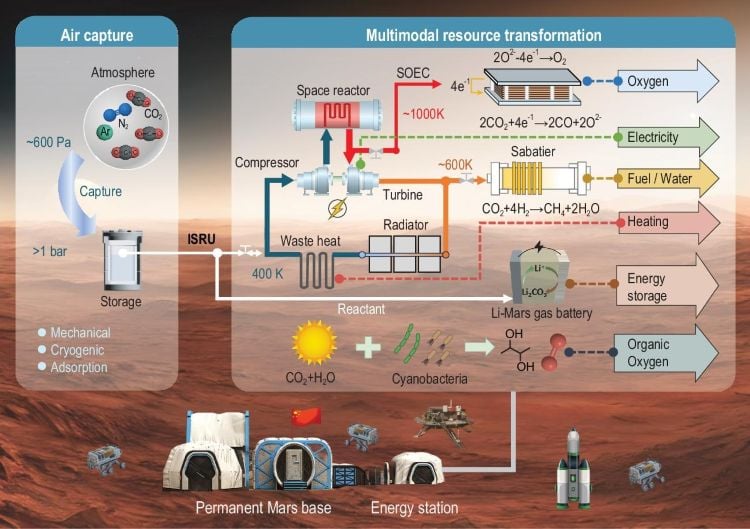
Diagram depicting how the Martian atmosphere could be used for power generation on future human missions to Mars. (Credit: Yang et al. (2026))

You’re in the lab analyzing Martian regolith samples within your cozy Mars habitat serving on the fifth human mission to Mars. The power within the habitat has been flowing flawlessly thanks to the MARS-MES (Mars Atmospheric Resource & Multimodal Energy System), including the general habitat lighting, science lab, sleeping quarters, exercise equipment, the virtual reality headsets the crew use for rest & relaxation, oxygen and fuel generation, and water. All this from converting the Martian atmosphere into workable electricity.

While this scenario might be decades away, scientists on Earth are working hard to make this concept a reality today...

Read More