JAXA tagged posts

Composition of Asteroid Phaethon

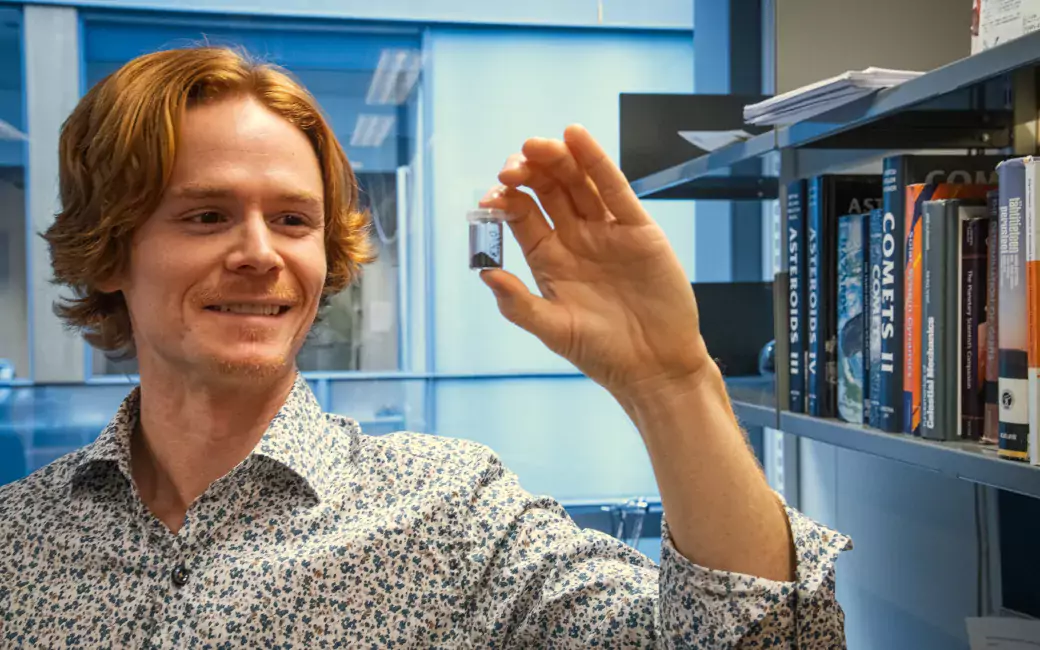
Nuori mies kädessään purkki, jossa mustaa hiekkaa.
Postdoctoral Researcher Eric MacLennan holds in his hands a very rare type of meteorite, the so-called CY carbonaceous chondrite. Only six specimens of the same type are known. The sample is on loan from the Natural History Museum in London. (Image: Susan Heikkinen)

The asteroid that causes the Geminid shooting star swarm has also puzzled researchers with its comet-like tail. The infrared spectrum of rare meteorites helped to determine the composition of the asteroid.

Asteroid Phaethon, which is five kilometers in diameter, has been puzzling researchers for a long time. A comet-like tail is visible for a few days when the asteroid passes closest to the Sun during its orbit.

However, the tails of comets are usually formed by vaporizing ice and carbon dioxide, which cannot explain ...

Read More

Japan space agency finds ample Soil, Gas from Asteroid

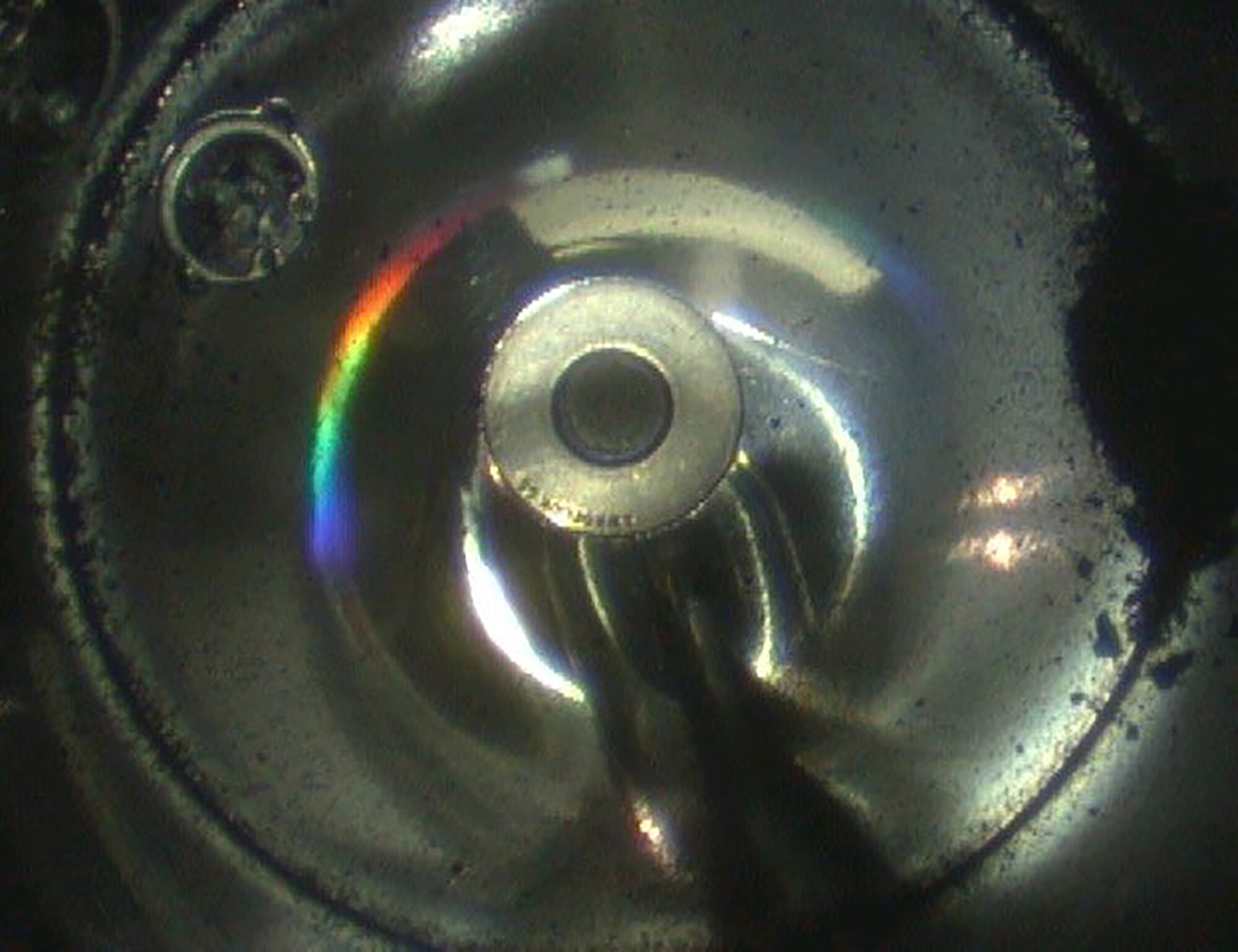
This Dec. 14, 2020, photo released by the Japan Aerospace Exploration Agency (JAXA), shows black grains, right, thought to be from Ryugu are inside the sample container of the re-entry capsule of Hayabusa2, in Sagamihara, near Tokyo. Japan’s space agency said Monday it has confirmed the presence of black soil samples inside a capsule that the spacecraft Hayabusa2 brought back from a distant asteroid last week. (JAXA via AP)

Officials from Japan’s space agency said Tuesday they have found more than the anticipated amount of soil and gases inside a small capsule the country’s Hayabusa2 spacecraft brought back from a distant asteroid this month, a mission they praised as a milestone for planetary research.

The Japan Aerospace Exploration Agency said its staff initially spotted some bla...

Read More

Finding a Killer Electron Hot Spot in Earth’s Van Allen Radiation Belts

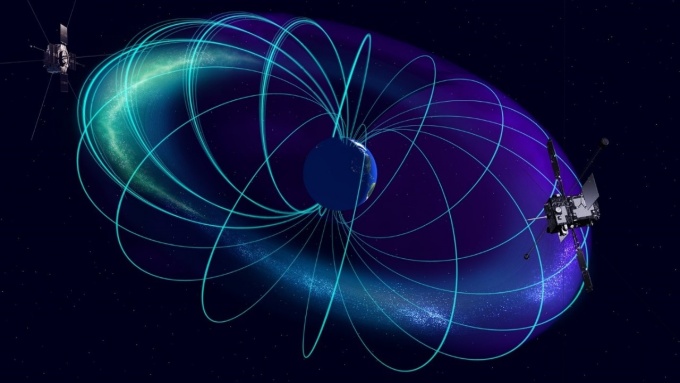
Image: Multi-point satellite observations by JAXA/Arase and NASA/Van Allen Probes
      Electrons detected at Van Allen Probes position (left) drift to the Arase position (right)
      Credit:  ERG Science Team

JAXA and NASA satellite observations show where killer electrons are generated in the Van Allen radiation belts surrounding Earth. The finding, published in the journal Geophysical Research Letters, could help scientists more accurately forecast when these killer (relativistic) electrons will form.

Professor Yoshizumi Miyoshi of the Institute for Space-Earth Environmental Research at Nagoya University and colleagues compared data from two satellites situated on opposite sides of the Earth: the Arase satellite, developed by the Japanese Aerospace Exploration Agency (JAXA)...

Read More

Long Suspected Theory about the Moon holds Water

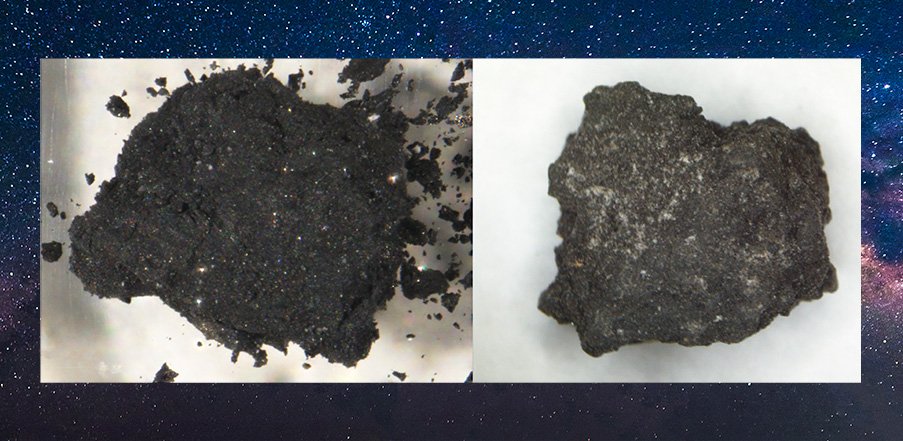
Photograph of lunar meteorite NWA 2727. Credit: Photo by Masahiro Kayama, Tohoku University

Photograph of lunar meteorite NWA 2727. Credit: Photo by Masahiro Kayama, Tohoku University

A team of Japanese scientists led by Masahiro Kayama of Tohoku University’s Frontier Research Institute for Interdisciplinary Sciences, has discovered a mineral known as moganite in a lunar meteorite found in a hot desert in northwest Africa. This is significant because moganite is a mineral that requires water to form, reinforcing the belief that water exists on the Moon.

“Moganite is a crystal of silicon dioxide and is similar to quartz. It forms on Earth as a precipitate when alkaline water including SiO2 is evaporated under high pressure conditions,” says Kayama. “The existence of moganite strongly implies that there is water activity on the Moon...

Read More