Machine learning tagged posts

Researchers leverage AI to Develop Early Diagnostic Test for Ovarian Cancer

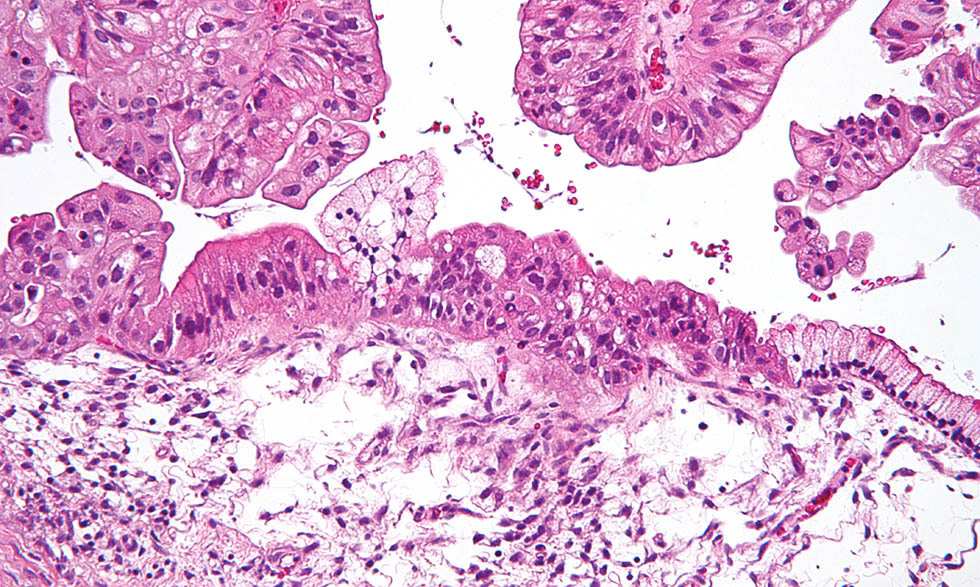
Micrograph of a mucinous ovarian tumor (Photo National Institutes of Health)

For over three decades, a highly accurate early diagnostic test for ovarian cancer has eluded physicians. Now, scientists in the Georgia Tech Integrated Cancer Research Center (ICRC) have combined machine learning with information on blood metabolites to develop a new test able to detect ovarian cancer with 93 percent accuracy among samples from the team’s study group.

John McDonald, professor emeritus in the School of Biological Sciences, founding director of the ICRC, and the study’s corresponding author, explains that the new test’s accuracy is better in detecting ovarian cancer than existing tests for women clinically classified as normal, with a particular improvement in detecting early-stage ovarian d...

Read More

Team develops a new Deepfake Detector designed to be Less Biased

Study: New deepfake detector designed to be less biased
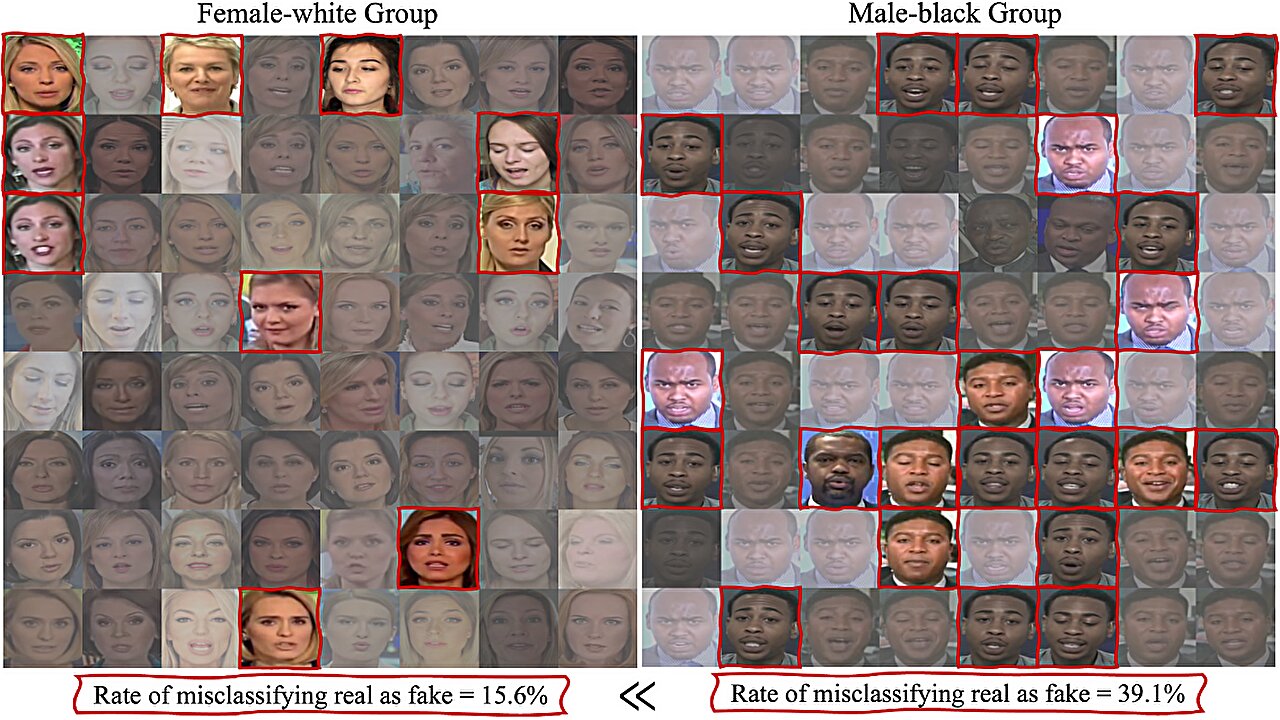
Deepfake detection algorithms often perform differently across races and genders, including a higher false positive rate on Black men than on white women. New algorithms developed at the University at Buffalo are designed to reduce such gaps. Credit: Siwei Lyu

University at Buffalo computer scientist and deepfake expert Siwei Lyu created a photo collage out of the hundreds of faces that his detection algorithms had incorrectly classified as fake—and the new composition clearly had a predominantly) darker skin tone.

“A detection algorithm’s accuracy should be statistically independent from factors like race,” Lyu says, “but obviously many existing algorithms, including our own, inherit a bias.”

Lyu, Ph.D...

Read More

New Study uses Machine Learning to Bridge the Reality Gap in Quantum Devices

New study uses machine learning to bridge the reality gap in quantum devices
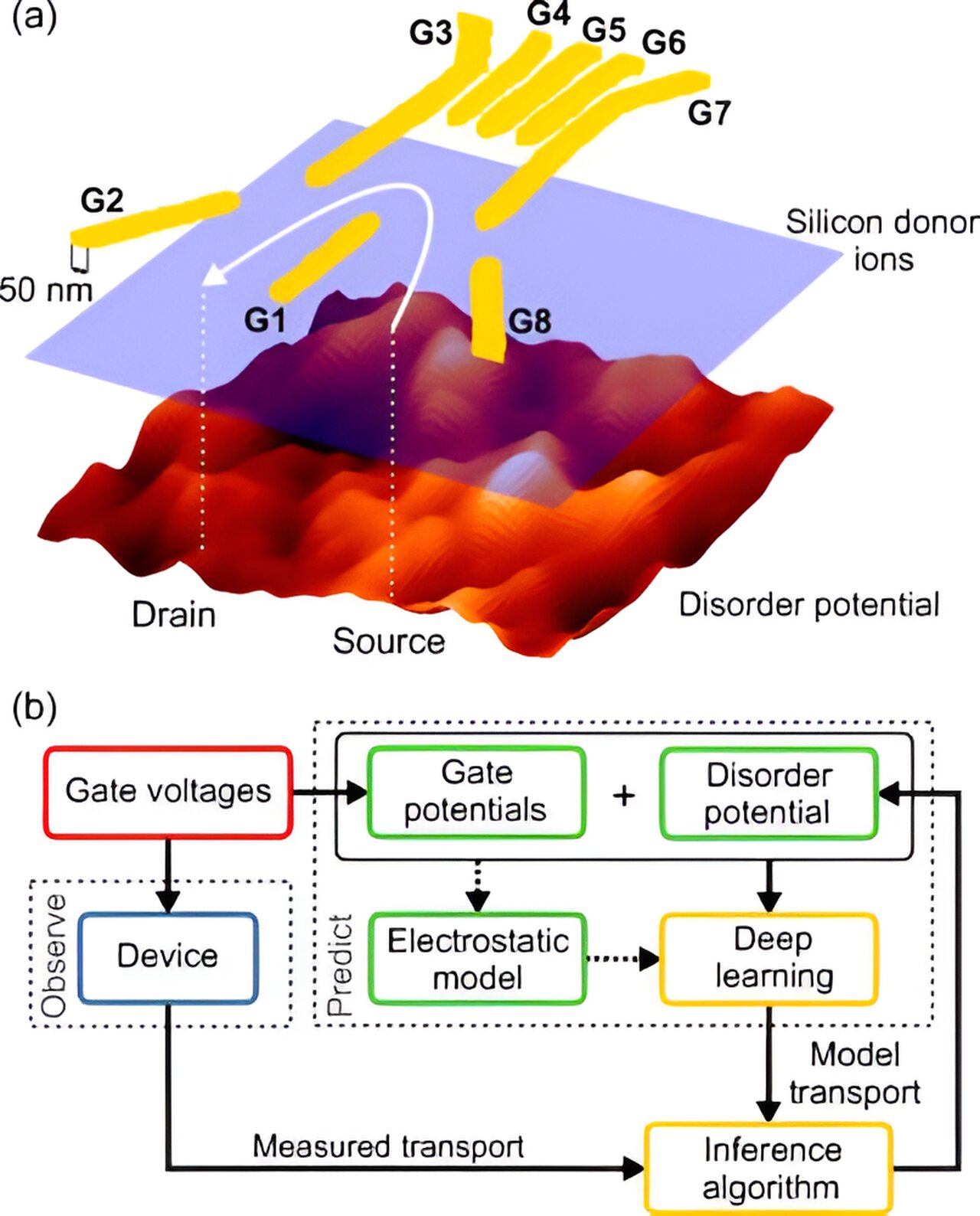
(a) Device geometry including the gate electrodes (labeled G1–G8), donor ion plane, and an example disorder potential experienced by confined electrons. Typical flow of current from source to drain is indicated by the white arrow. (b) Schematic of the disorder inference process. Colors indicate the following: red for experimentally controllable variables, green for quantities relevant to the electrostatic model, blue for experimental device, and yellow for machine learning methods. Dashed arrows represent the process of generating training data for the deep learning approximation and are not part of the disorder inference process. Credit: Physical Review X (2024). DOI: 10.1103/PhysRevX.14.011001

A study led by the University of Oxford has used the power of machine learning to ove...

Read More

Machine Learning gives users ‘Superhuman’ ability to Open and Control Tools in Virtual Reality

Machine learning gives users 'superhuman' ability to open and control tools in virtual reality

Researchers have developed a virtual reality application where a range of 3D modeling tools can be opened and controlled using just the movement of a user’s hand.

The researchers, from the University of Cambridge, used machine learning to develop ‘HotGestures’—analogous to the hot keys used in many desktop applications.

HotGestures give users the ability to build figures and shapes in virtual reality without ever having to interact with a menu, helping them stay focused on a task without breaking their train of thought.

The idea of being able to open and control tools in virtual reality has been a movie trope for decades, but the researchers say that this is the first time such a ‘superhuman’ ability has been made possible...

Read More