
Mars Reconnaissance Orbiter tagged posts

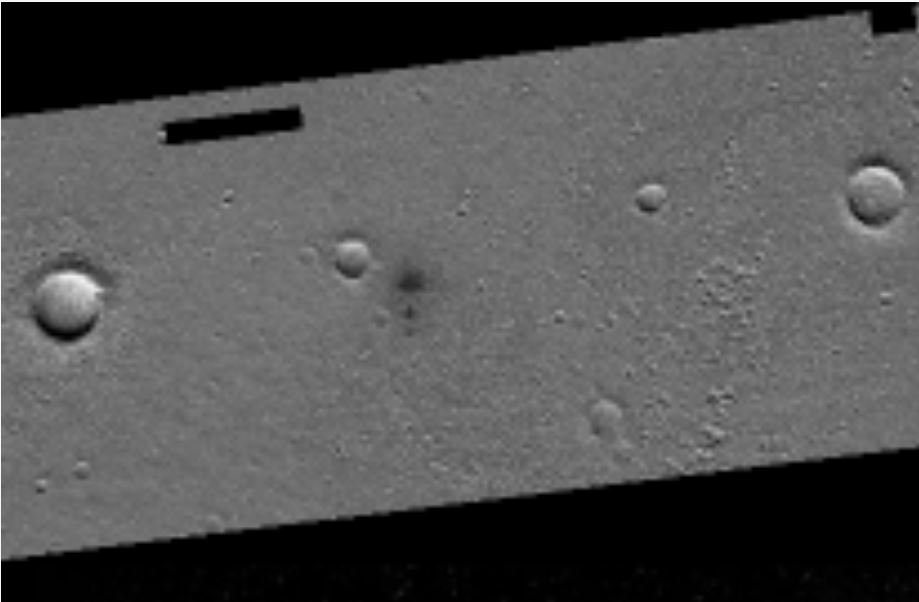
Newly Formed Craters Located on Mars

The largest crater is approximately 5.7 meters (nearly 19 feet) in diameter, while the smallest crater spans less than a meter (three feet). Image courtesy of NASA/JPL-Caltech/UArizona.

These craters hold interesting clues about the planet’s atmosphere and interior, including how it formed and evolved over time. An international team of researchers with NASA’s InSight mission located four new craters created by impacts on the surface of Mars. Using data from a seismometer and visuals acquired from the Mars Reconnaissance Orbiter, the team successfully calculated and confirmed the impact locations. This is the first time that researchers have been able to capture the dynamics of an impact on Mars...

Read More

Detailed Map of Potential Mars Rover Landing Site

1.A diverse landscape. A false color image highlights the complex geology of the Northeast Syrtis Major region on Mars. NASA/JPL/University of Arizona Credit: NASA/JPL/University of Arizona 2. A detailed map shows the the various geologic units exposed at Northeast Syrtis. Credit: Mike Bramble/Mustard Lab

1.A diverse landscape. A false color image highlights the complex geology of the Northeast Syrtis Major region on Mars. NASA/JPL/University of Arizona Credit: NASA/JPL/University of Arizona
2. A detailed map shows the the various geologic units exposed at Northeast Syrtis.
Credit: Mike Bramble/Mustard Lab

Mineral deposits in a region on Mars called Northeast Syrtis Major suggest a plethora of once-habitable environments. By mapping those deposits in the region’s larger geological context, the research could help set the stage for a possible rover mission in 2020. Using the highest resolution images available from NASA’s Mars Reconnaissance Orbiter, the study maps the extent of those key mineral deposits across the surface and places them within the region’s larger geological context.

“When w...

Read More