Memories tagged posts

Why memories get fuzzier with age—and what replaces them

memory
Credit: Pixabay/CC0 Public Domain

Research from the University of East Anglia shows how our memories change with age and why specific details associated with past events can fade over time. The new study reveals that as people age, they not only remember fewer details from their past—but also struggle more when switching between different types of memories.

The work is published in the journal Psychology and Aging. It points to a shift in how we remember things as we age—where vivid, moment-specific recollections gradually give way to broader, more generalized knowledge.

Rather than portraying memory decline as a simple loss, the study offers a nuanced picture of aging cognition and sheds light on how memory evolves over a lifetime...

Read More
Memories are Not Only in the Brain, Human Cell study finds

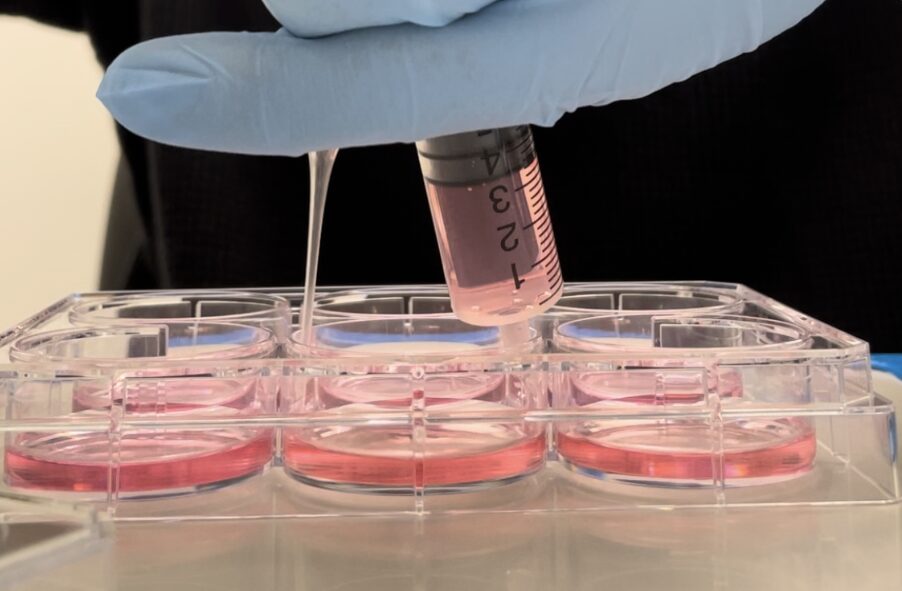
An NYU researcher administers chemical signals to non-neural cells grown in a culture plate. Photo credit: Nikolay Kukushkin.

It’s common knowledge that our brains—and, specifically, our brain cells—store memories. But a team of scientists has discovered that cells from other parts of the body also perform a memory function, opening new pathways for understanding how memory works and creating the potential to Enhance Learning and to Treat Memory-related Afflictions.

“Learning and memory are generally associated with brains and brain cells alone, but our study shows that other cells in the body can learn and form memories, too,” explains New York University’s Nikolay V. Kukushkin, the lead author of the study, which appears in the journal Nature Communications.

The research so...

Read More

Sleep Resets Neurons for new Memories the Next Day, Study Finds

neuron
Credit: Pixabay/CC0 Public Domain

While everyone knows that a good night’s sleep restores energy, a new Cornell University study finds it resets another vital function: memory.

Learning or experiencing new things activates neurons in the hippocampus, a region of the brain vital for memory. Later, while we sleep, those same neurons repeat the same pattern of activity, which is how the brain consolidates those memories that are then stored in a large area called the cortex. But how is it that we can keep learning new things for a lifetime without using up all of our neurons?

A study, “A Hippocampal Circuit Mechanism to Balance Memory Reactivation During Sleep,” published in Science, finds at certain times during deep sleep, certain parts of the hippocampus go silent, allowing those...

Read More

Memories may be stored in the Membranes of your Neurons

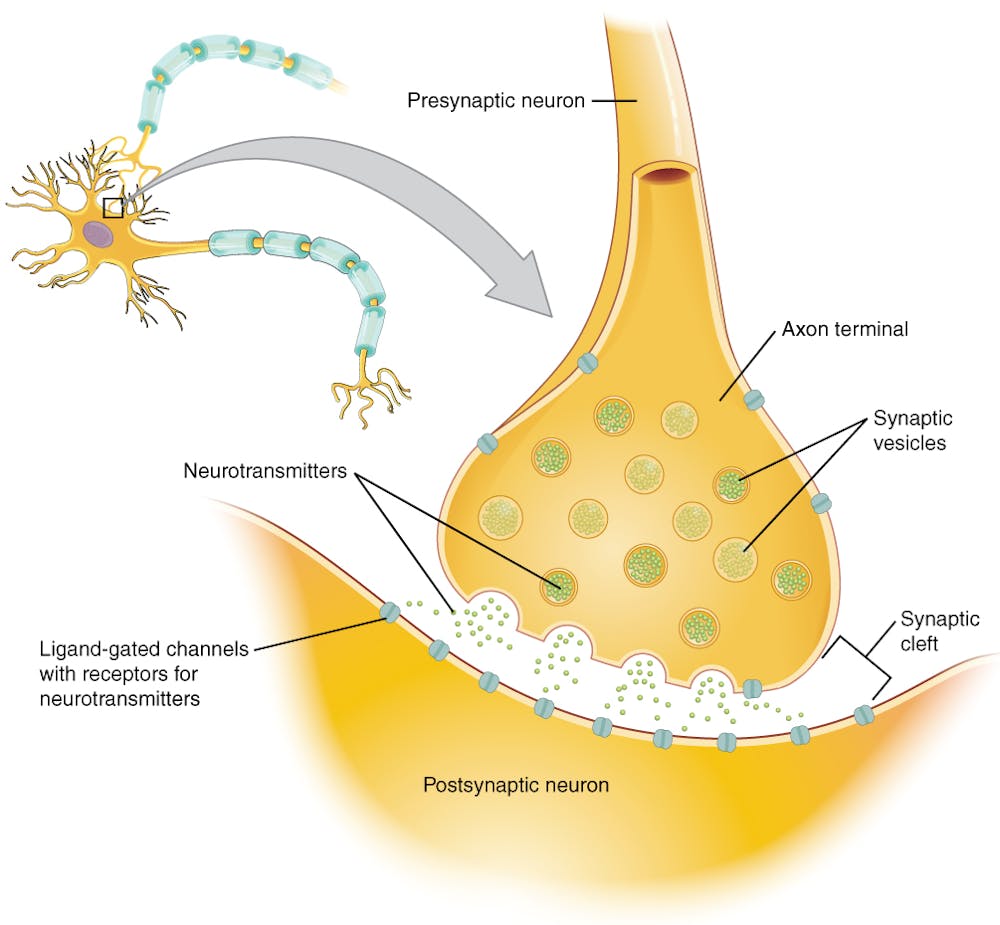
The space between two neurons is called a synapse. OpenStaxCC BY

Your brain is responsible for controlling most of your body’s activities. Its information processing capabilities are what allow you to learn, and it is the central repository of your memories. But how is memory formed, and where is it located in the brain?

Although neuroscientists have identified different regions of the brain where memories are stored, such as the hippocampus in the middle of the brain, the neocortex in the top layer of the brain and the cerebellum at the base of the skull, they have yet to identify the specific molecular structures within those areas involved in memory and learning.

Research from our team of biophysicists, physical chemists and materials scientists suggests that memory might ...

Read More