metamaterial tagged posts

Wild new “gyromorph” materials could make computers insanely fast

Gyromorphs Boost Light Computing Power
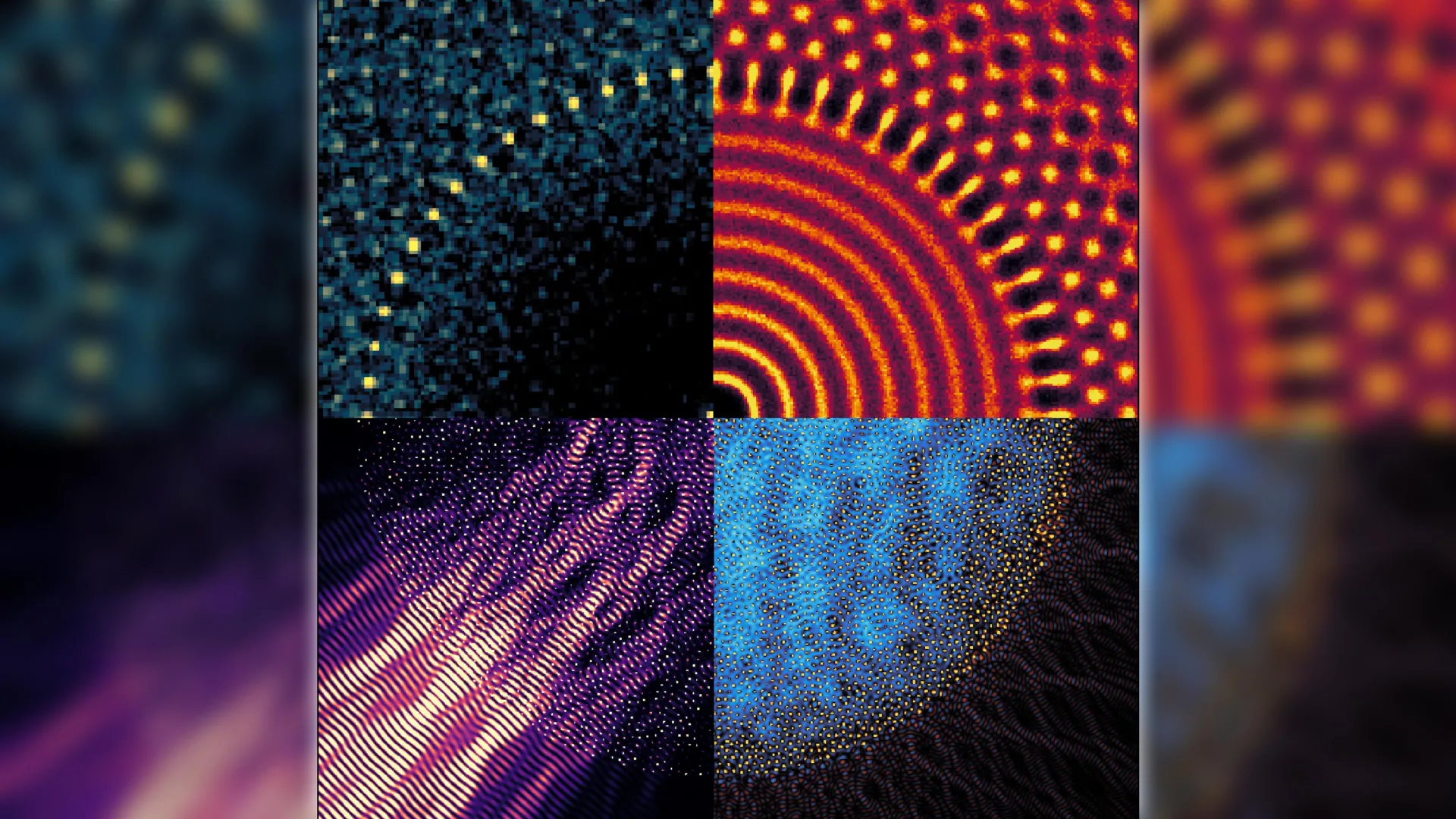
Illustration of a 60-fold gyromorph’s properties. Top row: Structure of the gyromorph. Left: Structure factor. Right: Pair correlation function. Bottom row: Optical properties. Left: Polarized light beam fully reflected by a gyromorph. Right: Density of states depletion in the gyromorph. Credit: The Martiniani lab at NYU

Gyromorphs merge order and disorder to deliver unprecedented light-blocking power for next-generation photonic computers. Researchers engineered “gyromorphs,” a new type of metamaterial that combines liquid-like randomness with large-scale structural patterns to block light from every direction. This innovation solves longstanding limitations in quasicrystal-based designs and could accelerate advances in photonic computing.

Researchers are exploring a new genera...

Read More

Material? Robot? It’s a metabot

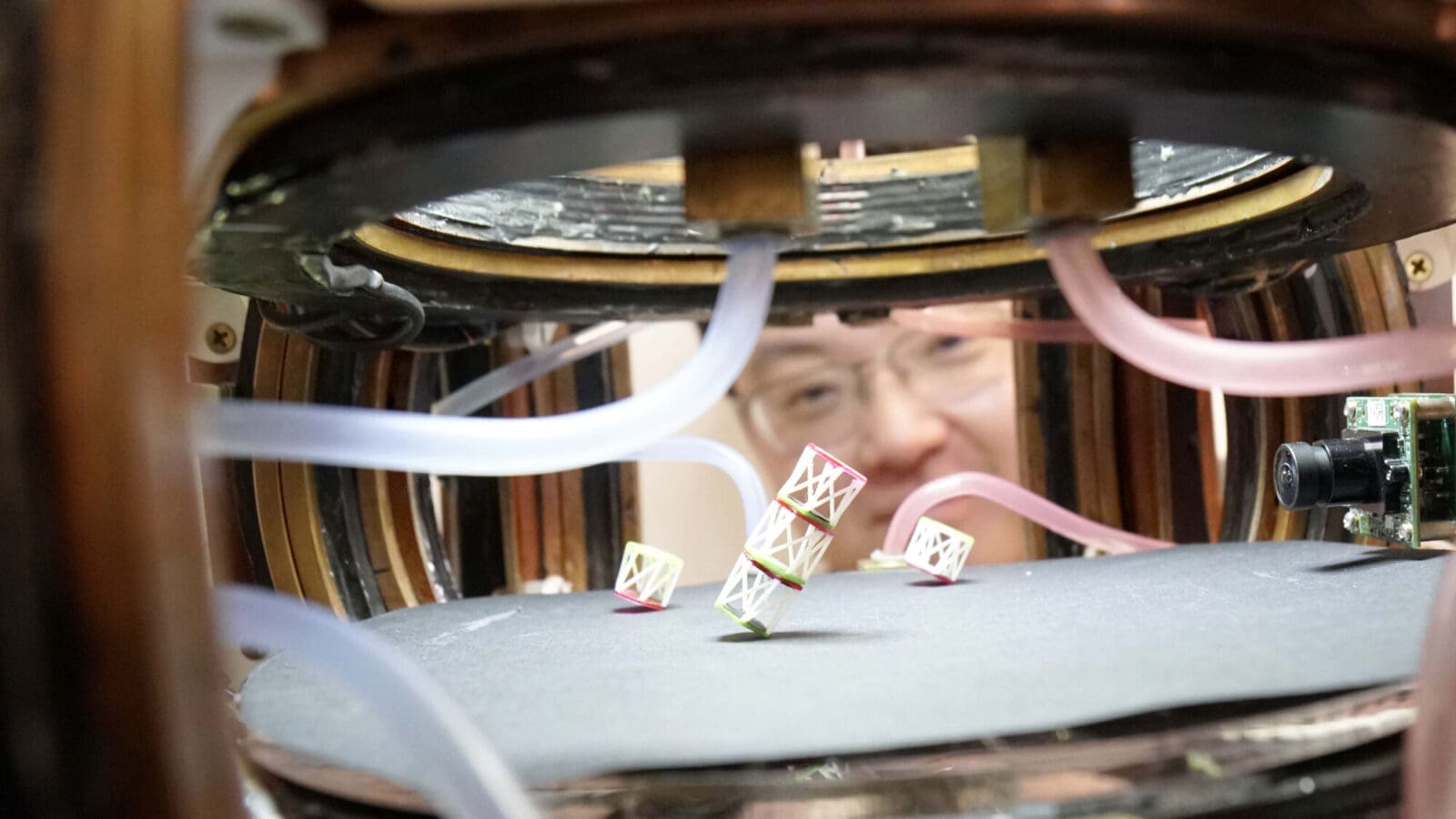
A researcher observes a metabot inside a magnetic chamber

In an experiment reminiscent of the Transformers movie franchise, engineers at Princeton University have created a type of material that can expand, assume new shapes, move and follow electromagnetic commands like a remotely controlled robot even though it lacks any motor or internal gears.

“You can transform between a material and a robot, and it is controllable with an external magnetic field,” said researcher Glaucio Paulino, the Margareta Engman Augustine Professor of Engineering at Princeton.

In an article published April 23 in the journal Nature, the researchers describe how they drew inspiration from the folding art of origami to create a structure that blurs the lines between robotics and materials...

Read More

First Metamaterial developed to Enable Real-time Shape and Property Control

World’s First Metamaterial Developed to Enable Real-Time Shape and Property Control
A research team, led by Professor Jiyun Kim in the Department of Materials Science and Engineering at UNIST has unveiled the world’s first matematerial that can dynamically tune its shape and mechanical properties in real time. l Design: Boeun Lee

Engineers have unveiled an encodable multifunctional material that can dynamically tune its shape and mechanical properties in real time. Inspired by the remarkable adaptability observed in biological organisms like the octopus, a breakthrough has been achieved in soft machines. A research team, led by Professor Jiyun Kim in the Department of Materials Science and Engineering at UNIST has successfully developed an encodable multifunctional material that can dynamically tune its shape and mechanical properties in real-time...

Read More

Sound-Powered Sensors stand to Save Millions of Batteries

Sound-powered sensors stand to save millions of batteries
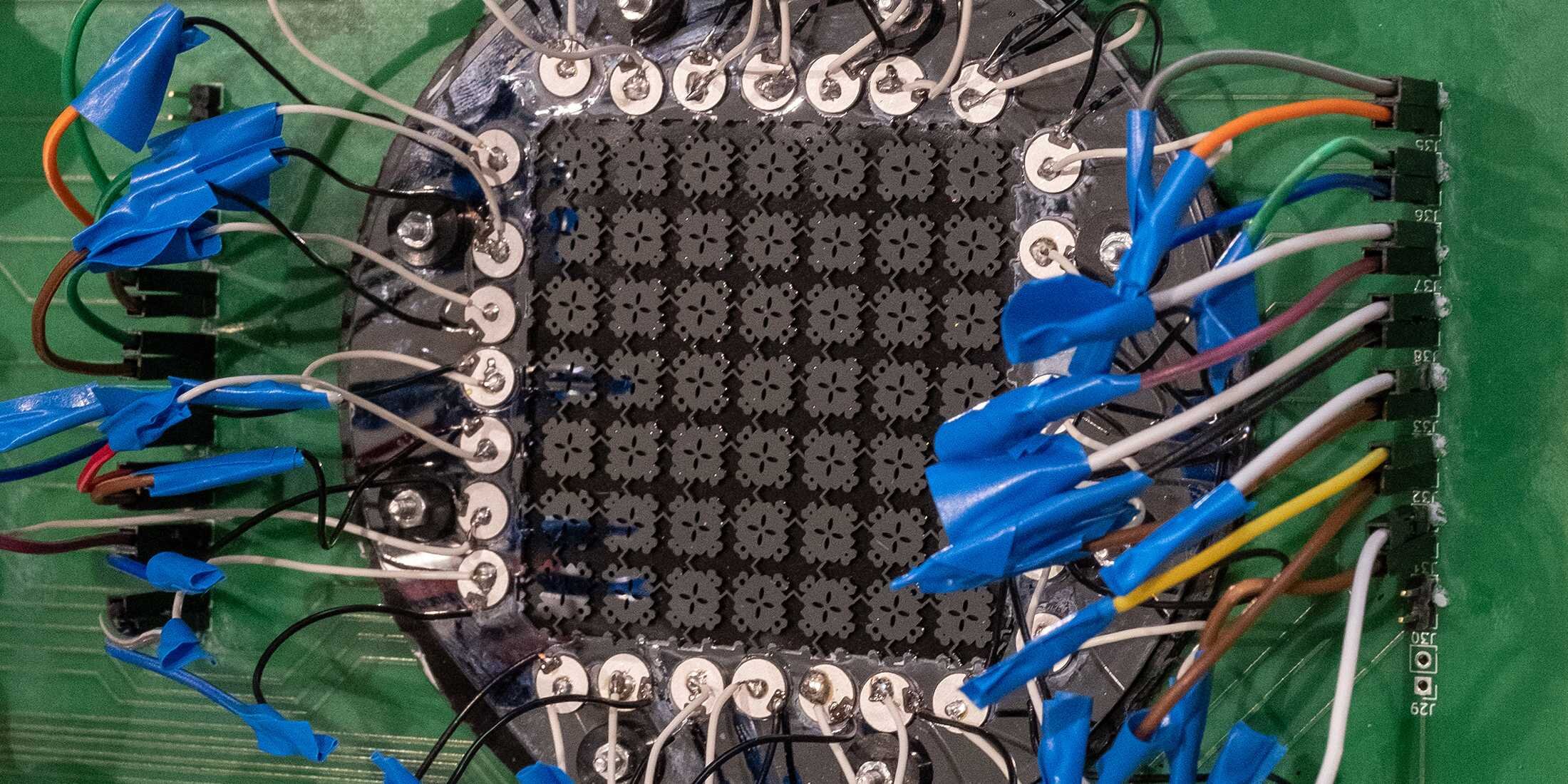
The prototype of the sound sensor is relatively large. Credit: Astrid Robertsson / ETH Zurich)

Sensors that monitor infrastructure, such as bridges or buildings, or are used in medical devices, such as prostheses for the deaf, require a constant supply of power. The energy for this usually comes from batteries, which are replaced as soon as they are empty. This creates a huge waste problem. An EU study forecasts that in 2025, 78 million batteries will end up in the rubbish every day.

A new type of mechanical sensor, developed by researchers led by Marc Serra-Garcia and ETH geophysics professor Johan Robertsson, could now provide a remedy...

Read More