microelectronics tagged posts

Aerosol jet printing creates durable, low-power transistors for next-generation tech

Printing electronic parts for next-generation technologies
Aerosol jet printer at Argonne used to deposit custom nanoparticle inks and build printed electronic parts for low-power transistor devices. Credit: Argonne National Laboratory

Tiny electronic devices, called microelectronics, may one day be printed as easily as words on a page, thanks to new research from scientists at the U.S. Department of Energy’s (DOE) Argonne National Laboratory. Building on years of progress in printed electronics, the team has shown how to create durable, low-power electronic switches, called transistors, by combining custom inks and a specialized printing process.

These switches, which control the flow of electrical current to turn circuits on and off, use very little power, are built to last and show new behaviors not seen in earlier printed devices...

Read More

At the edge of Graphene-based Electronics

A tiny graphene device on a silicon carbide substrate chip. The device rests on a person's fingertip. Credit: Jess Hunt-Ralston, Georgia Tech 

Researchers developed a new graphene-based nanoelectronics platform compatible with conventional microelectronics manufacturing, paving the way for a successor to silicon.Claire Berger, physics professor at Georgia Tech, holds the team’s graphene device grown on a silicon carbide substrate chip. Credit: Jess Hunt-Ralston, Georgia Tech 

A pressing quest in the field of nanoelectronics is the search for a material that could replace silicon. Graphene has seemed promising for decades. But its potential faltered along the way, due to damaging processing methods and the lack of a new electronics paradigm to embrace it. With silicon nearly maxed out in its ability to accommodate faster computing, the next big nanoelectronics platform is needed now more than ever.

Walter de Heer, Regen...

Read More

Simple Technique Ushers in Long-Sought Class of Semiconductors

20220901_2_fig_1.png

Breakthroughs in modern microelectronics depend on understanding and manipulating the movement of electrons in metal. Reducing the thickness of metal sheets to the order of nanometers can enable exquisite control over how the metal’s electrons move. In so doing, one can impart properties that aren’t seen in bulk metals, such as ultrafast conduction of electricity. Now, researchers from Osaka University and collaborating partners have synthesized a novel class of nanostructured superlattices. This study enables an unusually high degree of control over the movement of electrons within metal semiconductors, which promises to enhance the functionality of everyday technologies.

Precisely tuning the architecture of metal nanosheets, and thus facilitating advanced microelectronics functio...

Read More

Quantum Physics sets a Speed Limit to Electronics

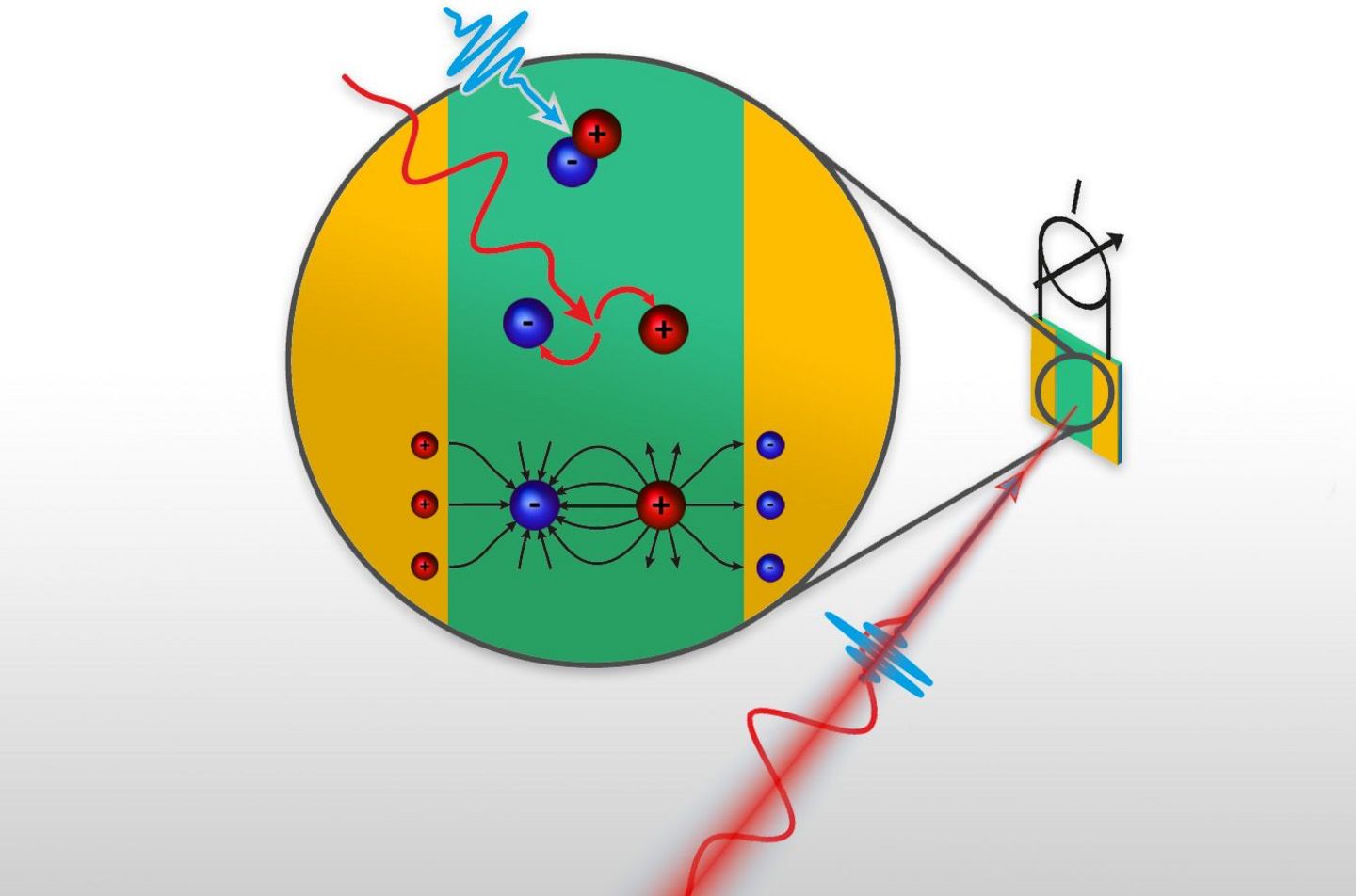
An ultra short laser pulse (blue) creates free charge carriers, another pulse (red) accelerates them in opposite directions.

Semiconductor electronics is getting faster and faster — but at some point, physics no longer permits any increase. The speed can definitely not be increased beyond one petahertz (one million gigahertz), even if the material is excited in an optimal way with laser pulses.

How fast can electronics be? When computer chips work with ever shorter signals and time intervals, at some point they come up against physical limits. The quantum-mechanical processes that enable the generation of electric current in a semiconductor material take a certain amount of time. This puts a limit to the speed of signal generation and signal transmission.

TU Wien (Vienna), TU Gra...

Read More