Milky Way tagged posts

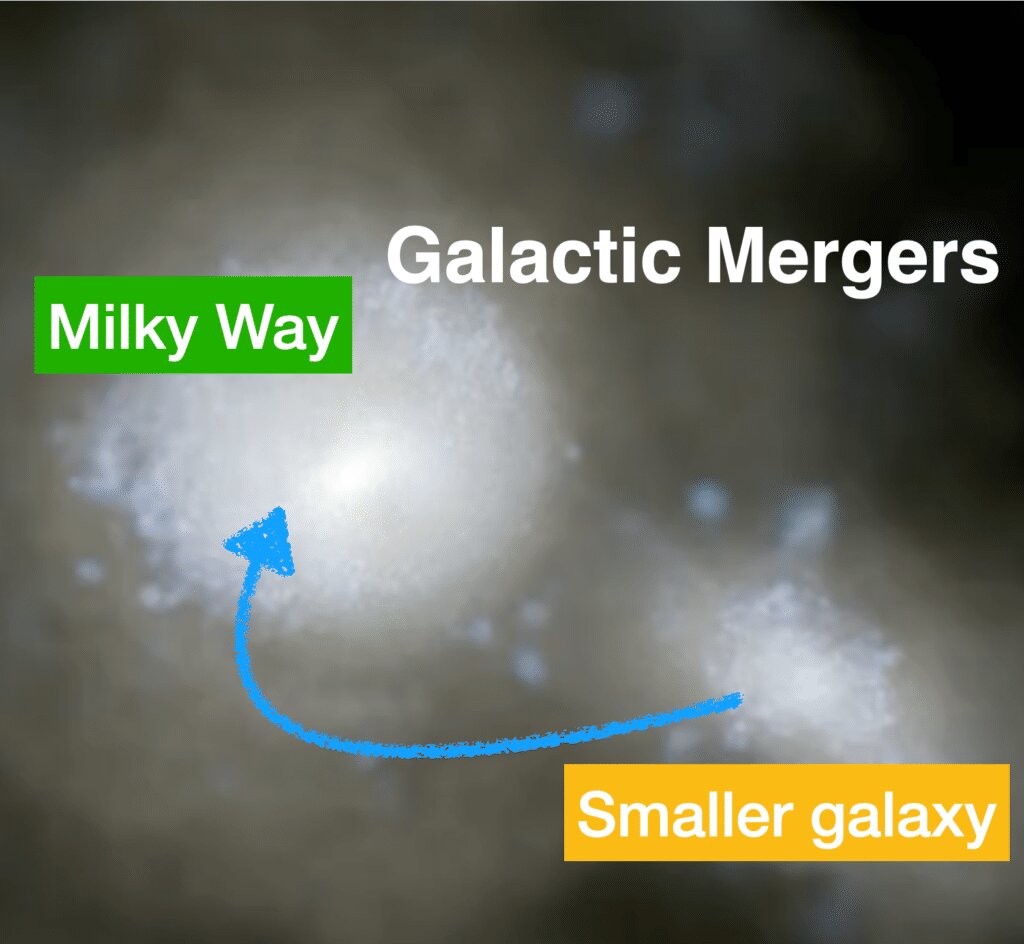
The Origin of the First Structures formed in Galaxies like the Milky Way identified

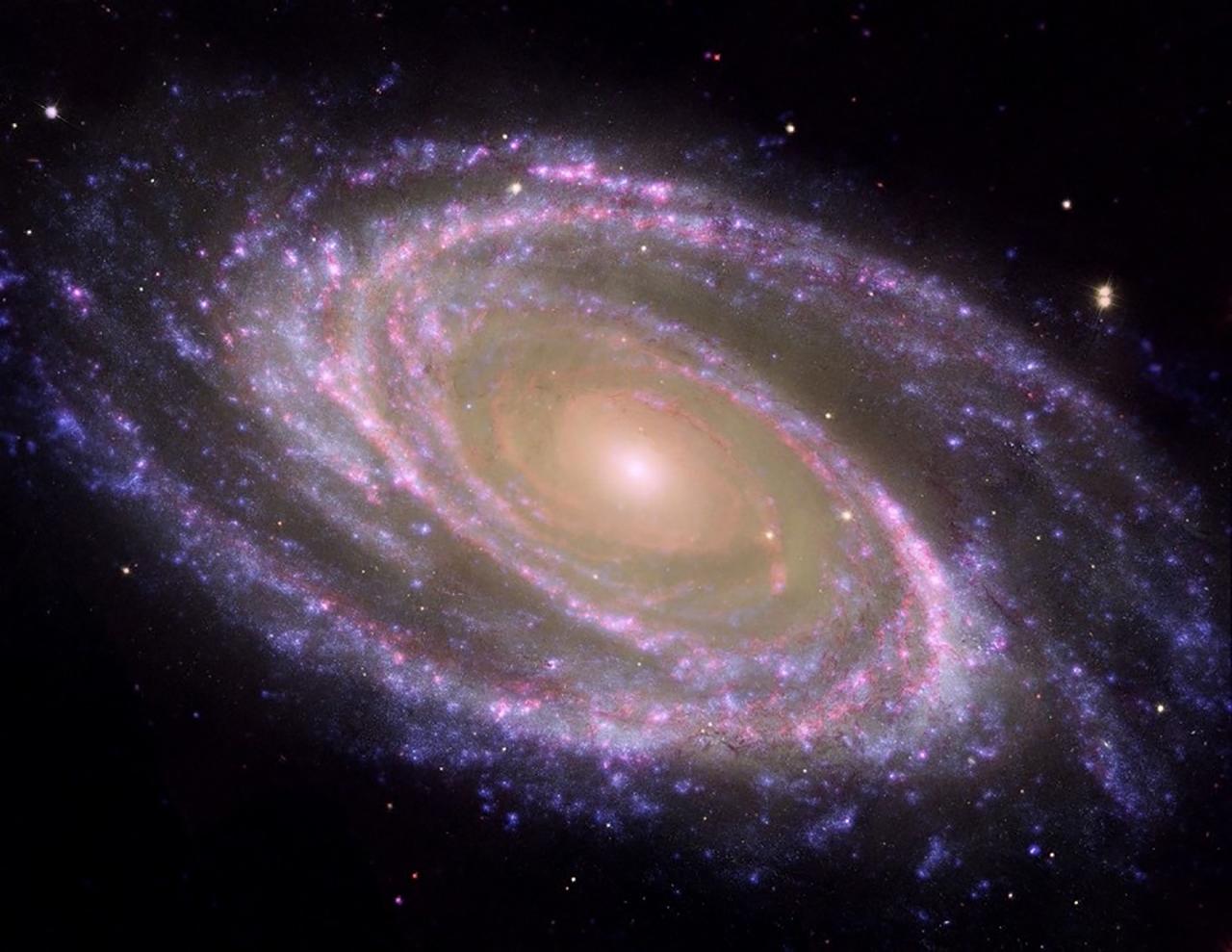
An example of a nearby spiral galaxy, M81, where the bulge is easily identified as the central redder part, and the disc, dotted with zones where stars are currently forming and appear as blue regions forming spiral arms. Credit: NASA/JPL-Caltech/ESA/Harvard-Smithsonian CfA.
An example of a nearby spiral galaxy, M81, where the bulge and the disc are easily identified. Credit: NASA/JPL-Caltech/ESA/Harvard-Smithsonian CfA.

An international team of scientists led from the Centre for Astrobiology (CAB, CSIC-INTA), with participation from the Instituto de Astrofísica de Canarias (IAC), has used the Gran Telescopio Canarias (GTC) to study a representative sample of galaxies, both disc and spheroidal, in a deep sky zone in the constellation of the Great Bear to characterize the properties of the stellar populations of galactic bulges. The researchers have been able to determine the mode of formation and development of these galactic structures. The results of this study were recently published in The Astrophysical Journal.

The researchers focused their study ...

Read More

What if the Black Hole at the Center of the Milky Way is actually a mass of Dark Matter?

Milky Way
Credit: CC0 Public Domain

A team of researchers at the International Center for Relativistic Astrophysics has found evidence that suggests Sagittarius A* is not a massive black hole but is instead a mass of dark matter. In their paper published in the journal Monthly Notices of the Royal Astronomical Society: Letters, the group describes the evidence they found and how it has stood up to testing.

For several years the scientific community has agreed that there is a mass at the center of the Milky Way galaxy and that the mass is a supermassive black hole—it has been named Sagittarius A*. Its presence has never been verified directly, however, instead it has been inferred by noting the behavior of bodies around it...

Read More

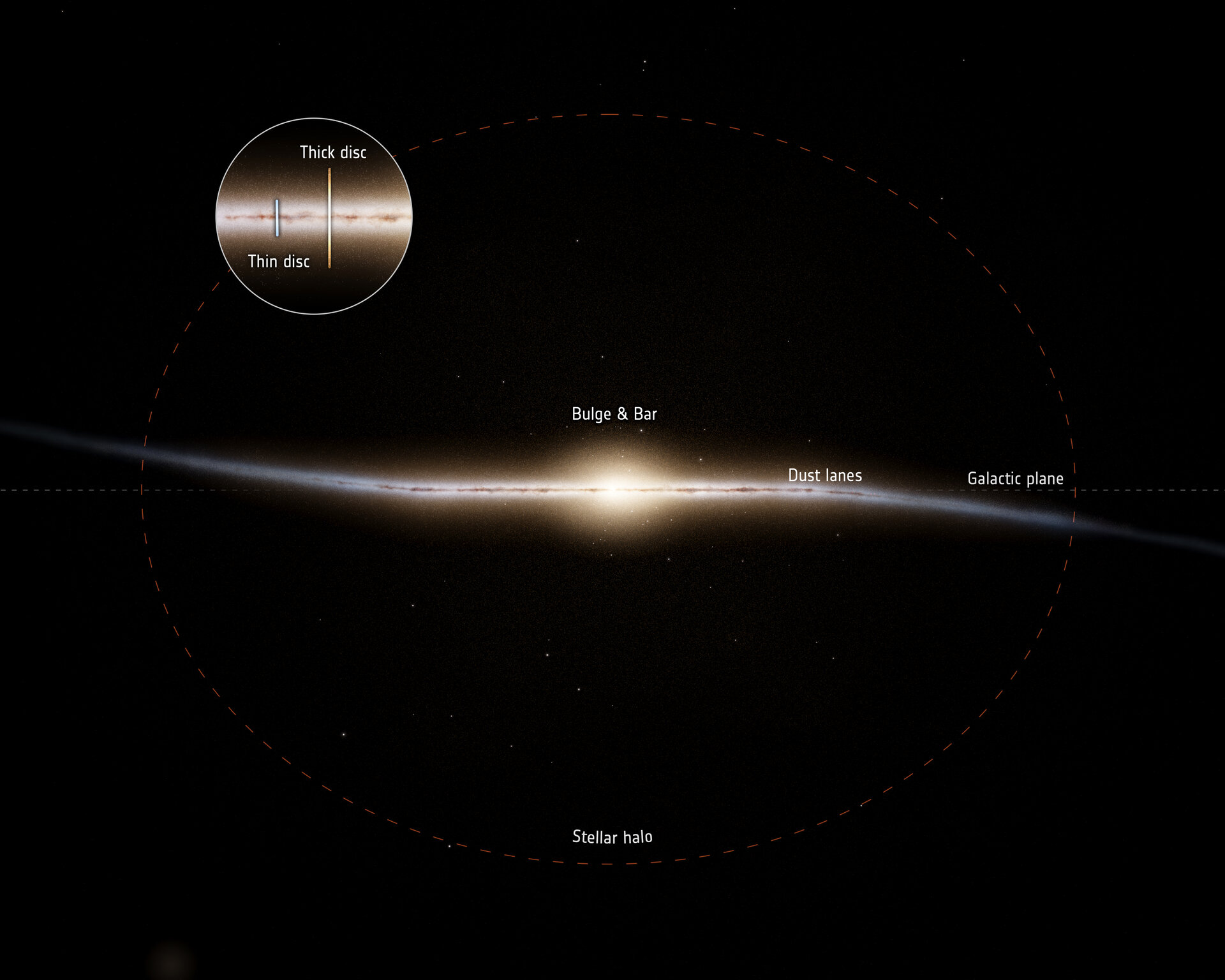
Detailed cross-section of another galaxy reveals surprising similarities to our home. The first detailed cross-section of a galaxy broadly similar to the Milky Way, published today, reveals that our galaxy evolved gradually, instead of being the result of a violent mash-up. The finding throws the origin story of our home into doubt.

The galaxy, dubbed UGC 10738, turns out to have distinct ‘thick’ and ‘thin’ discs similar to those of the Milky Way. This suggests, contrary to previous theories, that such structures are not the result of a rare long-ago collision with a smaller galaxy. They appear to be the product of more peaceful change.

And that is a game-changer. It means that our spiral galaxy home isn’t the product of a freak accident. Instead, it is typical.

The finding w...

Read More

Rare Blast’s remains discovered in Milky Way’s Center

Astronomers may have found our galaxy’s first example of an unusual kind of stellar explosion. This discovery, made with NASA’s Chandra X-ray Observatory, adds to the understanding of how some stars shatter and seed the universe with elements critical for life on Earth.

This intriguing object, located near the center of the Milky Way, is a supernova remnant called SagittariusA East, or Sgr A East for short. Based on Chandra data, astronomers previously classified the object as the remains of a massive star that exploded as a supernova, one of many kinds of exploded stars that scientists have catalogued.

Using longer Chandra observations, a team of astronomers has now instead concluded that the object is left over from a different type of supernova...

Read More