
Nanocellulose tagged posts

Fully Recyclable Printed Electronics developed

Recyclable printed electronics
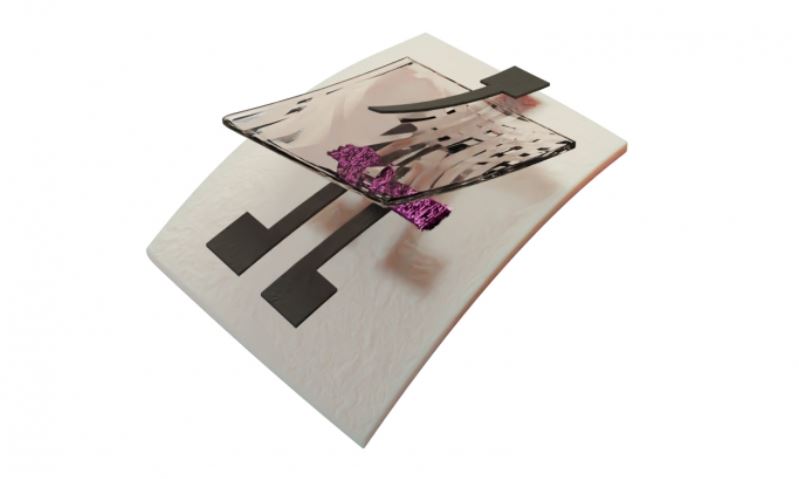
A 3D rendering of the first fully recyclable, printed transistor

New technique reclaims nearly 100% of all-carbon-based transistors while retaining future functionality of the materials. Engineers at Duke University have developed the world’s first fully recyclable printed electronics. By demonstrating a crucial and relatively complex computer component — the transistor — created with three carbon-based inks, the researchers hope to inspire a new generation of recyclable electronics to help fight the growing global epidemic of electronic waste.

The work appears online recently in the journal Nature Electronics.

“Silicon-based computer components are probably never going away, and we don’t expect easily recyclable electronics like ours to replace the technology and devices that ar...

Read More

Storing Electricity in Paper: Organic mixed ion-electron Conductor for power Electronics

This piece of power paper can store 1F. Credit: Photo Thor Balkhed

This piece of power paper can store 1F. Credit: Photo Thor Balkhed

Power paper is a new material with outstanding ability to store energy. It consists of nanocellulose and a conductive polymer. 1 sheet, 15 cm in diameter and a few tenths of a mm thick can store as much as 1F, which is similar to the supercapacitors currently on the market. The material can be recharged hundreds of times and each charge only takes a few seconds.

It’s a dream product in a world where the increased use of renewable energy requires new methods for energy storage — from summer to winter, from a windy day to a calm one, from a sunny day to one with heavy cloud cover. “Thin films that function as capacitors have existed for some time. What we have done is to produce the material in 3D...

Read More

Nanocellulose Materials by Design

This is an illustration of a single cellulose nanocrystal and a cross-section. Credit: Robert Sinko

This is an illustration of a single cellulose nanocrystal and a cross-section. Credit: Robert Sinko

Theoretically, nanocellulose could be the next hot supermaterial. A new computational approach allows researchers to design cellulose nanocomposites with optimal properties. A class of biomaterials in many natural systems like trees, cellulose nanocrystals have captured researchers’ attention for their extreme strength, toughness, light weight, and elasticity. The materials are so strong and tough, in fact, that many people think they could replace Kevlar in ballistic vests and combat helmets for military. Unlike their source material (wood), cellulose nanocrystals are transparent, making them exciting candidates for protective eyewear, windows, or displays.

Although there is a lot of excite...

Read More