
NASA Curiosity rover tagged posts

NASA Curiosity rover finds mysterious life linked molecules on Mars

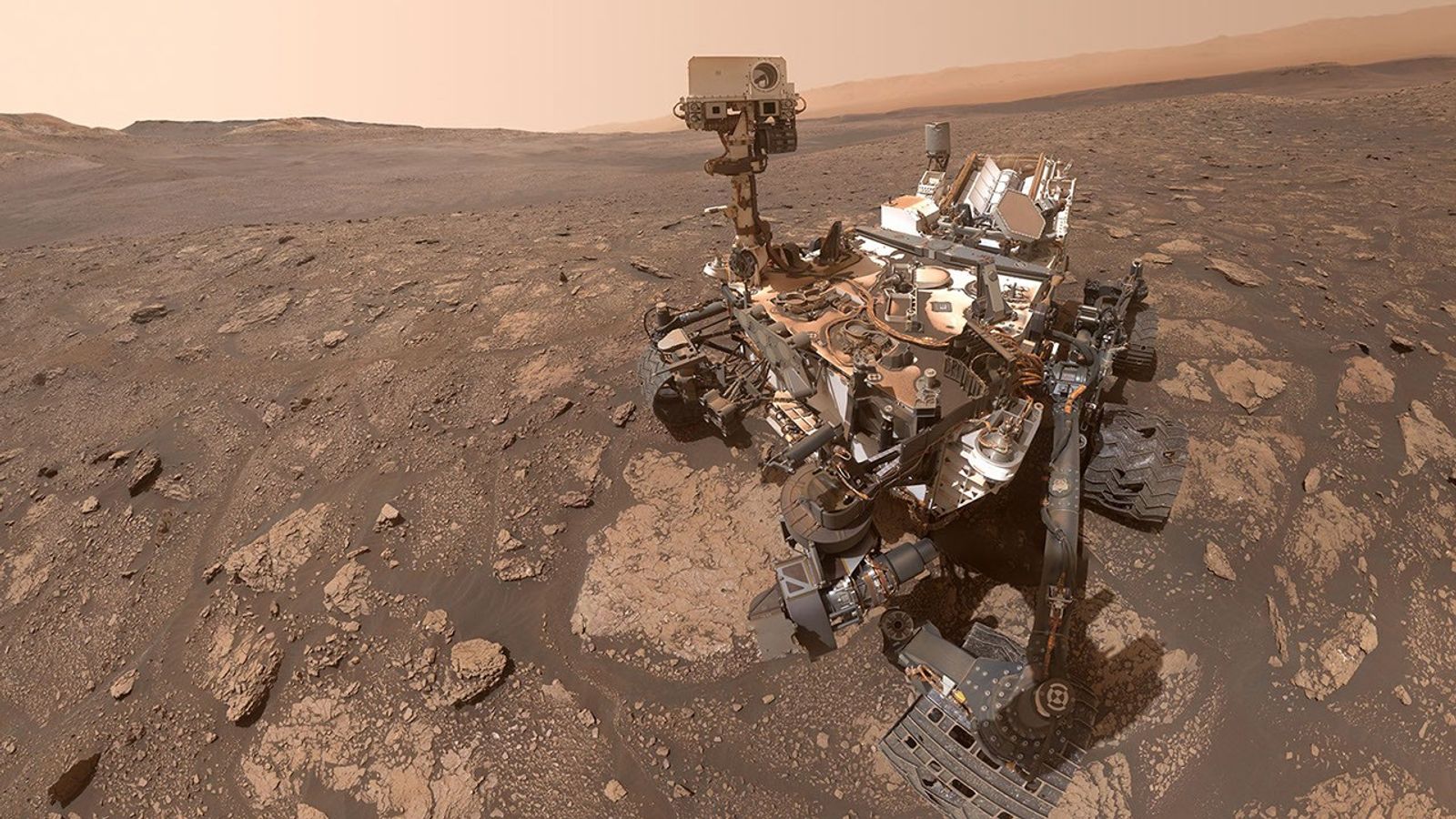
The six-wheeled Curiosity rover is positioned in the right side of the frame on a rugged, rock-strewn, brownish-red Martian plain. The rover’s articulated robotic arm and camera mast are raised. Distant hills and a hazy, dusty orange-brown sky are in the background.
NASA’s Curiosity Mars rover took this selfie on Oct. 25, 2020, after drilling a rock sample from a spot nicknamed “Mary Anning.” After years of extensive analysis, the sample has revealed the greatest diversity of organic molecules ever found on Mars.
NASA/JPL-Caltech/MSSS

NASA’s Curiosity rover has identified a wide range of organic molecules on Mars, including compounds that scientists consider key ingredients for the origin of life on Earth.

The discovery comes from a chemical experiment carried out on another planet for the first time. Results show that the Martian surface is capable of preserving molecules that could act as potential signs of ancient life...

Read More

NASA’s Curiosity show Silica-rich Mars rocks—might preserve ancient Organics


Approaching its 3rd anniversary of Mars landing, the rover has found a target unlike anything it has studied before – bedrock with surprisingly high levels of silica. Silica is a rock-forming compound containing silicon and oxygen, commonly found on Earth as quartz. This area lies just downhill from a geological contact zone the rover has been studying near “Marias Pass” on lower Mount Sharp.

>>Curiosity team decided to back up the rover 151 feet from the geological contact zone to investigate the high-silica target dubbed “Elk.” The decision was made after they analyzed data from 2 instruments, the laser-firing Chemistry & Camera (ChemCam) and Dynamic Albedo of Neutrons (DAN), which show elevated amounts of silicon and hydrogen, respectively...

Read More