neural networks tagged posts

Robot ‘Chef’ Learns to Recreate Recipes from Watching Food Videos

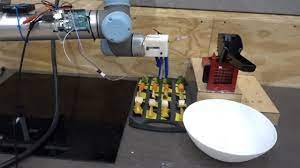
Researchers have trained a robotic ‘chef’ to watch and learn from cooking videos, and recreate the dish itself.

The researchers, from the University of Cambridge, programmed their robotic chef with a ‘cookbook’ of eight simple salad recipes. After watching a video of a human demonstrating one of the recipes, the robot was able to identify which recipe was being prepared and make it.

In addition, the videos helped the robot incrementally add to its cookbook. At the end of the experiment, the robot came up with a ninth recipe on its own. Their results, reported in the journal IEEE Access, demonstrate how video content can be a valuable and rich source of data for automated food production, and could enable easier and cheaper deployment of robot chefs.

Robotic chefs have been fe...

Read More
Team creates Nano-Magnets that could Restore Damaged Nerve Cells

The nano-magnets that will restore damaged nerve cells
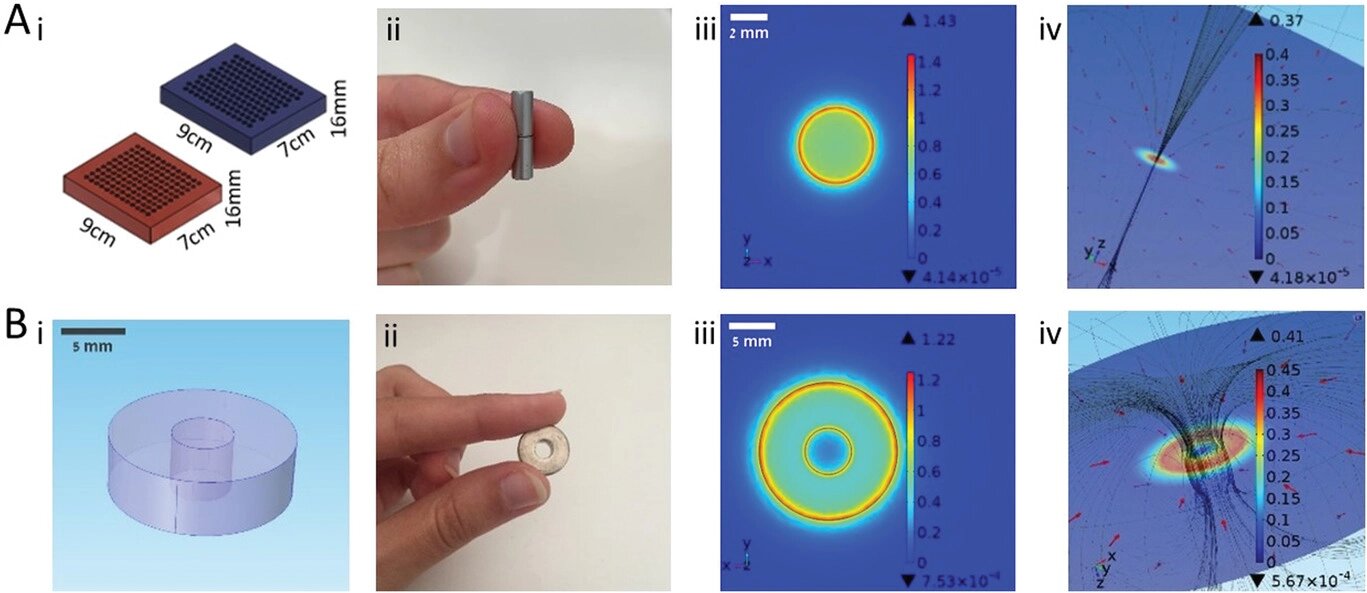
Modular magnetic devices for applying local magnetic fields. Applying magnetic fields using A) 4 mm diameter pinhole parallelly-aligned and beehive-like magnetic devices. B) 1.5 cm diameter ring magnet. i) Illustrations of magnetic devices. In blue: pores are arranged in a beehive-like pattern, in red: pores are arranged in parallel lines. ii) Life-size images of magnetic rod/ring. iii) Simulations of magnetic flux density in COMSOL software. The images present a top view of magnetic flux density generated by a magnetic rod/ring in tesla (T). Intensity is color-coded (low intensity in dark blue, high intensity in red). iv) COMSOL simulations of magnetic field, magnetic flux density, and magnetic force 1 mm above the magnetic rod/ring. The magnetic field is indicated as solid lines...
Read More

‘Nanomagnetic’ Computing can provide Low-energy AI

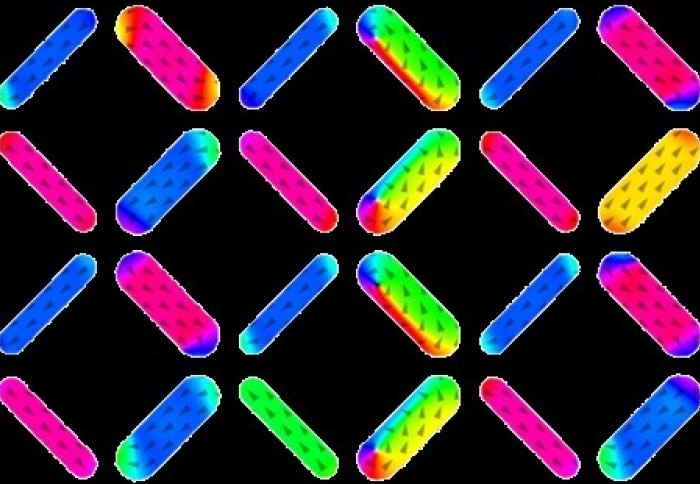
Researchers have shown it is possible to perform artificial intelligence using tiny nanomagnets that interact like neurons in the brain. The new method, developed by a team led by Imperial College London researchers, could slash the energy cost of artificial intelligence (AI), which is currently doubling globally every 3.5 months.

In a paper published today in Nature Nanotechnology, the international team have produced the first proof that networks of nanomagnets can be used to perform AI-like processing. The researchers showed nanomagnets can be used for ‘time-series prediction’ tasks, such as predicting and regulating insulin levels in diabetic patients.

Artificial intelligence that uses ‘neural networks’ aims to replicate the way parts of the brain work, where neurons talk to...

Read More

World’s Fastest Optical Neuromorphic Processor

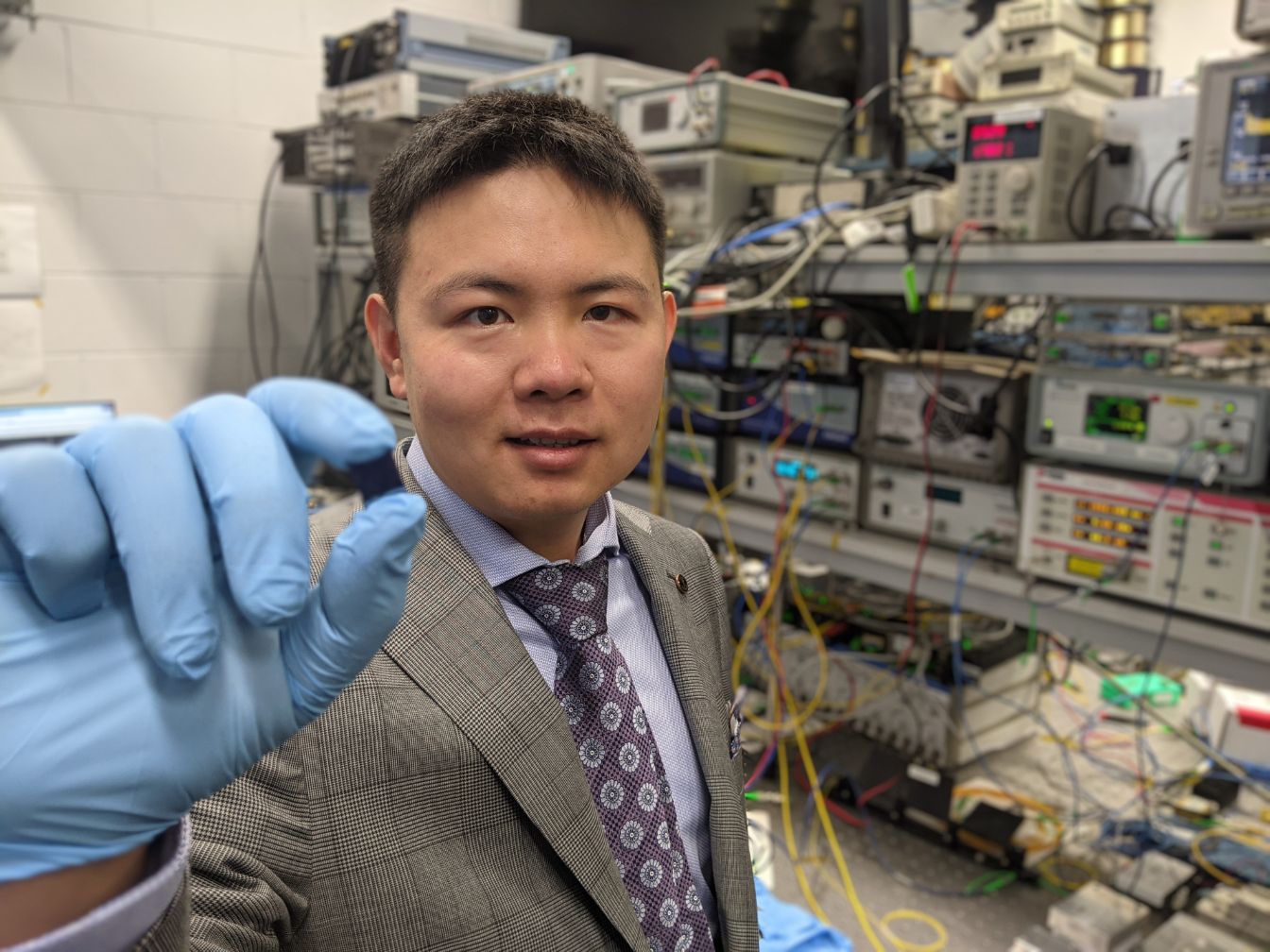
Dr Xingyuan (Mike) Xu with the integrated optical microcomb chip, which forms the core part of the optical neuromorphic processor.

An international team of researchers led by Swinburne University of Technology has demonstrated the world’s fastest and most powerful optical neuromorphic processor for artificial intelligence (AI), which operates faster than 10 trillion operations per second (TeraOPs/s) and is capable of processing ultra-large scale data.

Published in the journal Nature, this breakthrough represents an enormous leap forward for neural networks and neuromorphic processing in general.

Artificial neural networks, a key form of AI, can ‘learn’ and perform complex operations with wide applications to computer vision, natural language processing, facial recognition, speech...

Read More