
neurodegeneration tagged posts

Loss of Neurons, Not Lack of Sleep, makes Alzheimer’s Patients Drowsy

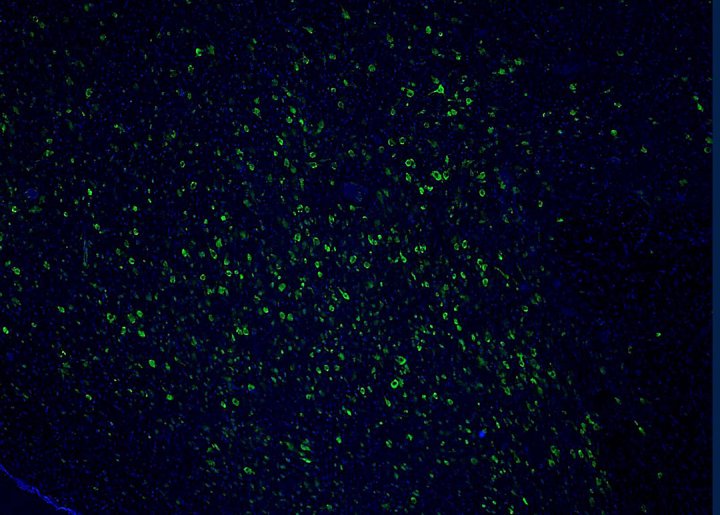
Neurons that promote wakefulness in the brain of an Alzheimer’s patient (green). There are far fewer functioning neurons that would be seen in a healthy brain, indicating that the awake system is weakened in this patient. Image by Grinberg Lab

Reviving ‘awake neurons’ could be the solution to their sleepiness. The lethargy that many Alzheimer’s patients experience is caused not by a lack of sleep, but rather by the degeneration of a type of neuron that keeps us awake, according to a study that also confirms the tau protein is behind that neurodegeneration.

The study’s findings contradict the common notion that Alzheimer’s patients sleep during the day to make up for a bad night of sleep and point toward potential therapies to help these patients feel more awake.

The data came fro...

Read More
Scientists identify Gut-derived Metabolites that play a role in Neurodegeneration

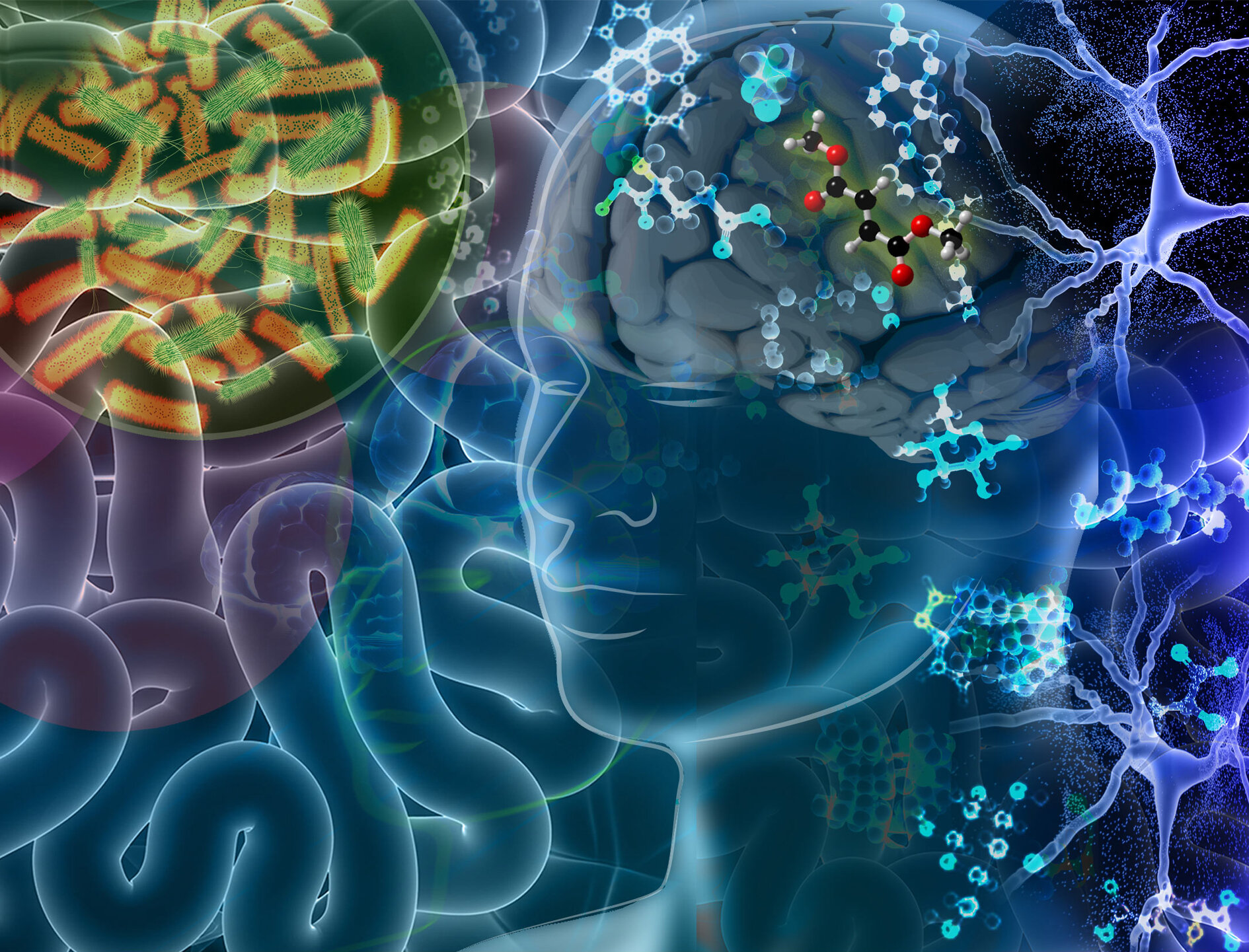
A new study has identified gut-derived metabolites that appear to be neurotoxic and play a role in the progression of multiple sclerosis. Credit: Nicoletta Barolini

A New York-based, multi-institutional research team has found high levels of three toxic metabolites produced by gut bacteria in the cerebrospinal fluid and plasma samples of multiple sclerosis (MS) patients. The important findings, published in the journal Brain, further scientists’ understanding of how gut bacteria can impact the course of neurological diseases by producing compounds that are toxic to nerve cells.

Previously published evidence has supported the concept that an imbalance in the gut microbiota—the community of organisms that live in the human intestines—may underly a range of neurological disorders...

Read More

New Class of Highly Effective Inhibitors protects against Neurodegeneration

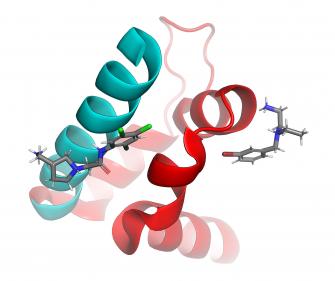
Interaction of interface inhibitors compound 8 and compound 19 within their binding pockets of the protein contact surface.
Interaction of interface inhibitors compound 8 and compound 19 within their binding pockets of the protein contact surface. | © Hilmar Bading

Neurobiologists at Heidelberg University have discovered how a special receptor at neuronal junctions that normally activates a protective genetic programme can lead to nerve cell death when located outside synapses. Their fundamental findings on neurodegenerative processes simultaneously led the researchers at the Interdisciplinary Center for Neurosciences (IZN) to a completely new principle for therapeutic agents. In their experiments on mouse models, they discovered a new class of highly effective inhibitors for protecting nerve cells. As Prof...

Read More

Tau Prevents Synaptic Transmission at Early stage of Neurodegeneration

Interfering with Tau N-terminal-dependent vesicle-binding reverts Tau-induced presynaptic deficits in fly neurons.

Interfering with Tau N-terminal-dependent vesicle-binding reverts Tau-induced presynaptic deficits in fly neurons. Drosophila larvae used in (a–c) express UAS-TauΔN (R406W, V337M or P301L) under the D42-Gal4 motor neuron driver. (a) FRAP measurements of vesicle mobility within synaptic boutons. Fluoresence recovery (% of initial fluorescence) was plotted over time and fit with double-exponential curves. n=22 (R406W), 20 (ΔN_R406W, ΔN_V337M), 24 (ΔN_P301L) or 25 (Control) boutons (3–5 boutons per animal). (b) Synapto-pHluorin responses to stimulation at 10 Hz with the presence of bafilomycin. Fluorescence change ΔF at ratio to maximal ΔF (NH4Cl dequenching) was plotted over time during the stimulation. Two-way ANOVA, n=7 (R406W, ΔN_R406W, ΔN_V337M, ΔN_P301L),9 (Control) NMJs (animals)...

Read More