
neurodegenerative diseases tagged posts

Boosting good gut bacteria population through targeted interventions may slow cognitive decline

Boosting good gut bacteria population through targeted interventions may slow cognitive decline
Microbiota-targeted interventions are associated with improvements in memory, executive function, and global cognition. Credit: Darryl Leja, National Human Genome Research Institute, National Institutes of Health

The origin of neurodegenerative diseases like Alzheimer’s or dementia isn’t limited to the brain. The state of your gut can quietly set off a cycle of chronic, system-wide inflammation that nudges the brain toward cognitive decline. But how does the pathogenesis of a disease that seems purely brain-based begin in the gut—an organ that is mostly busy producing chemicals for digesting food?

It turns out these two entities are linked by the gut-brain axis, a two-way communication superhighway that constantly sends signals between the digestive tract and the central nervous s...

Read More
An at-home smell test could pave the way for early detection of Alzheimer’s disease

An at-home smell test could pave the way for early detection of Alzheimer's disease
AROMHA Brain Health Test. Following online prescreening and online consent, the web-based program instructs you through the 5 bilingual (English / Spanish) cards (A). Card A comprises a practice odor P followed by the 9 odor labels comprising the OPID9 test. Adjacent in the blue box (B) is the workflow for these tests as directed by the testyourbrainhealth.com software to generate the OPID9, OPID9noguess, and average intensity scores. After a 10-minute break, participants are instructed to work through Cards B and C using the workflow in the green box (B) to generate the POEM, OPID18, and OPID18noguess scores. Then participants are instructed to move on to Cards D and E using the workflow in the purple box (B) to generate an OD10 odor discrimination score. Credit: Scientific Reports (202...
Read More

Scientists Identify how Dietary Restriction Slows Brain Aging and Increases Lifespan

Scientists identify how dietary restriction slows brain aging and increases lifespan
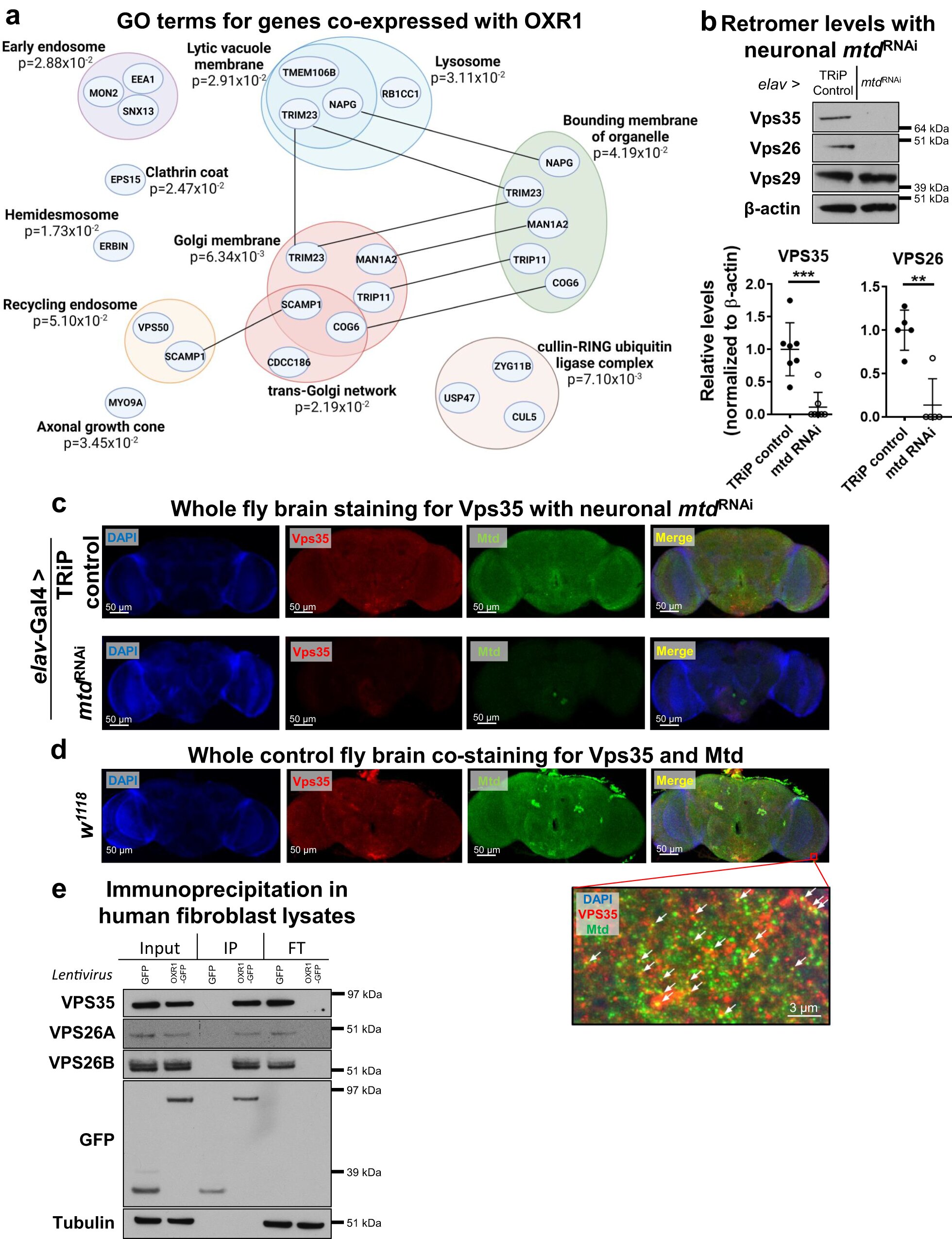
mtd interacts with the retromer complex and is required for retromer maintenance. Credit: Nature Communications (2024). DOI: 10.1038/s41467-023-44343-3

Restricting calories is known to improve health and increase lifespan, but much of how it does so remains a mystery, especially in regard to how it protects the brain. Buck Institute for Research on Aging scientists have uncovered a role for a gene called OXR1 that is necessary for the lifespan extension seen with dietary restriction and is essential for healthy brain aging.

“When people restrict the amount of food that they eat, they typically think it might affect their digestive tract or fat buildup, but not necessarily about how it affects the brain,” said Kenneth Wilson, Ph.D...

Read More

Researcher takes another step toward discovering how a Brain Molecule could Halt MS

Fractalkine appears to trigger repair of brain damage caused by the disease. A University of Alberta researcher is one step closer to demonstrating the potential of a brain molecule called fractalkine to halt and even reverse the effects of multiple sclerosis and other neurodegenerative diseases.

Multiple sclerosis is an autoimmune disease in which the myelin, or fatty lining of nerve cells, is eroded, leading to nerve damage and slower signalling between the brain and the body. MS symptoms range from blurred vision to complete paralysis, and while there are treatments, the causes are not fully understood and nothing exists to reverse the disease process. More than 90,000 Canadians live with MS, according to the MS Society.

In new research published in Stem Cell Reports, Anastas...

Read More