obesity tagged posts

New Target Receptor Discovered in the Fight against Obesity

Multiple sensors and multiple downstream effectors of gut sensory systems, using the L cell as an example

Multiple sensors and multiple downstream effectors of gut sensory systems, using the L cell as an example

A team of scientists from King’s College London and Imperial College London tested a high-fat diet, containing a fermentable carbohydrate, and a control diet on mice and looked at the effect on food intake of those with and without the FFAR2 receptor.

The results showed that mice fed the diet containing fermentable carbohydrate were protected against obesity. This protection was lost however, when the FFAR2 receptor was not present. Indeed, those with the receptor showed an increase of 130% in the satiety inducing gut hormone peptide YY, as well as an increased density of cells containing PYY, leading to an increased feeling of fullness.

Lead author of the study, Gavin Bewick from King...

Read More

Epigenetic Modification Increases Susceptibility to Obesity and predicts Fatty Liver

DNA methylations occur when methyl groups bind to the DNA. These can either activate or inactivate genes. Epigenetic factors modify histone tails by e.g. transferring methyl or acetyl groups on lysine side chains. This can complicate or facilitate the activation of a gene. The direct methylation of the DNA changes the gene expression permanently if it takes place in the control regions of genes (so-called CpG islands), that have been made accessible by the modification of the histones. Credit: Copyright: DIfE

DNA methylations occur when methyl groups bind to the DNA. These can either activate or inactivate genes. Epigenetic factors modify histone tails by e.g. transferring methyl or acetyl groups on lysine side chains. This can complicate or facilitate the activation of a gene. The direct methylation of the DNA changes the gene expression permanently if it takes place in the control regions of genes (so-called CpG islands), that have been made accessible by the modification of the histones. Credit: Copyright: DIfE

Scientists have shown in a mouse model that the epigenetic* modification of the Igfbp2** gene observed in the young animal precedes a fatty liver in the adult animal later in life...

Read More

Converting Cells to Burn Fat, not Store it

Beige fat created from white fat by cold activation

Beige fat created from white fat by cold activation

Discovery could help fight obesity, metabolic disorders. Researchers have uncovered a new molecular pathway for stimulating the body to burn fat – a discovery that could help fight obesity, diabetes and cardiovascular disease. A McGill University team focused on a protein, folliculin and its role in regulating the activity of fat cells. By knocking out the gene that produces folliculin in fat cells in mice, the researchers triggered a series of biomolecular signals that switched the cells from storing fat to burning it.

This process is known as the ‘browning’ of fat cells. Brown fat gets its colour from iron-rich mitochondria, an abundance of which is a sign that a cell is in metabolic overdrive...

Read More

Saturated Fat ‘Short-Circuits’ Immune Cells to Trigger Inflammation

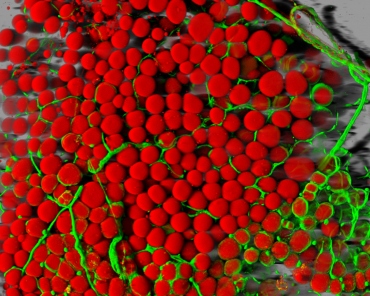
A mouse's fat cells are shown surrounded by a network of blood vessels.

A mouse’s fat cells (red) are shown surrounded by a network of blood vessels (green). Source: Daniela Malide, National Heart, Lung, and Blood Institute, National Institutes of Health

UC SF scientists have found a surprising new avenue for potential therapies to reduce risk of type 2 diabetes and other metabolic disorders associated with chronic tissue inflammation in obesity. Inflammation in obesity may be caused, at least in part, by a completely different mechanism from the one that controls normal immune responses. The research shows saturated fats “short-circuit” both mouse and human immune cells, producing an inappropriate inflammatory response as a consequence...

Read More