
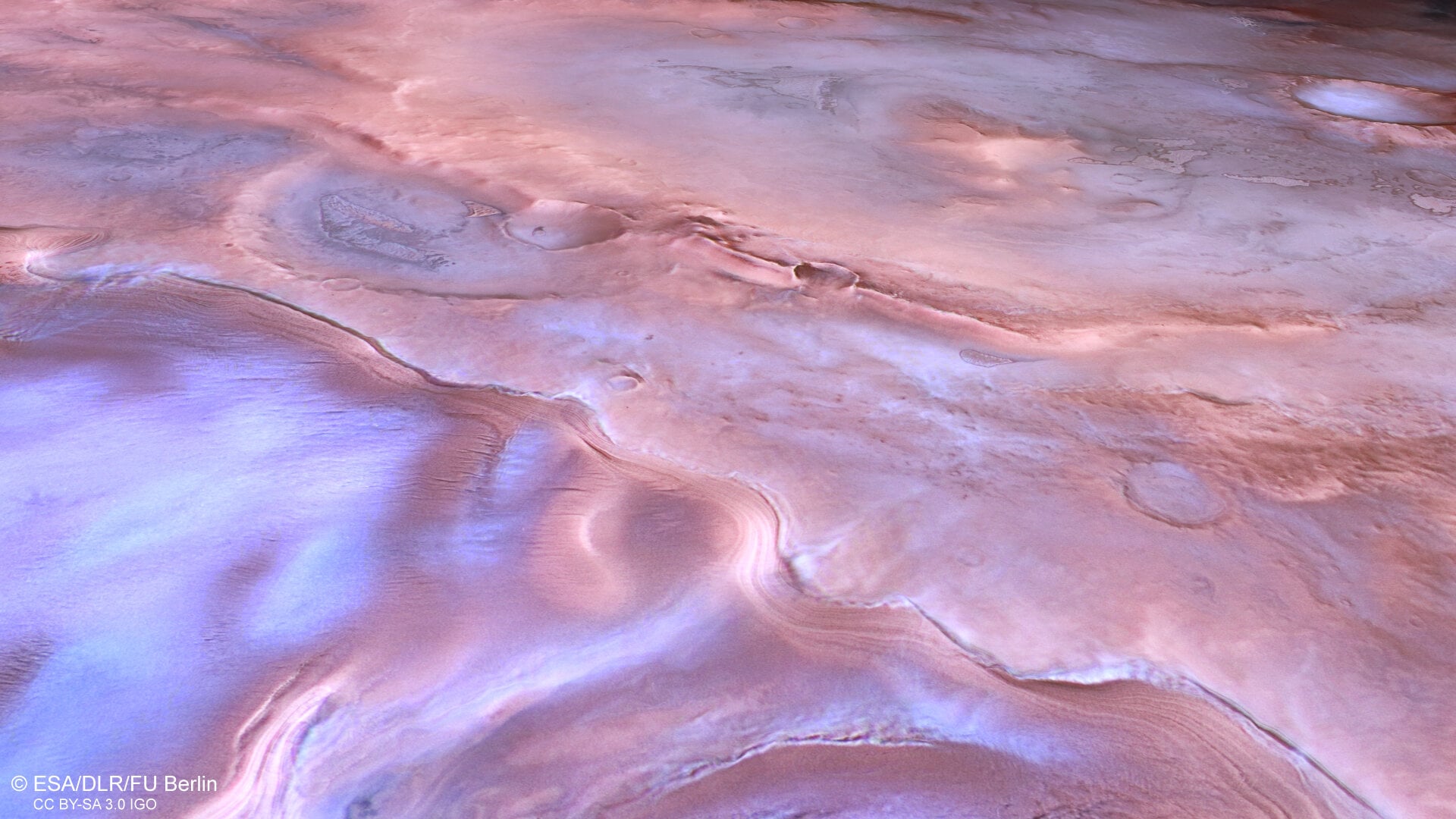
Oxidized iron dominates the Martian color palette. The dusty reds, ochers, browns and tans give the planet its nickname: the Red Planet. But new images of Mars’ south polar region show something different...
Read More

September 23, 2026,
 Astronomy/Space
Oxidized iron dominates the Martian color palette. The dusty reds, ochers, browns and tans give the planet its nickname: the Red Planet. But new images of Mars’ south polar region show something different...
Read More
December 1, 2023,
Astronomy/Space
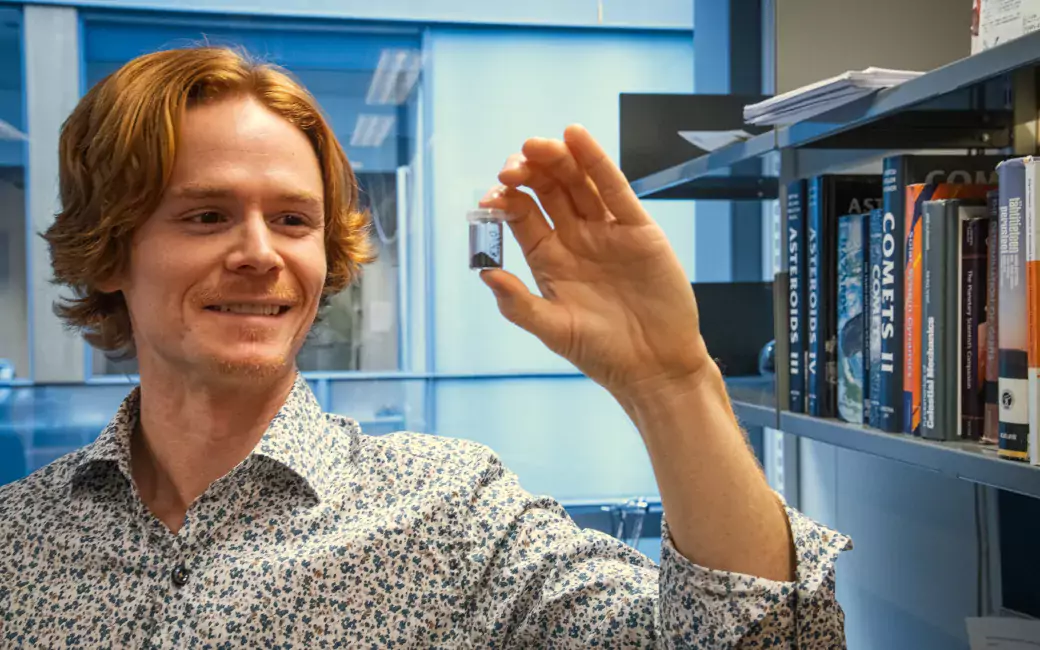
The asteroid that causes the Geminid shooting star swarm has also puzzled researchers with its comet-like tail. The infrared spectrum of rare meteorites helped to determine the composition of the asteroid.
Asteroid Phaethon, which is five kilometers in diameter, has been puzzling researchers for a long time. A comet-like tail is visible for a few days when the asteroid passes closest to the Sun during its orbit.
However, the tails of comets are usually formed by vaporizing ice and carbon dioxide, which cannot explain ...
Read More
November 3, 2020,
Astronomy/Space, Environment/Geology
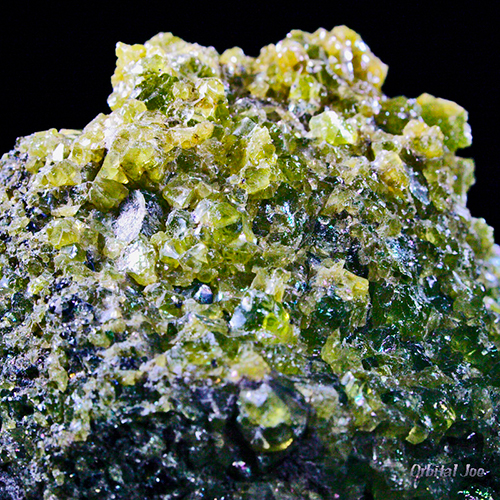
Planetary scientists from Brown University have developed a new remote sensing method for studying olivine, a mineral that could help scientists understand the early evolution of the Moon, Mars and other planetary bodies.
“Olivine is understood to be a major component in the interiors of rocky planets,” said Christopher Kremer, a Ph.D. candidate at Brown University and lead author of a new paper describing the work. “It’s a primary constituent of Earth’s mantle, and it’s been detected on the surfaces of the Moon and Mars in volcanic deposits or in impact craters that bring up material from the subsurface.”
Current remote sensing techniques are good a...
Read More
June 7, 2018,
Astronomy/Space

A panorama of Gale crater on Mars taken from Vera Rubin ridge. Credit: NASA/JPL-Caltech/MSSS
Mineralogist’s big data approach improves resolution of a Curiosity instrument by an order of magnitude. A team of scientists led by Carnegie’s Shaunna Morrison and including Bob Hazen have revealed the mineralogy of Mars at an unprecedented scale, which will help them understand the planet’s geologic history and habitability. Their findings are published in two American Mineralogist papers.
Minerals form from novel combinations of elements. These combinations can be facilitated by geological activity, including volcanoes and water-rock interactions...
Read More
Recent Comments