OSIRIS-REx mission tagged posts

Building blocks of life discovered in Bennu asteroid rewrite origin story

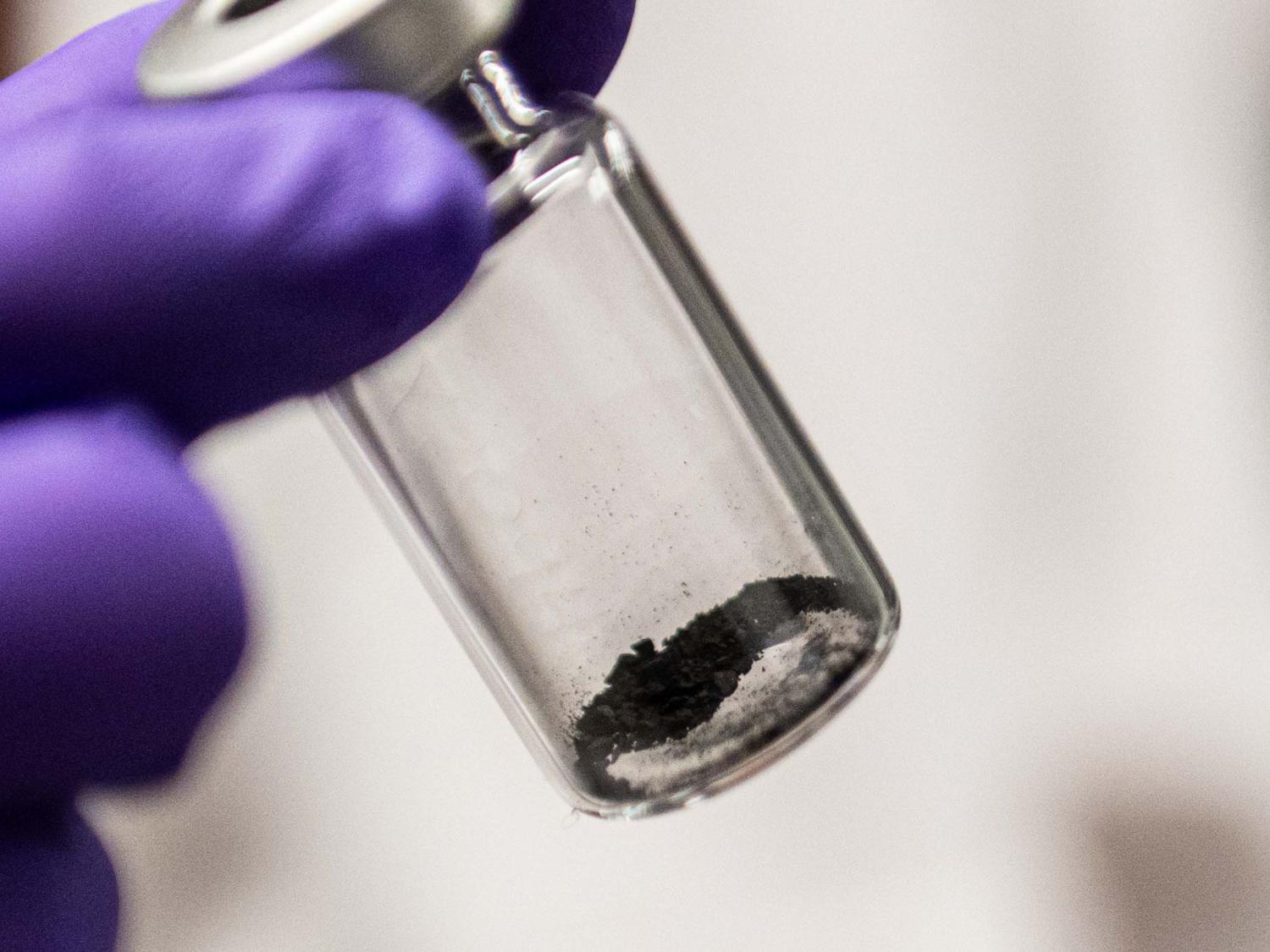
A gloved hand holds a vial with dust
Analyzing a precious bit of space dust no bigger than a teaspoon, the Penn State team used custom instruments capable of measuring isotopes, slight variations in the mass of atoms. Credit: Jaydyn Isiminger / Penn State. Creative Commons

Amino acids, the building blocks necessary for life, were previously found in samples of 4.6-billion-year-old rocks from an asteroid called Bennu, delivered to Earth in 2023 by NASA’s OSIRIS-REx mission. How those amino acids—the molecules that create proteins and peptides in DNA—formed in space was a mystery, but new research led by Penn State scientists shows they could have originated in an icy-cold, radioactive environment at the dawn of Earth’s solar system.

According to the researchers, who published new findings in the Proceedings of th...

Read More

RNA molecule Uracil found in Asteroid Ryugu Samples

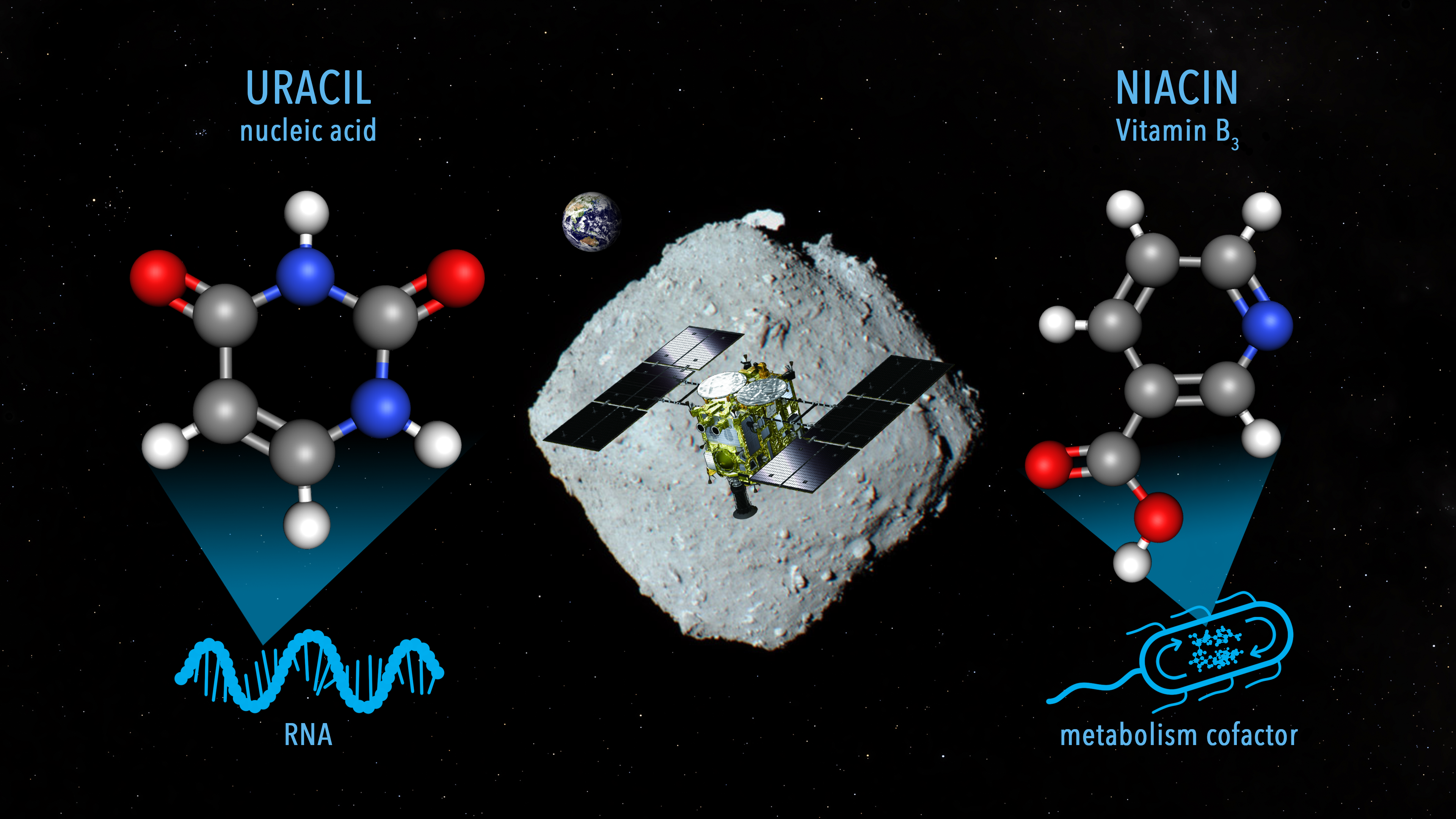
A conceptual image for sampling materials on the asteroid Ryugu containing uracil and niacin by the Hayabusa2 spacecraft (NASA Goddard/JAXA/Dan Gallagher).

Researchers have analyzed samples of the asteroid Ryugu collected by the Japanese Space Agency’s Hayabusa2 spacecraft and found uracil, one of the informational units that make up RNA, the molecules that contain the instructions for how to build and operate living organisms. Nicotinic acid, also known as Vitamin B3 or niacin, which is an important cofactor for metabolism in living organisms, was also detected in the same samples.

This discovery by an international team, led by Associate Professor Yasuhiro Oba at Hokkaido University, adds to the evidence that important building blocks for life are created in space and could have b...

Read More

NASA’s OSIRIS-REx mission explains Asteroid Bennu’s mysterious particle events

This view of asteroid Bennu ejecting particles from its surface on January 6 was created by combining two images taken by the NavCam 1 imager onboard NASA’s OSIRIS-REx spacecraft: a short exposure image (1.4 ms), which shows the asteroid clearly, and a long exposure image (5 sec), which shows the particles clearly. Other image processing techniques were also applied, such as cropping and adjusting the brightness and contrast of each layer.
Credits: NASA/Goddard/University of Arizona/Lockheed Martin

Shortly after NASA’s OSIRIS-REx spacecraft arrived at asteroid Bennu, an unexpected discovery by the mission’s science team revealed that the asteroid could be active, or consistently discharging particles into space...

Read More

OSIRIS-REx Asteroid Search tests instruments, science team

The path of the Main Belt asteroid 12 Victoria, as imaged by NASA's OSIRIS-REx spacecraft on Feb. 11, 2017, during the mission's Earth-Trojan Asteroid Search. This animation is made of a series of five images taken by the spacecraft's MapCam camera that were then cropped and centered on Victoria. The images were taken about 51 minutes apart and each was exposed for 10 seconds. Credit: NASA/Goddard/University of Arizona Read more at: https://phys.org/news/2017-03-osiris-rex-asteroid-instruments-science-team.html#jCp

The path of the Main Belt asteroid 12 Victoria, as imaged by NASA’s OSIRIS-REx spacecraft on Feb. 11, 2017, during the mission’s Earth-Trojan Asteroid Search. This animation is made of a series of five images taken by the spacecraft’s MapCam camera that were then cropped and centered on Victoria. The images were taken about 51 minutes apart and each was exposed for 10 seconds. Credit: NASA/Goddard/University of Arizona

During an almost 2-week search, NASA’s OSIRIS-REx mission team activated the spacecraft’s MapCam imager and scanned part of the surrounding space for elusive Earth-Trojan asteroids—objects that scientists believe may exist in one of the stable regions that co-orbits the sun with Earth...

Read More