
oxygen tagged posts

Oxygen discovered in most distant known galaxy

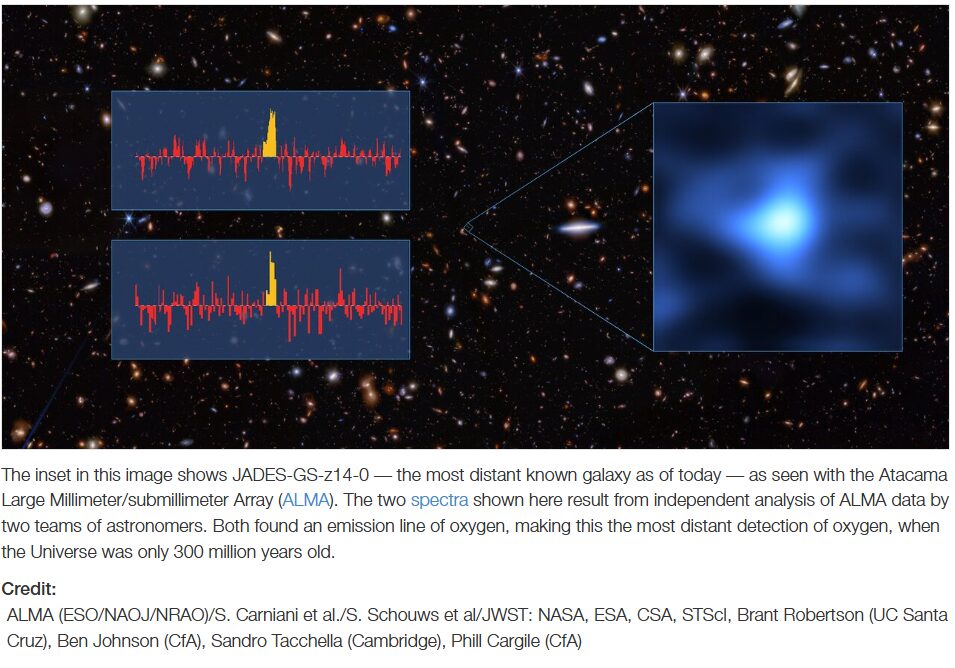
Two different teams of astronomers have detected oxygen in the most distant known galaxy, JADES-GS-z14-0. The discovery, reported in two separate studies, was made possible thanks to the Atacama Large Millimeter/submillimeter Array (ALMA), in which the European Southern Observatory (ESO) is a partner. This record-breaking detection is making astronomers rethink how quickly galaxies formed in the early universe.

Discovered last year, JADES-GS-z14-0 is the most distant confirmed galaxy ever found: it is so far away, its light took 13.4 billion years to reach us, meaning we see it as it was when the universe was less than 300 million years old, about 2% of its present age.

The new oxygen detection with ALMA, a telescope array in Chile’s Atacama Desert, suggests the galaxy is much m...

Read More

Is Oxygen the Cosmic Key to Alien Technology?

Astrophysicists outline the links between atmospheric oxygen and the potential rise of advanced technology on distant planets. In the quest to understand the potential for life beyond Earth, researchers are widening their search to encompass not only biological markers, but also technological ones. While astrobiologists have long recognized the importance of oxygen for life as we know it, oxygen could also be a key to unlocking advanced technology on a planetary scale.

In a new study published in Nature Astronomy, Adam Frank, the Helen F. and Fred H...

Read More

Could Acid-Neutralizing Life-forms make Habitable Pockets in Venus’ Clouds?

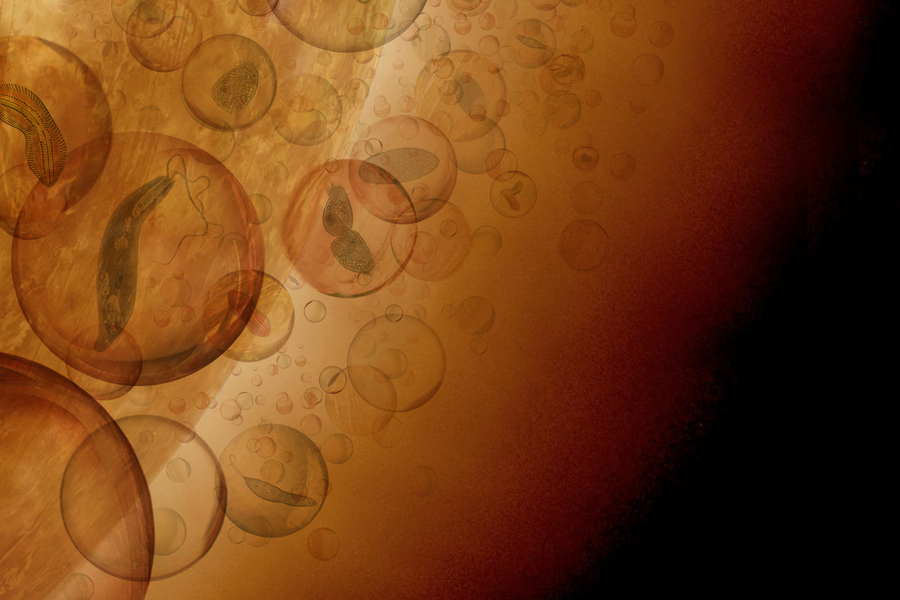
Artist’s conception of the aerial biosphere in the cloud layers of Venus’ atmosphere. In this picture, hypothetical microbial life in the clouds of Venus resides inside protective cloud particles and is carried by winds around the planet.
Credits:Figure credit: J. Petkowska

It’s hard to imagine a more inhospitable world than our closest planetary neighbor. With an atmosphere thick with carbon dioxide, and a surface hot enough to melt lead, Venus is a scorched and suffocating wasteland where life as we know it could not survive. The planet’s clouds are similarly hostile, blanketing the planet in droplets of sulfuric acid caustic enough to burn a hole through human skin.

And yet, a new study supports the longstanding idea that if life exists, it might make a home in Venus’ clouds...

Read More

New Research adds a Wrinkle to our Understanding of the Origins of Matter in the Milky Way

This image combines data from four space telescopes to reconstruct all that remains of the oldest documented example of a supernova, which was witnessed in 185 A.D. by Chinese astronomers. Supernovae are understood to be important sources of cosmic rays arriving at Earth. Image credit: NASA

New findings published this week in Physical Review Letters suggest that carbon, oxygen, and hydrogen cosmic rays travel through the galaxy toward Earth in a similar way, but, surprisingly, that iron arrives at Earth differently. Learning more about how cosmic rays move through the galaxy helps address a fundamental, lingering question in astrophysics: How is matter generated and distributed across the universe?

“So what does this finding mean?” asks John Krizmanic, a senior scientist with UMBC’s...

Read More