
photocatalyst tagged posts

Solar reactor uses old battery acid to turn plastic waste into clean hydrogen

Researchers turn recovered car battery acid and plastic waste into clean hydrogen
Researchers have developed a solar-powered reactor to break down hard-to-recycle forms of plastic waste—such as drink bottles, nylon textiles and polyurethane foams—using acid recovered from old car batteries, and converting it into clean hydrogen fuel and valuable industrial chemicals. Credit: Beverly Low

Researchers have developed a solar-powered reactor to break down hard-to-recycle forms of plastic waste—such as drink bottles, nylon textiles and polyurethane foams—using acid recovered from old car batteries, and converting it into clean hydrogen fuel and valuable industrial chemicals. The results are reported in the journal Joule.

The reactor, developed by researchers from the University of Cambridge, is powered by the energy from the sun, and could be a cheaper, more su...

Read More
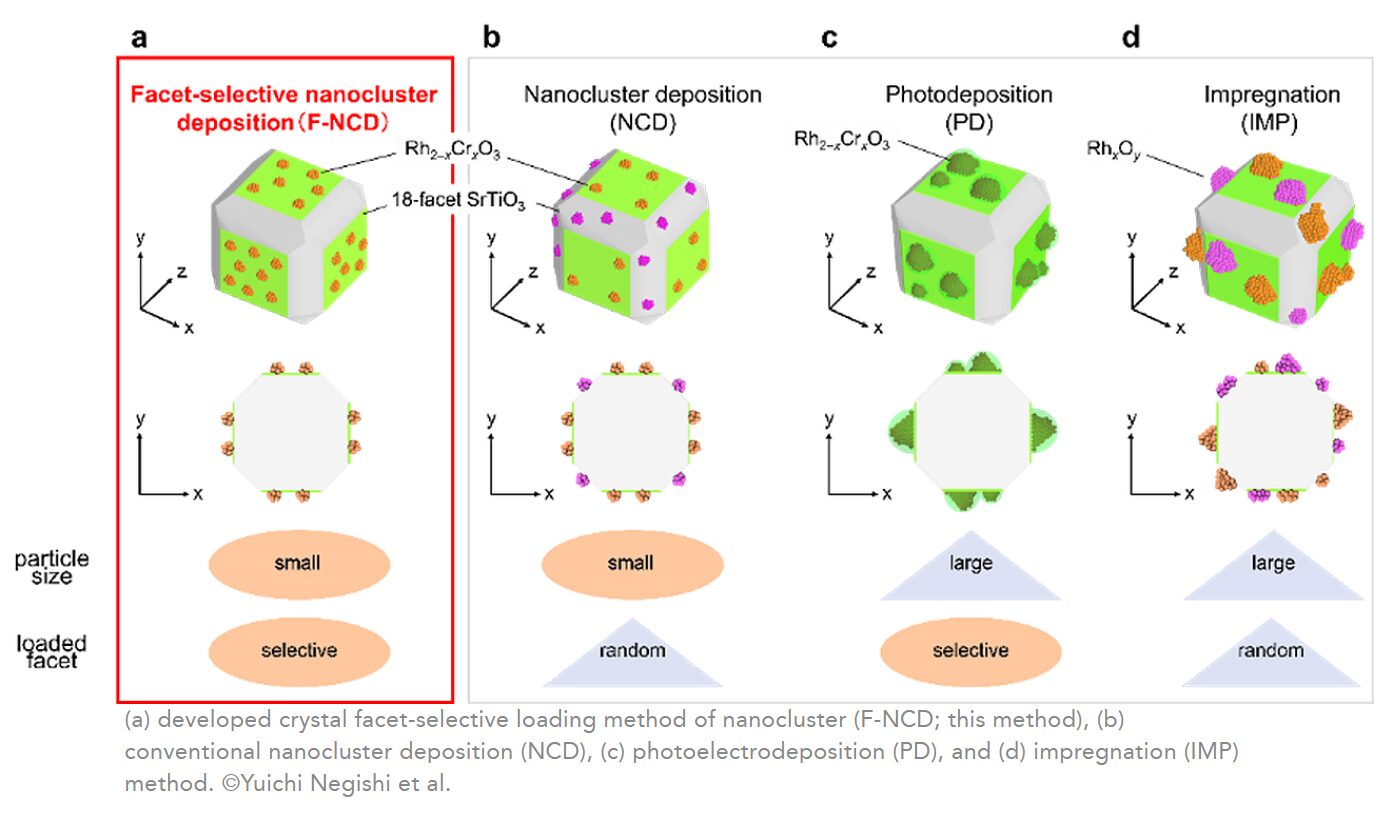

A Novel Method to Split Water to Create Hydrogen – a Clean Source of Fuel

Researchers have developed a novel method using facet-selective, ultrafine cocatalysts to efficiently split water to create hydrogen – a clean source of fuel. Scientists are urgently searching for clean fuel sources – such as hydrogen – to move towards carbon neutrality. A breakthrough for improving the efficiency of the photocatalytic reaction that splits water into hydrogen has been made by a team of researchers from Tohoku University, Tokyo University of Science and Mitsubishi Materials Corporation.

“Water-splitting photocatalysts can produce hydrogen (H2) from only sunlight and water,” explains Professor Yuichi Negishi, the lead researcher of this project (Tohoku University), “However, the process hasn’t been optimized sufficiently for practical applications...

Read More

Solar-Powered Device produces Clean Water and Clean Fuel at the Same Time

Device for making solar fuels on the River Cam near the Bridge of Sighs

A floating, solar-powered device that can turn contaminated water or seawater into clean hydrogen fuel and purified water, anywhere in the world, has been developed by researchers.

The device, developed by researchers at the University of Cambridge, could be useful in resource-limited or offgrid environments, since it works with any open water source and does not require any outside power.

It takes its inspiration from photosynthesis, the process by which plants convert sunlight into food. However, unlike earlier versions of the ‘artificial leaf’, which could produce green hydrogen fuel from clean water sources, this new device operates from polluted or seawater sources and can produce clean drinking water at the same time.

Tests of the device showed it was able to produce cl...

Read More

Brilliant Iron Molecule could provide Cheaper Solar Energy

The new molecule. Credit: Illustration by Nils Rosemann

The new molecule. Credit: Illustration by Nils Rosemann

For the first time, researchers have succeeded in creating an iron molecule that can function both as a photocatalyst to produce fuel and in solar cells to produce electricity. The results indicate that the iron molecule could replace the more expensive and rarer metals used today.

Some photocatalysts and solar cells are based on a technology that involves molecules containing metals, known as metal complexes. The task of the metal complexes in this context is to absorb solar rays and utilise their energy. The metals in these molecules pose a major problem, however, as they are rare and expensive metals, such as the noble metals ruthenium, osmium and iridium.

“Our results now show that by using advanced molecule design, it is possible...

Read More