



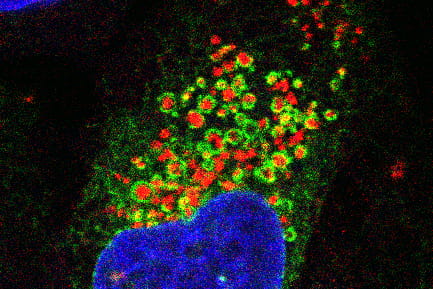
University of Pittsburgh researchers describe for the first time a pathway by which cells repair damaged lysosomes, structures that contribute to longevity by recycling cellular trash. The findings are an important step towards understanding and treating age-related diseases driven by leaky lysosomes.
“Lysosome damage is a hallmark of aging and many diseases, particularly neurodegenerative disorders such as Alzheimer’s,” said lead author Jay Xiaojun Tan, Ph.D., assistant professor of cell biology at Pitt’s School of Medicine and member of the Aging Institute, a partnership between Pitt and UPMC. “Our study identifies a series of steps that we believe is a universal mechanism for lysosomal repair, which we named the PITT pathway as a nod to the University of Pittsburgh.”
As the c...
Read More
Recent Comments