
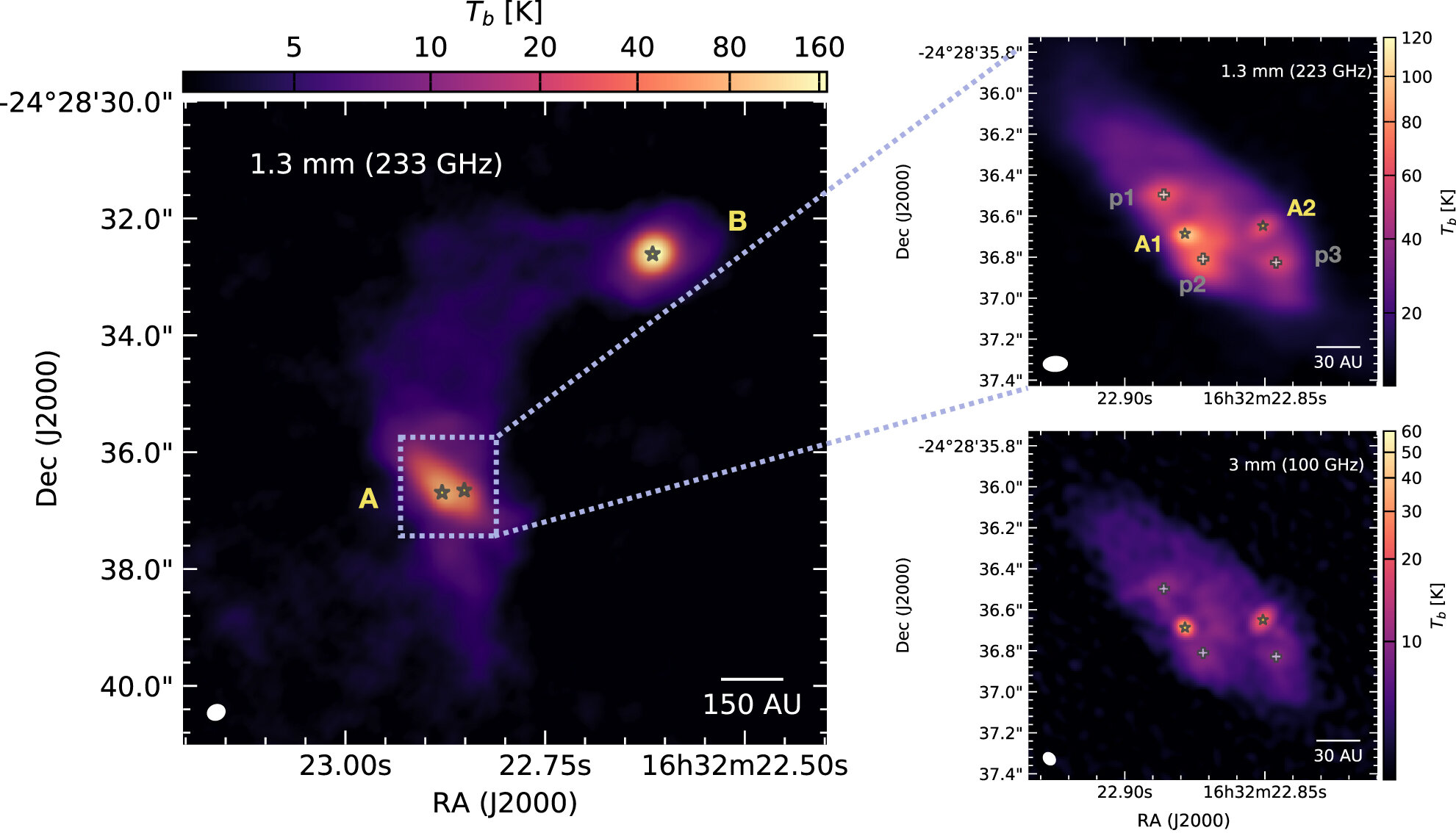
A team of researchers at Max Planck Institute for Extraterrestrial Physics, working with a colleague at the U...
Read More

December 29, 2022,
 Astronomy/Space
A team of researchers at Max Planck Institute for Extraterrestrial Physics, working with a colleague at the U...
Read More
November 16, 2022,
Astronomy/Space
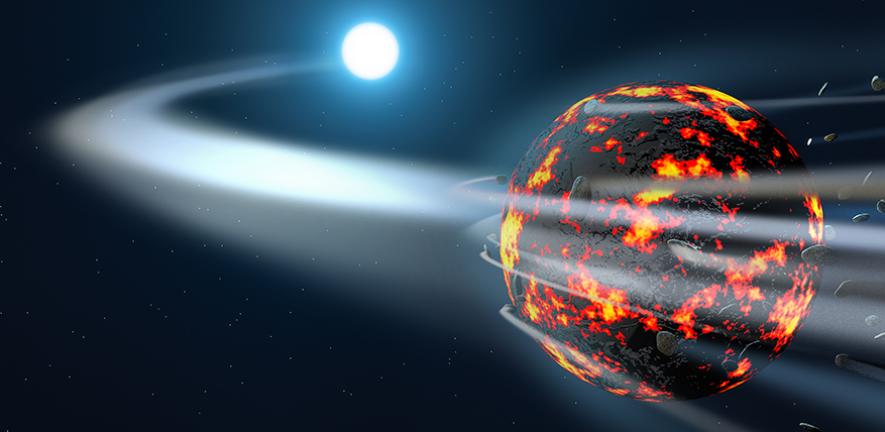
A team of astronomers have found that planet formation in our young Solar System started much earlier than previously thought, with the building blocks of planets growing at the same time as their parent star.
A study of some of the oldest stars in the Universe suggests that the building blocks of planets like Jupiter and Saturn begin to form while a young star is growing. It had been thought that planets only form once a star has reached its final size, but new results, published in the journal Nature Astronomy, suggests that stars and planets ‘grow up’ together.
The research, led by the University of Cambridge, changes our understanding of how planetary systems, including our own Solar System, formed, potentially solving a major puzzle in astronomy.
“We have a pretty good i...
Read More
February 25, 2022,
Astronomy/Space

A new way of dating collisions between asteroids and planetary bodies throughout our Solar System’s history could help scientists reconstruct how and when planets were born.
A team of researchers, led by the University of Cambridge, combined dating and microscopic analysis of the Chelyabinsk meteorite — which fell to Earth and hit the headlines in 2013 — to get more accurate constraints on the timing of ancient impact events.
Their study, published in Communications Earth & Environment, looked at how minerals within the meteorite were damaged by different impacts over time, meaning they could identify the biggest and oldest events that may have been involved in planetary formation.
“Meteorite impact ages are often controversial: our work shows that we need to draw on multiple...
Read More
February 3, 2022,
Astronomy/Space
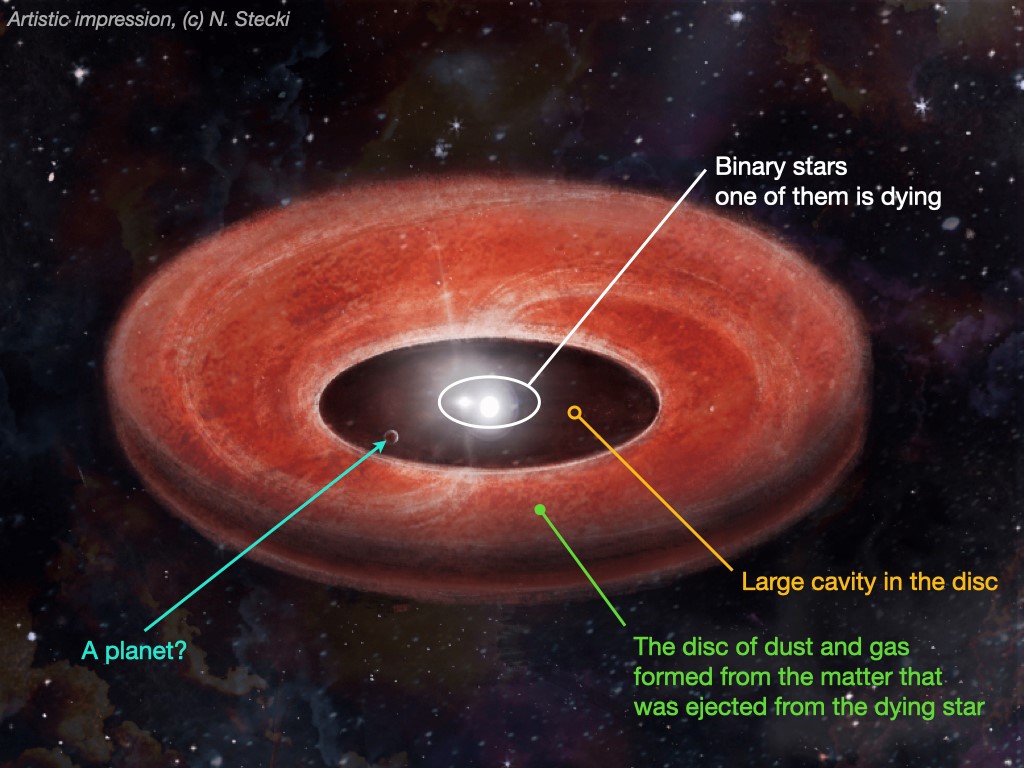
Planets are usually not much older than the stars around which they revolve. Take the Sun: it was born 4.6 billion years ago, and not long after that, Earth came into the world. But KU Leuven astronomers have discovered that a completely different scenario is also possible. Even if they are near death, some types of stars can possibly still form planets. If this is confirmed, theories on planet formation will need to be adjusted.
Planets such as Earth, and all other planets in our solar system, were formed not long after the Sun. Our Sun started to burn 4.6 billion years ago, and in the next million years, the matter around it clumped into protoplanets...
Read More
Recent Comments