planetesimals tagged posts

Unknown Class of Water-Rich Asteroids Identified

Unknown class of water-rich asteroids identified
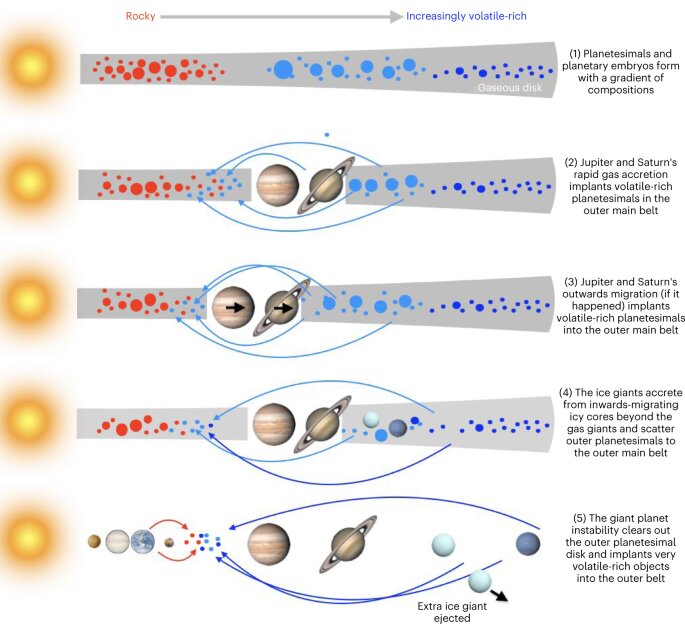
Implantation of planetesimals into the asteroid belt during the planets’ growth and dynamical evolution. Credit: Nature Astronomy (2023). DOI: 10.1038/s41550-023-01898-x

New astronomical measurements in the infrared range have led to the identification of a heretofore unknown class of asteroids. An international research team including geoscientists from Heidelberg University has succeeded in characterizing these small planets using infrared spectroscopy.

They are located in the asteroid belt between Mars and Jupiter and are—similar to the dwarf planet Ceres—rich in water. According to computer models, complex dynamic processes shifted these asteroids from the outer regions of our solar system into today’s asteroid belt shortly after their creation.

With an equatorial diame...

Read More
Cosmic History can explain the Properties of Mercury, Venus, Earth and Mars

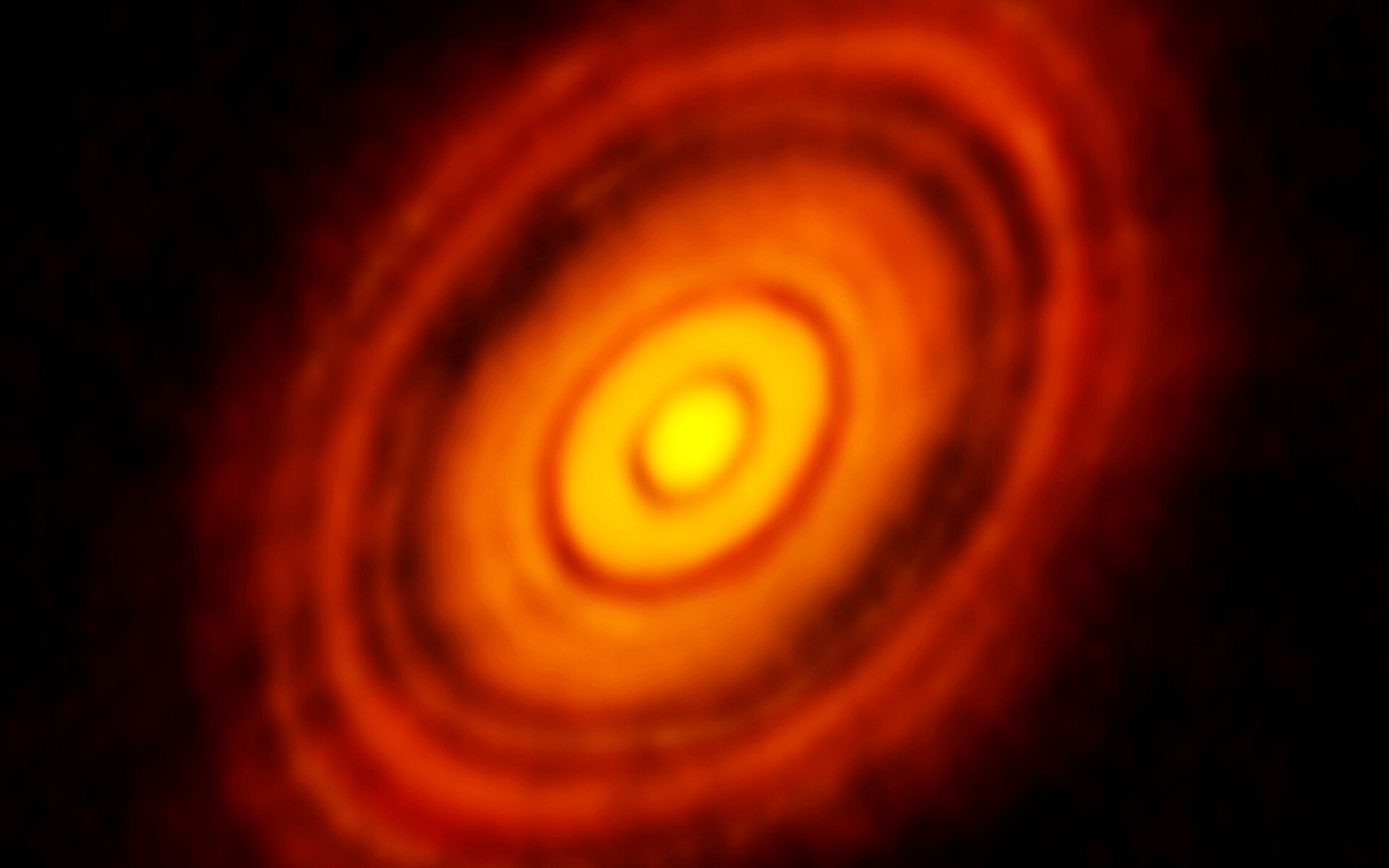
This is the sharpest image ever taken by ALMA — sharper than is routinely achieved in visible light with the NASA/ESA Hubble Space Telescope. It shows the protoplanetary disc surrounding the young star HL Tauri. These new ALMA observations reveal substructures within the disc that have never been seen before and even show the possible positions of planets forming in the dark patches within the system. Credit: ALMA (ESO/NAOJ/NRAO)

Astronomers have managed to link the properties of the inner planets of our solar system with our cosmic history: with the emergence of ring structures in the swirling disk of gas and dust in which these planets were formed...

Read More

The case of the Missing Mantle: How impact debris may have disappeared from the solar system

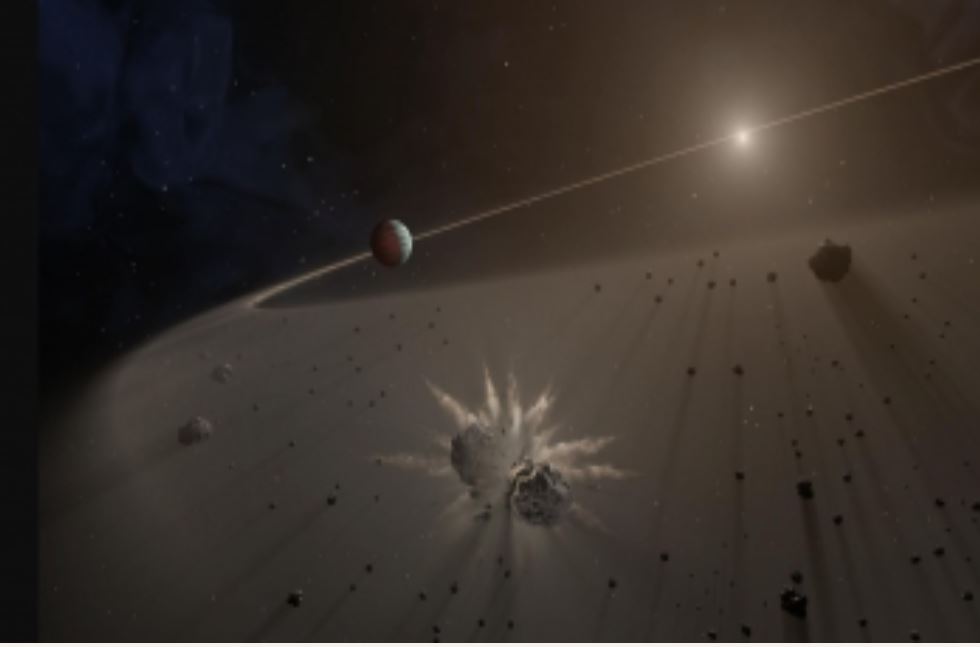
Debris from planet-forming collisions can range from solid materials to gases. The work from Gabriel & Allen-Sutter (2021) suggests large collisions form predominantly gas, leaving behind little trace in the current solar system. Illustration credit: NASA/JPL-Caltech

In the early solar system, terrestrial planets like Mercury, Venus, Earth and Mars are thought to have formed from planetesimals, small early planets. These early planets grew over time, through collisions and mergers, to make them the size they are today.

The material released from these violent collisions is commonly thought to have escaped and orbited around the sun, bombarding the growing planets and altering the composition of the asteroid belt...

Read More

Astronomers show how Planets Form in Binary Systems Without getting Crushed

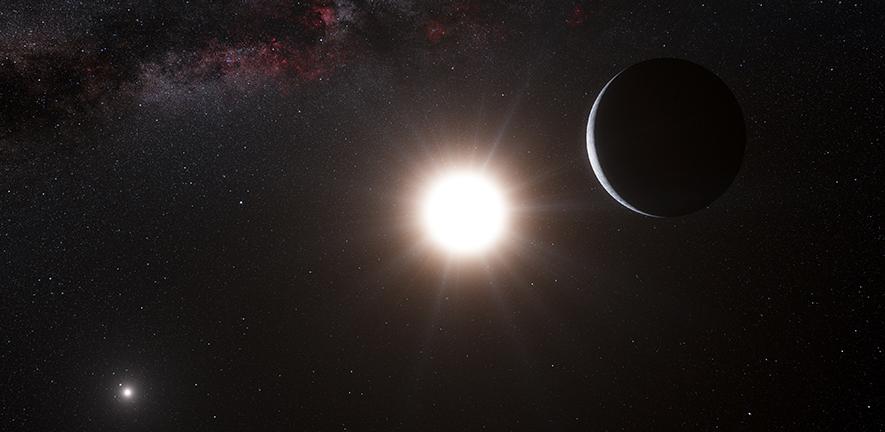
Artist’s impression of the planet around Alpha Centauri B

Astronomers have developed the most realistic model to date of planet formation in binary star systems.

The researchers, from the University of Cambridge and the Max Planck Institute for Extra-terrestrial Physics, have shown how exoplanets in binary star systems—such as the ‘Tatooine’ planets spotted by NASA’s Kepler Space Telescope—came into being without being destroyed in their chaotic birth environment.

They studied a type of binary system where the smaller companion star orbits the larger parent star approximately once every 100 years—our nearest neighbour, Alpha Centauri, is an example of such a system.

“A system like this would be the equivalent of a second Sun where Uranus is, which would have made our own solar system look very different,” said co-author Dr...

Read More