
quantum computing technologies tagged posts

Quantum hyperdimensional computing can work 500 times faster than other methods

Quantum computing paradigm inspired by the human brain
Circuit diagram illustrating the two-stage bundling. Credit: npj Unconventional Computing (2026). DOI: 10.1038/s44335-026-00064-6

Cleveland Clinic researchers are unlocking quantum computing’s full potential through the creation of a new computing paradigm inspired by the human brain. Fabio Cumbo, Ph.D., research associate in the lab of Daniel Blankenberg, Ph.D., associate staff, Computational Life Sciences, is developing the model, called quantum hyperdimensional computing (QHDC).

Cumbo published the first-ever implementation of QHDC in two distinct experiments in npj Unconventional Computing.

Hyperdimensional computing (HDC) is a type of computing based in neuroscience. It follows the idea that a concept in the brain is not stored on one single neuron...

Read More
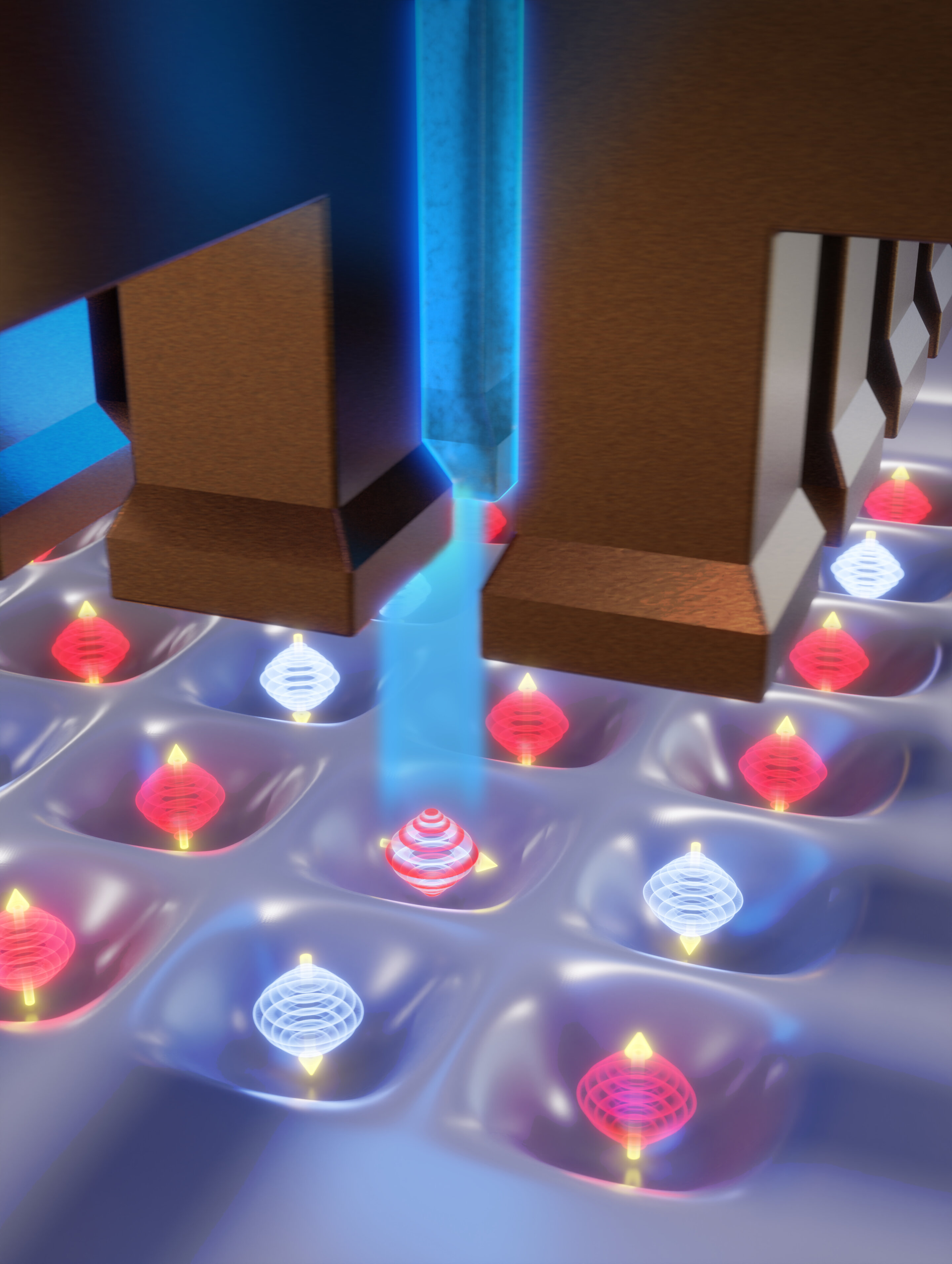
Study achieves the Coherent Manipulation of Electron Spins in Silicon

Study achieves the coherent manipulation of electron spins in silicon
Electrons in silicon experience a coupling between their spin (up and down arrows) and valley states (blue and red orbitals). In the presence of a DC voltage (blue glow) an electron can undergo coherent spin-valley oscillation. Image credit: Mike Osadciw.

In recent years, many physicists and computer scientists have been working on the development of quantum computing technologies. These technologies are based on qubits, the basic units of quantum information. In contrast with classical bits, which have a value of 0 or 1, qubits can exist in superposition states, so they can have a value of 0 and 1 simultaneously. Qubits can be made of different physical systems, including electrons, nuclear spins (i.e., the spin state of a nucleus), photons, and superconducting circuits.

Electron s...

Read More