red giants tagged posts

Dying stars are devouring giant planets, astronomers discover

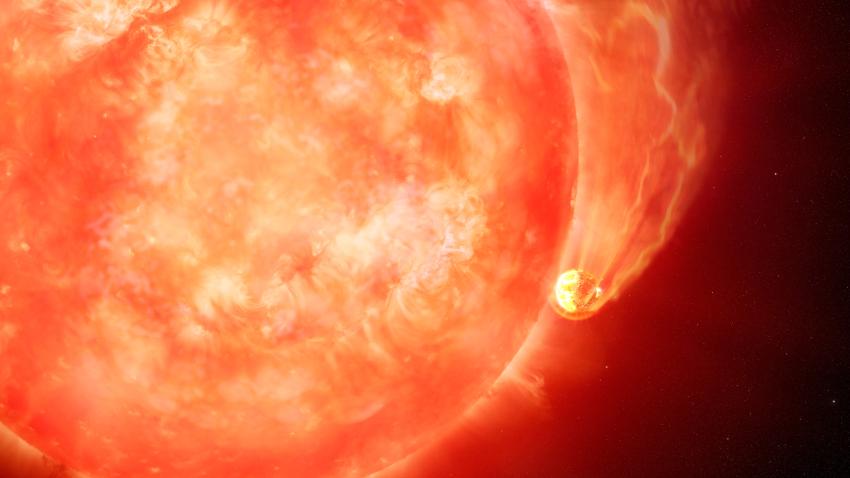
This artist’s impression depicts a dying Sun-like star engulfing an exoplanet. New research published in Monthly Notices of the Royal Astronomical Society suggests that ageing stars may be destroying the giant planets orbiting closest to them.
Credit
International Gemini Observatory/NOIRLab/NSF/AURA/M. Garlick/M. Zamani
Licence type
Attribution (CC BY 4.0)

A new study suggests that aging stars may be wiping out the giant planets that orbit closest to them. The research, led by astronomers at UCL (University College London) and the University of Warwick, provides fresh evidence that these planets can be pulled inward and destroyed as their host stars evolve.

Stars like our Sun eventually run out of hydrogen fuel...

Read More
Nova Outbursts are apparently a source for Cosmic Rays

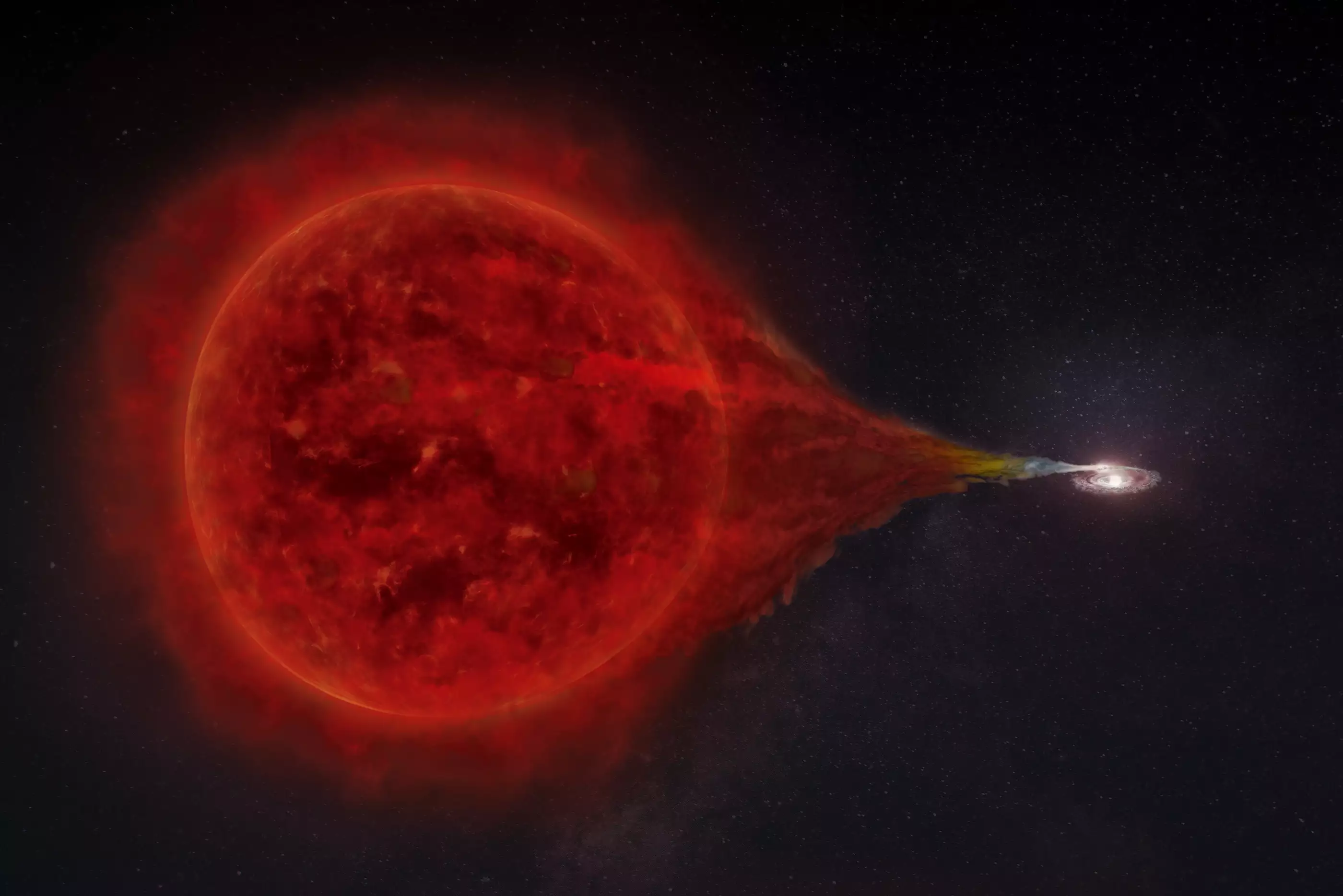
The binary star system RS Ophiuchi: Matter flows from the red giant onto the white dwarf. The newly added stellar envelopes explode in a bright nova about every 15 years.
© superbossa.com / MPP

The MAGIC telescopes have observed the nova RS Ophiuchi shining brightly in gamma rays at extremely high energy. The Gamma rays emanate from protons that are accelerated to very high energies in the shock front following the explosion. This suggests that novae are also a source of the ubiquitous cosmic radiation in the universe which consists mainly of protons rich in energy, which race through space at almost the speed of light.

Light on, light off — this is how one could describe the behavior of the nova, which goes by the name RS Ophiuchi (RS Oph)...

Read More

Gigantic, Red and full of Spots

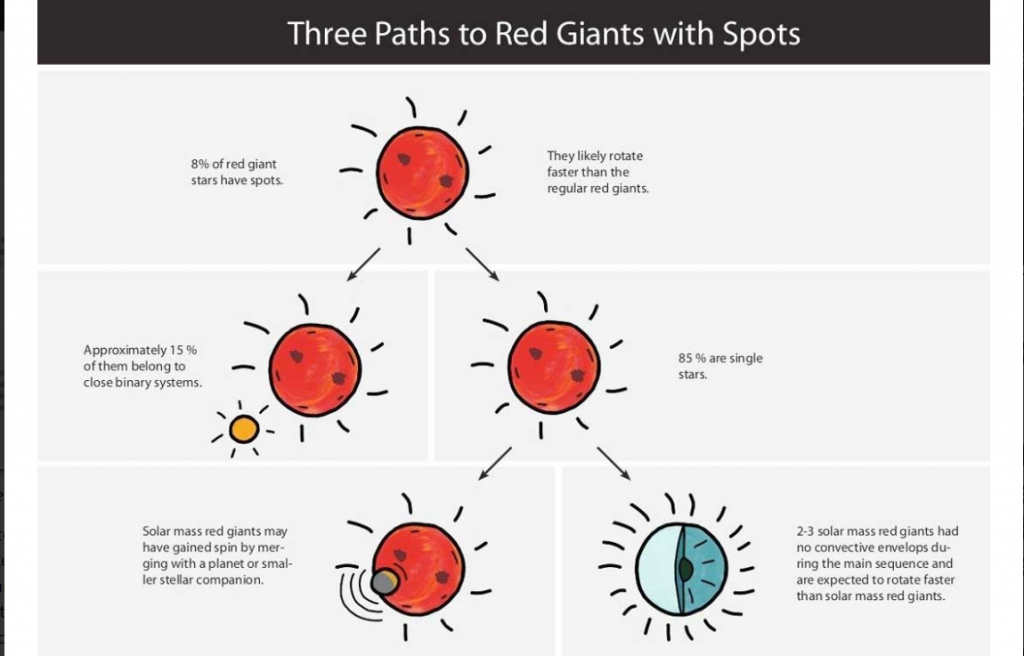
Three Paths to Red Giants with Spots. (Image: MPs) 

About eight percent of red giants are covered by sunspot-like, dark areas; these stars rotate faster than others of their kind. Starspots are more common among red giant stars than previously thought. Astronomers report that approximately eight percent of red giants exhibit such spots. Although red giants are generally regarded as slowly rotating stars, those with starspots are apparently an exception. The new publication offers a comprehensive analysis of the reasons for their short rotation periods.

Among the Sun’s most striking features are its sunspots, relatively darker areas compared to the rest of the surface, some of which are visible from Earth even without magnification...

Read More

Stardust from Red Giants

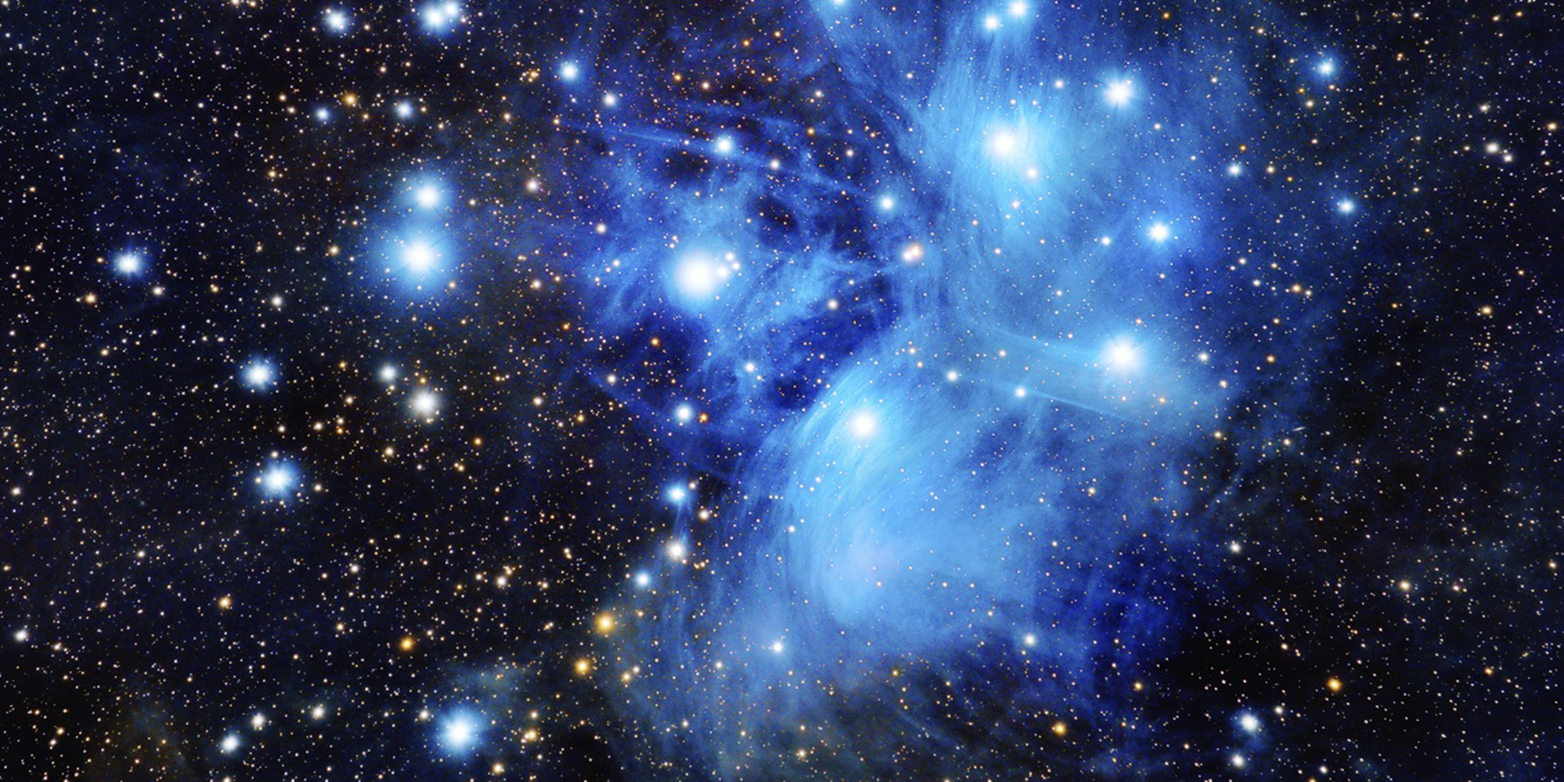
Stardust in the area of the Pleiades. (Photograph: Keystone / Miguel Claro / Science Photo Library)

Some of the Earth’s building material was stardust from red giants. Astronomers can also explain why the Earth contains more of this stardust than the asteroids or the planet Mars, which are farther from the sun.

Around 4.5 billion years ago, an interstellar molecular cloud collapsed. At its centre, the Sun was formed; around that, a disc of gas and dust appeared, out of which the earth and the other planets would form. This thoroughly mixed interstellar material included exotic grains of dust: “Stardust that had formed around other suns,” explains Maria Schoenbaechler, a professor at the Institute of Geochemistry and Petrology at ETH Zurich...

Read More