regolith tagged posts

Clover Growth in Mars-like Soils Boosted by Bacterial Symbiosis

Clover growth in Mars-like soils boosted by bacterial symbiosis
Observed growth differences between clover (Melilotus officinalis) inoculated with nodule forming bacteria Sinorhizobium meliloti (left) and a clover plant not inoculated when grown in Martian regolith. Credit: Harris et al., 2021, PLOS ONE, CC-BY 4.0 (creativecommons.org/licenses/by/4.0/)

Benefits of nitrogen-fixing bacteria could aid efforts towards farming soils on Mars. Clover plants grown in Mars-like soils experience significantly more growth when inoculated with symbiotic nitrogen-fixing bacteria than when left uninoculated. Franklin Harris of Colorado State University, U.S., and colleagues present these findings in the open-access journal PLOS ONE on September 29, 2021.

As Earth’s population grows, researchers are studying the possibility of farming Martian soils, or “regoli...

Read More

Possibly Active Tectonic System on the Moon

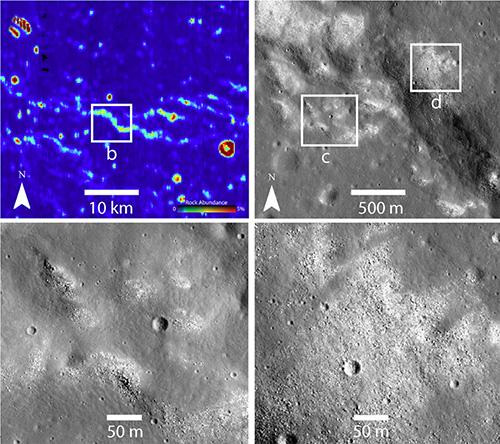
Infrared (upper left) and other images from NASA’s Lunar Reconnaissance Orbiter revealed strange bare spots where the Moon’s ubiquitous dust is missing. The spots suggest an active tectonic process. 

Researchers have discovered a system of ridges spread across the nearside of the Moon topped with freshly exposed boulders. The ridges could be evidence of active lunar tectonic processes, the researchers say, possibly the echo of a long-ago impact that nearly tore the Moon apart.

“There’s this assumption that the Moon is long dead, but we keep finding that that’s not the case,” said Peter Schultz, a professor in Brown University’s Department of Earth, Environmental and Planetary Sciences and co-author of the research, which is published in the journal Geology...

Read More

ESA opens Oxygen Plant, making Air Out of Moondust

Oxygen and metal from lunar regolith

ESA’s technical heart has begun to produce oxygen out of simulated moondust. A prototype oxygen plant has been set up in the Materials and Electrical Components Laboratory of the European Space Research and Technology Centre, ESTEC, based in Noordwijk in the Netherlands.

“Having our own facility allows us to focus on oxygen production, measuring it with a mass spectrometer as it is extracted from the regolith simulant,” comments Beth Lomax of the University of Glasgow, whose Ph.D. work is being supported through ESA’s Networking and Partnering Initiative, harnessing advanced academic research for space applications.

“Being able to acquire oxygen from resources found on the Moon would obviously be hugely useful for future lunar settlers, both...

Read More

Solar Storms could Spark Soils at Moon’s Poles

Illustration showing how solar storms charge lunar soil

Illustration showing how solar energetic particles may cause dielectric breakdown in lunar regolith in a permanently shadowed region (PSR). Tiny breakdown events could occur throughout the floor of the PSR. Credits: NASA/Andrew Jordan

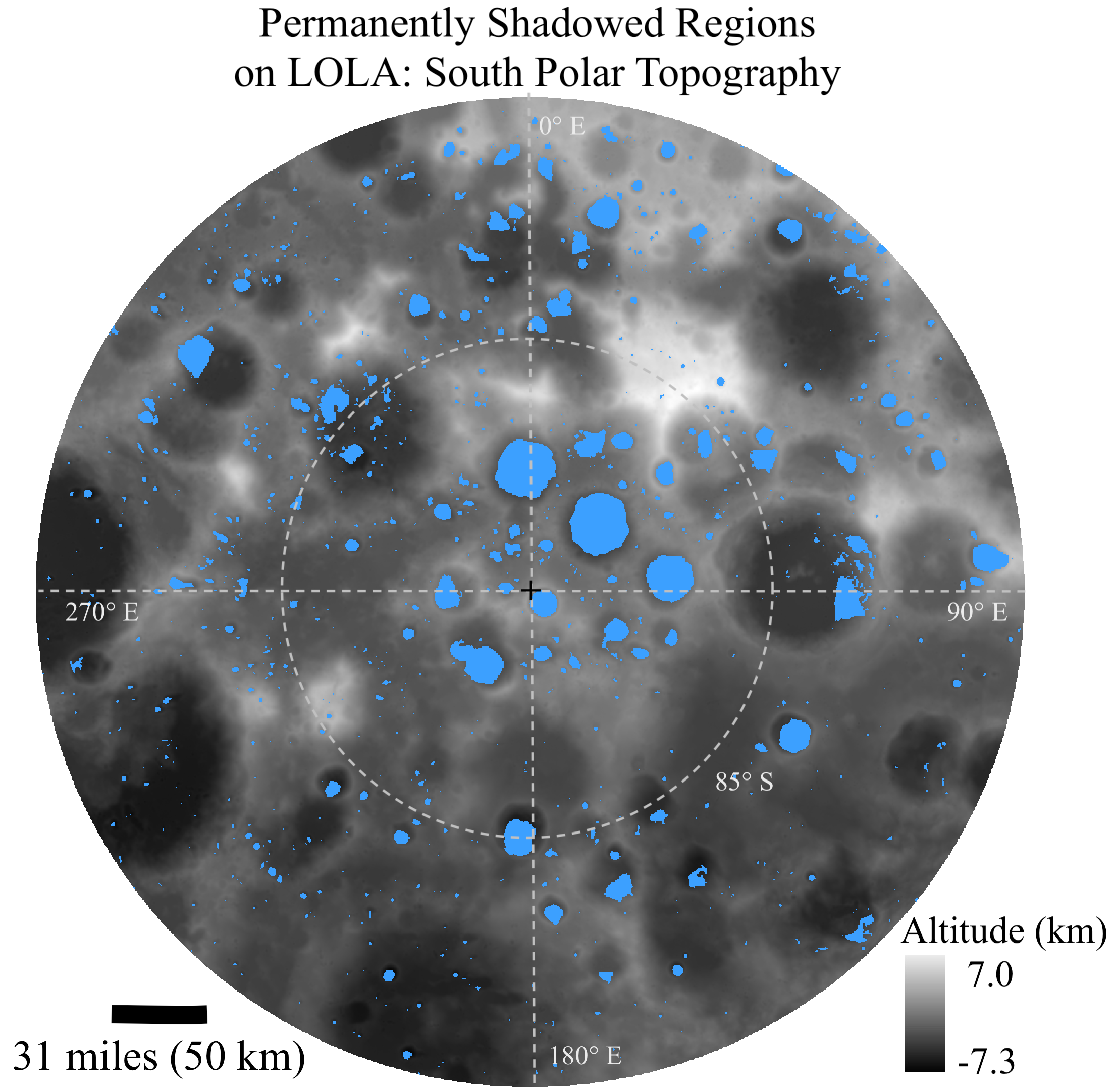
Powerful solar storms can charge up the soil in frigid, permanently shadowed regions near the lunar poles, and may possibly produce “sparks” that could vaporize and melt the soil, perhaps as much as meteoroid impacts. This alteration may become evident when analyzing future samples from these regions that could hold the key to understanding the history of the moon and solar system.

The moon has almost no atmosphere, so its surface is exposed to the harsh space environment...

Read More