Robots tagged posts

Robots team up to explore planetary lava caves

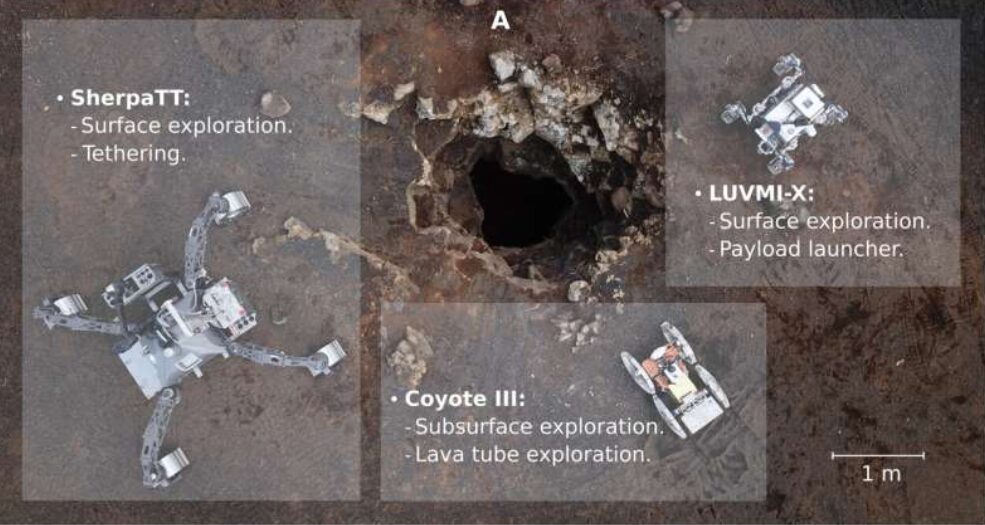
Robot team used during the Lanzarote field trial along with scale bar. (A) Heterogeneous robot team. (B) Robot capabilities and used materials. Credit: Science Robotics (2025). DOI: 10.1126/scirobotics.adj9699

In the not-too-distant future, the search for signs of life on Mars and the moon could see the next generation of robots exploring a new frontier: subsurface lava tubes. These missions could also help us determine the best locations for establishing human bases.

To see whether this could be feasible, scientists tested three autonomous robots in a lava cave on the Spanish island of Lanzarote.

Lava tubes are deep underground caves formed by volcanic activity and are found in various parts of the world, as well as on Mars and the moon...

Read More
Integrated Multimodal Sensing and Learning System could give Robots New Capabilities

A new multi-modal sensing and learning platform that could enhance robot manipulation
Soft robot fingers equipped with tactile sensors grasping an egg. The bottom-right images show the tactile sensing results. Credit: Binghao Huang.

To assist humans with household chores and other everyday manual tasks, robots should be able to effectively manipulate objects that vary in composition, shape and size. The manipulation skills of robots have improved significantly over the past few years, in part due to the development of increasingly sophisticated cameras and tactile sensors.

Researchers at Columbia University have developed a new system that simultaneously captures both visual and tactile information...

Read More

Researchers Develop System Cat’s Eye-Inspired Vision for Autonomous Robotics

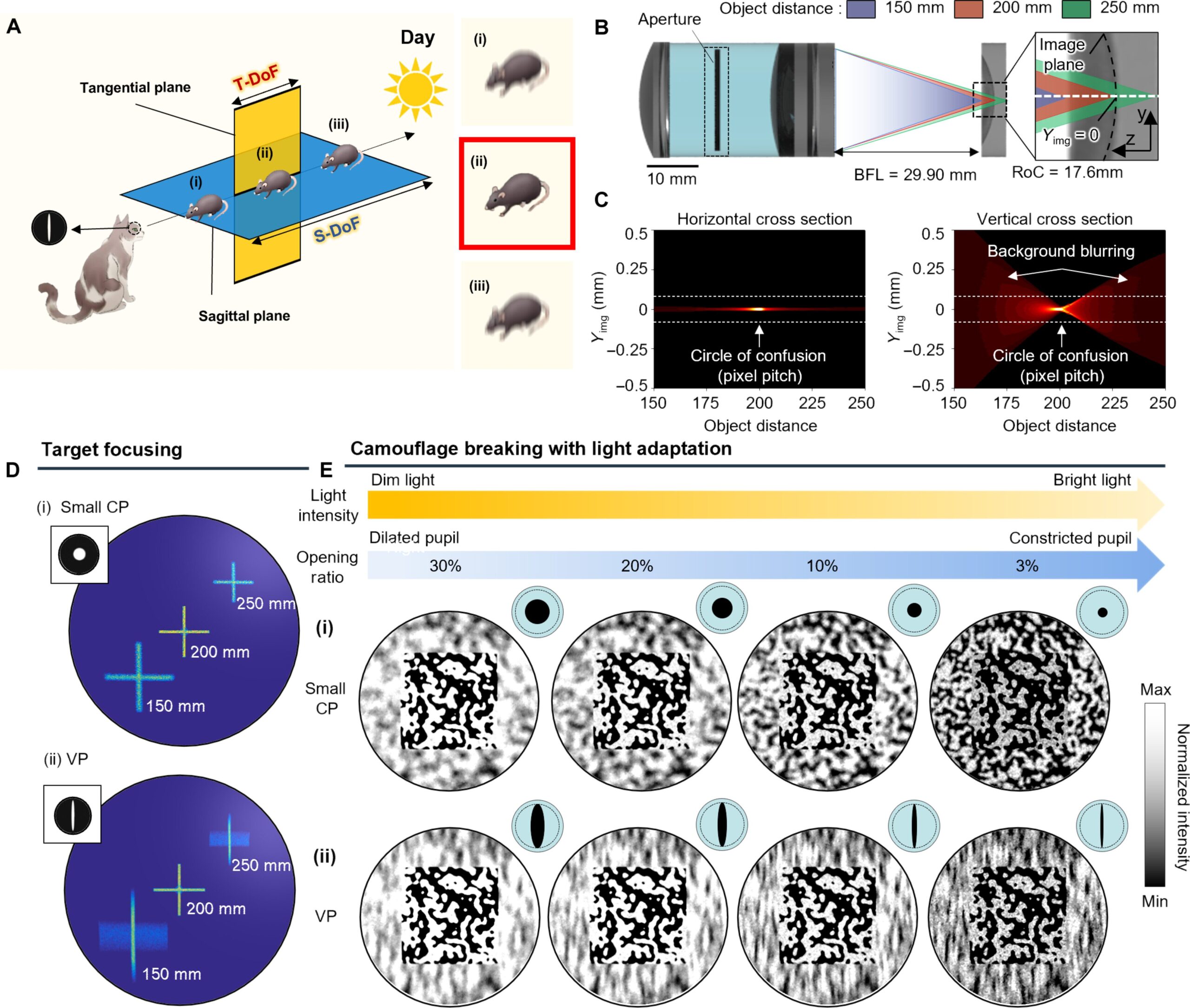
Optical simulation of the characteristics of the feline eye–inspired vision system

Feline-inspired vision technology enhances accuracy in challenging environments, paving the way for smarter, more efficient autonomous systems

Researchers have unveiled a vision system inspired by feline eyes to enhance object detection in various lighting conditions. Featuring a unique shape and reflective surface, the system reduces glare in bright environments and boosts sensitivity in low-light scenarios. By filtering unnecessary details, this technology significantly improves the performance of single-lens cameras, representing a notable advancement in robotic vision capabilities.

Autonomous systems like drones, self-driving cars, and robots are becoming more common in our daily lives...

Read More

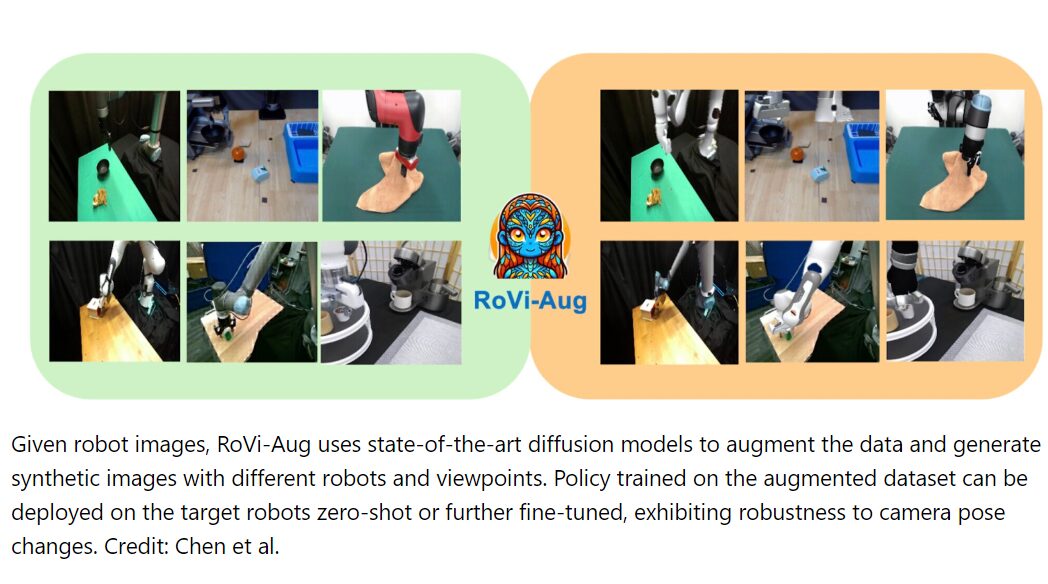
New Data Augmentation Algorithm could Facilitate the Transfer of Skills across Robots

In recent years, roboticists have developed a wide range of systems designed to tackle various real-world tasks, ranging from completing household chores to delivering packages or finding target objects in delineated environments.

A key objective in the field has been to develop algorithms that allow the reliable transfer of specific skills across robots with different bodies and characteristics, which would help to rapidly train robots on new tasks, broadening their capabilities.

Researchers at UC Berkeley have developed RoVi-Aug, a new computational framework designed to augment robotic data and facilitate the transfer of skills across different robots...

Read More