
Ryugu asteroid tagged posts

Ryugu asteroid samples contain all DNA and RNA building blocks, bolstering origin-of-life theories

The black particles from an asteroid some 300 million kilometres away look unremarkable, but they hold components of life

All the essential ingredients to make the DNA and RNA underpinning life on Earth have been discovered in samples collected from the asteroid Ryugu, scientists said Monday.

The discovery comes after these building blocks of life were detected on another asteroid called Bennu, suggesting they are abundant throughout the solar system.

One longstanding theory is that life first began on Earth when asteroids carrying fundamental elements crashed into our planet long ago.

The asteroids that hurtle through our solar system give scientists a rare chance to study this possibility.

In 2014, the Japanese spacecraft Hayabusa-2 blasted off on a 300-million-kilometer (185-million-mile) mission to land on Ryugu, a 900-meter-wide (2,950-feet-wide) asteroid.

It successfully managed to c...

Read More
Ryugu asteroid samples contain all DNA and RNA building blocks, bolstering origin-of-life theories

The black particles from an asteroid some 300 million kilometres away look unremarkable, but they hold components of life
The black particles from an asteroid some 300 million kilometers away look unremarkable, but they hold components of life.

All the essential ingredients to make the DNA and RNA underpinning life on Earth have been discovered in samples collected from the asteroid Ryugu, scientists said Monday.

The discovery comes after these building blocks of life were detected on another asteroid called Bennu, suggesting they are abundant throughout the solar system.

One longstanding theory is that life first began on Earth when asteroids carrying fundamental elements crashed into our planet long ago.

The asteroids that hurtle through our solar system give scientists a rare chance to study this possibility.

In 2014, the Japanese spacecraft Hayabusa-2 blasted off on a 300-million-kilometer...

Read More

‘Bouncing’ Comets could deliver Building Blocks for Life to Exoplanets

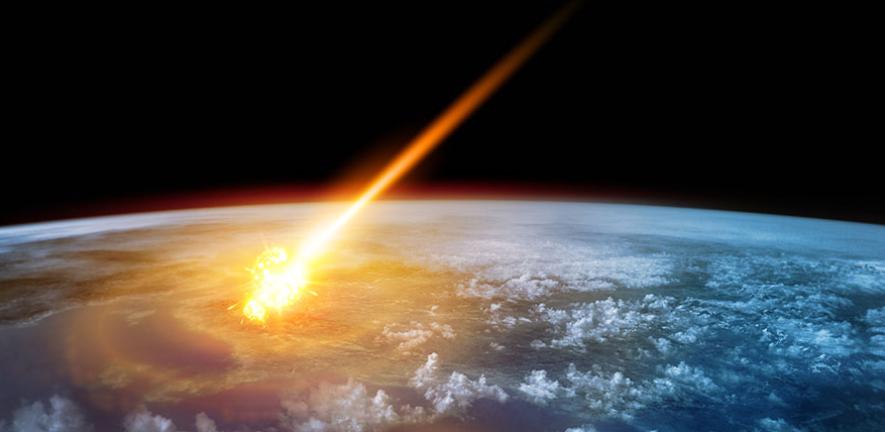
Artist's impression of a meteor hitting Earth

How did the molecular building blocks for life end up on Earth? One long-standing theory is that they could have been delivered by comets. Now, researchers from the University of Cambridge have shown how comets could deposit similar building blocks to other planets in the galaxy.

In order to deliver organic material, comets need to be travelling relatively slowly – at speeds below 15 kilometres per second. At higher speeds, the essential molecules would not survive – the speed and temperature of impact would cause them to break apart.

The most likely place where comets can travel at the right speed are ‘peas in a pod’ systems, where a group of planets orbit closely together...

Read More

How was the Solar System Formed? The Ryugu Asteroid is helping us learn

Japan Aerospace Exploration Agency (JAXA)

Our solar system is estimated to be about 4.57 billion years old. Previous analyses of ancient meteorites have shown that minerals were created through chemical reactions with water as far back as 4.5 billion years ago. New findings from the Ryugu asteroid samples indicate that carbonates were forming from water-rock reactions several million years earlier, even closer to the solar system’s beginnings.

Mineral samples collected from the Ryugu asteroid by the Japan’s Hayabusa2 spacecraft are helping UCLA space scientists and colleagues better understand the chemical composition of our solar system as it existed in its infancy, more than 4.5 billion years ago.

In research recently published in Nature Astronomy, scientists using isotopic ana...

Read More