
Self-healing materials tagged posts

New Tech Solves Longstanding Challenges for Self-healing Materials

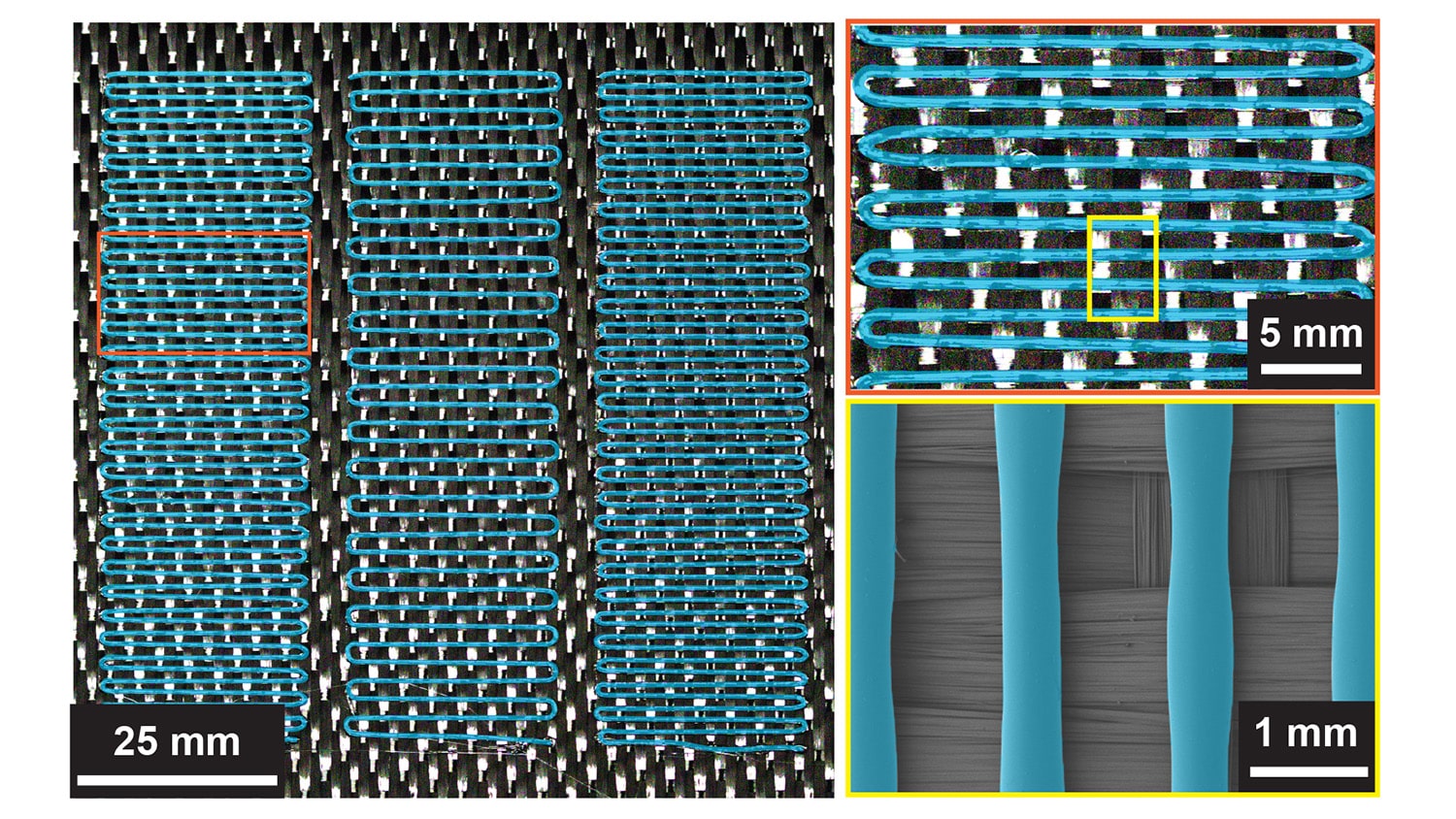
image shows blue piping (thermoplastic) embedded in a black carbon fiber mesh
3D printed thermoplastic on woven-carbon fiber reinforcement.

Engineering researchers have developed a new self-healing composite that allows structures to repair themselves in place, without having to be removed from service. This latest technology resolves two longstanding challenges for self-healing materials, and can significantly extend the lifespan of structural components such as wind-turbine blades and aircraft wings.

“Researchers have developed a variety of self-healing materials, but previous strategies for self-healing composites have faced two practical challenges,” says Jason Patrick, corresponding author of the research paper and an assistant professor of civil, construction and environmental engineering at North Carolina State University.

“First, the materials ofte...

Read More
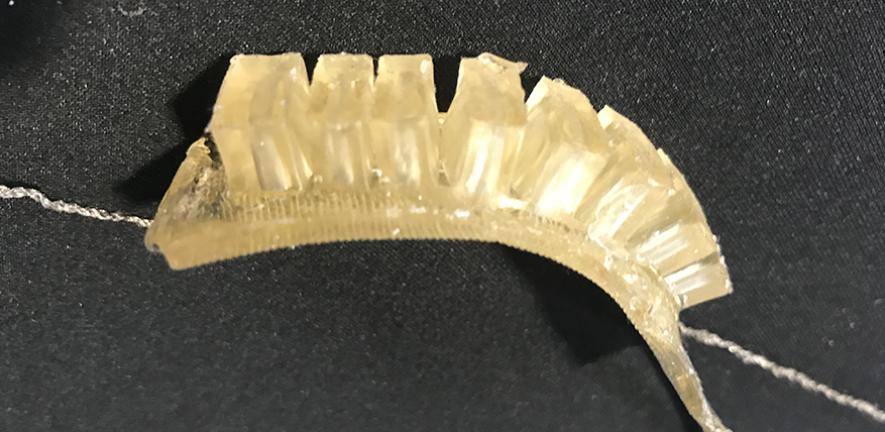
Self-Healing Materials for Robotics made from ‘Jelly’ and Salt

Researchers have developed self-healing, biodegradable, 3D-printed materials that could be used in the development of realistic artificial hands and other soft robotics applications.

The low-cost jelly-like materials, developed by researchers at the University of Cambridge, can sense strain, temperature and humidity. And unlike earlier self-healing robots, they can also partially repair themselves at room temperature.

The results are reported in the journal NPG Asia Materials.

Soft sensing technologies could transform robotics, tactile interfaces and wearable devices, among other applications. However, most soft sensing technologies aren’t durable and consume high amounts of energy.

“Incorporating soft sensors into robotics allows us to get a lot more information from them...

Read More

Self-Healing Materials for Semi-Dry Conditions

Chemical Structure of the Gels (A) Schematic representation of HPPRx and HPPul used in this study. (B) Chemical structures of the PRx-PB (x) gel, Pul-PB (x) gel, PRx-CC (x) gel, and pAAm (x) gel used in this study. Here, x represents the mol % content of cross-linker units in the vinyl polymerization.

Chemical Structure of the Gels (A) Schematic representation of HPPRx and HPPul used in this study. (B) Chemical structures of the PRx-PB (x) gel, Pul-PB (x) gel, PRx-CC (x) gel, and pAAm (x) gel used in this study. Here, x represents the mol % content of cross-linker units in the vinyl polymerization.

Before we have self-healing cars or buildings, we need strong materials that can fully self-repair in water-free environments. Self-healing materials work very well if they are soft and wet, but research groups have found that the ability to self-repair diminishes as materials dry out. Scientists at Osaka University are beginning to bridge this gap with rigid materials that can repair 99% of a cut on the surface in semi-dry conditions...

Read More