
short-chain fatty acids (SCFAs) tagged posts

Gut bacteria leave intestinal ‘memory,’ protecting against inflammation

Image generated by the editorial team using DALL·E for illustrative purposes.

New Northwestern Medicine research published in Nature Communications suggests that a metabolite produced by gut bacteria when they digest dietary fiber can leave a lasting molecular imprint on intestinal cells, promoting immune tolerance and protecting against inflammatory bowel disease-like conditions long after exposure ends.

Yingzi Cong, Ph.D., the Stanley Gradowski Professor of Gastroenterology and a professor of Microbiology-Immunology and Pathology, was the senior and co-corresponding author of the study.

Investigators describe the findings as evidence that beneficial microbial metabolites may be able to “train” the intestinal lining to maintain immune tolerance over time.

“Our laboratory has...

Read More
Dietary Fiber in the Gut may Help with Skin Allergies

A Monash University study exploring the emerging gut-skin axis has found that microbial fermentation of dietary fibre in the gut can protect against allergic skin disease. The research could potentially lead to novel treatments to prevent or treat allergies.

Professor Ben Marsland from the Central Clinical School’s Department of Immunology, together with Swiss colleagues at the University Hospital of Lausanne (CHUV), showed that the fermentation of fibre in the gut by bacteria and subsequent production of short-chain fatty acids (SCFAs), in particular butyrate, protected against atopic dermatitis in mice.

The research was published today in Mucosal Immunology.

While it is well established that the gut microbiome shapes the immune system, the influence it has on the skin is le...

Read More

Natural compound in basil may protect against Alzheimer’s disease pathology

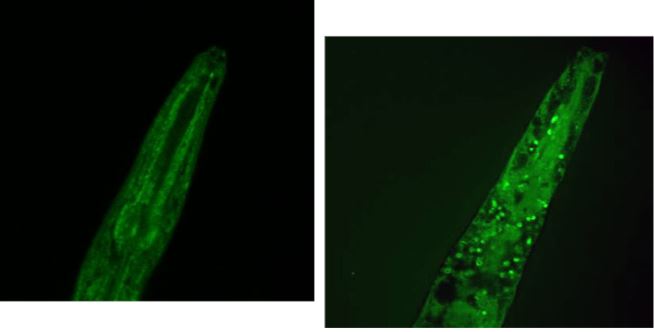
Alzheimer’s disease model of the worm C. elegans treated with the plant-derived compound fenchol (Left) and with a DMSO placebo (Right). Fenchol reduced accumulation of amyloid-β (green dots) in the organism’s head, compared to the placebo. | Images courtesy of Hariom Yadav, PhD, of the University of South Florida, first appeared as Fig. 4d in Frontiers in Aging Neuroscience, DIO: 10.3389/fnagi.2021.735933

Fenchol, a natural compound abundant in some plants including basil, can help protect the brain against Alzheimer’s disease pathology, a preclinical study led by University of South Florida Health (USF Health) researchers suggests.

The new study published Oct...

Read More