SKA tagged posts

Astrophysicists explore our galaxy’s magnetic turbulence in unprecedented detail using a new computer model

A close up of colourful swirls and lines, a composite image of the Phantom Galaxy.
A composite image of the Phantom Galaxy and (inset) a high-resolution simulation of galactic turbulence with magnetic field lines in white. Photo: ESA/Webb, NASA & CSA, J. Lee and the PHANGS-JWST Team; Acknowledgement: J. Schmidt; Simulation: J. Beattie.

“Turbulence remains one of the greatest unsolved problems in classical mechanics,” says James Beattie, a postdoctoral researcher at the Canadian Institute for Theoretical Astrophysics (CITA) in the Faculty of Arts & Science at the University of Toronto, who also holds a joint appointment at Princeton University.

“This despite the fact that turbulence is ubiquitous: from swirling milk in our coffee to chaotic flows in the oceans, solar wind, interstellar medium, even the plasma between galaxies.

“The key distinction in astro...

Read More
Planets of Binary Stars as possible homes for Alien Life

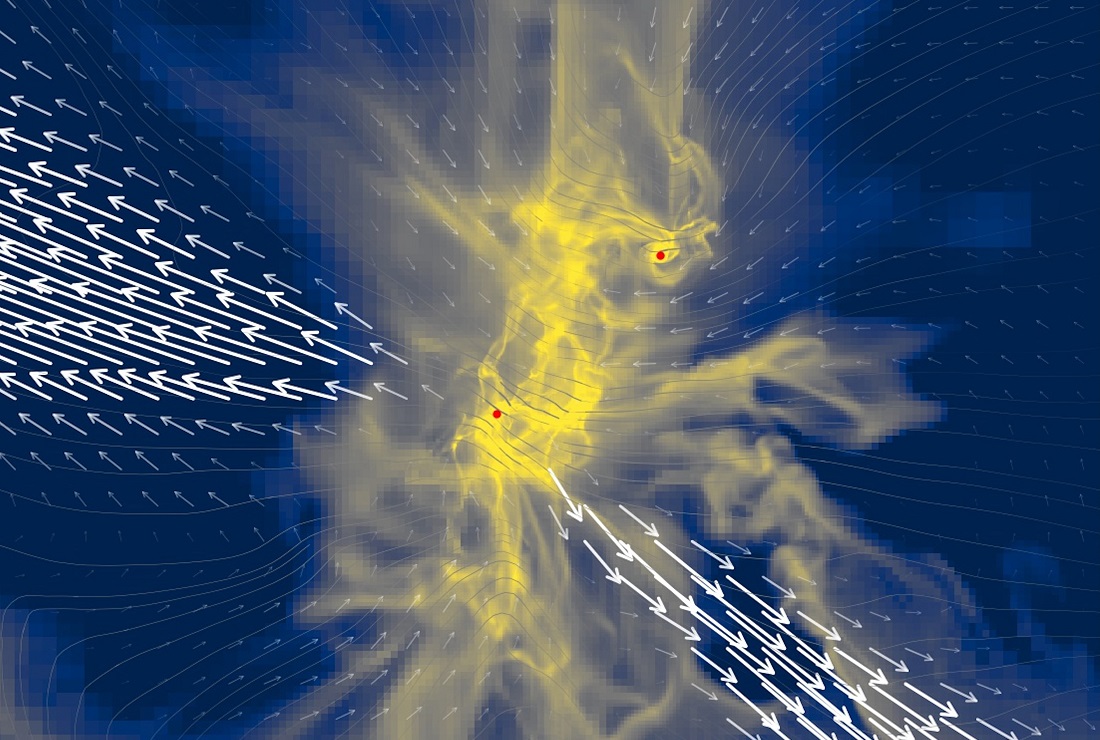
Simulation of binary star (from the scientific article by Jørgensen, Kuruwita et al.)

Nearly half of Sun-size stars are binary. According to University of Copenhagen research, planetary systems around binary stars may be very different from those around single stars. This points to new targets in the search for extraterrestrial life forms.

Since the only known planet with life, the Earth, orbits the Sun, planetary systems around stars of similar size are obvious targets for astronomers trying to locate extraterrestrial life. Nearly every second star in that category is a binary star.

“The result is exciting since the search for extraterrestrial life will be equipped with several new, extremely powerful instruments within the coming years...

Read More

Astronomers Capture Black Hole Eruption Spanning 16 times the Full Moon in the sky

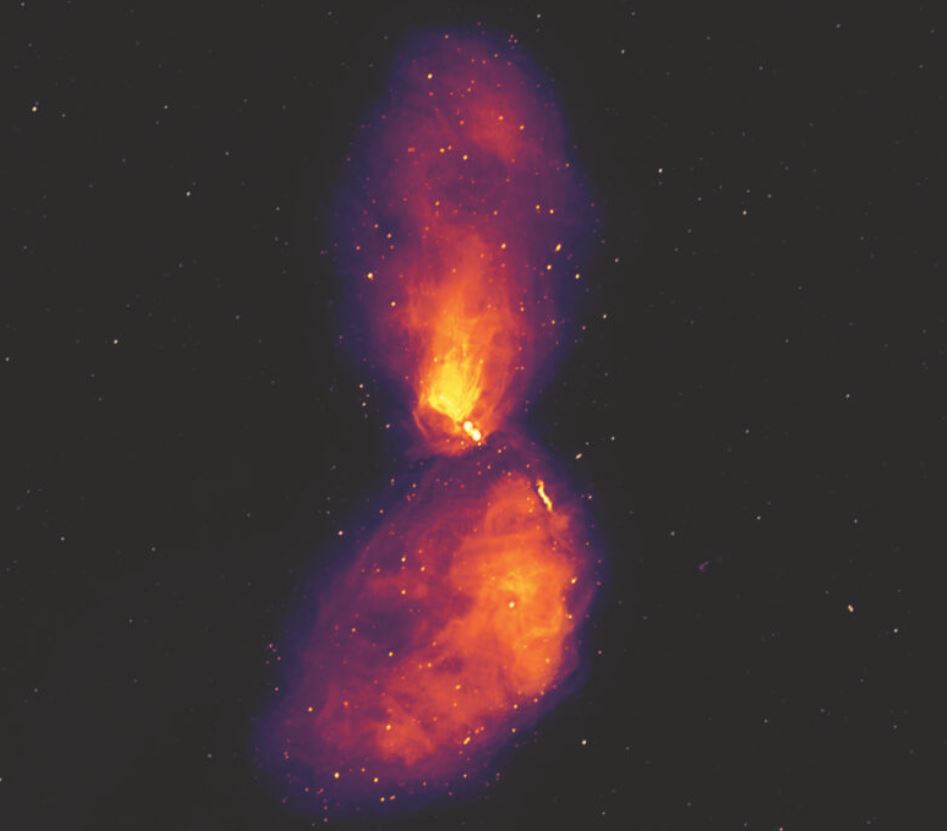
Astronomers have produced the most comprehensive image of radio emission from the nearest actively feeding supermassive black hole to Earth.

The emission is powered by a central black hole in the galaxy Centaurus A, about 12 million light years away.

As the black hole feeds on in-falling gas, it ejects material at near light-speed, causing ‘radio bubbles’ to grow over hundreds of millions of years.

When viewed from Earth, the eruption from Centaurus A now extends eight degrees across the sky — the length of 16 full Moons laid side by side.

It was captured using the Murchison Widefield Array (MWA) telescope in outback Western Australia.

The research was published today in the journal Nature Astronomy.

Lead author Dr Benjamin McKinley, from the Curtin University node o...

Read More

Plasma Jets reveal Magnetic Fields far, far away

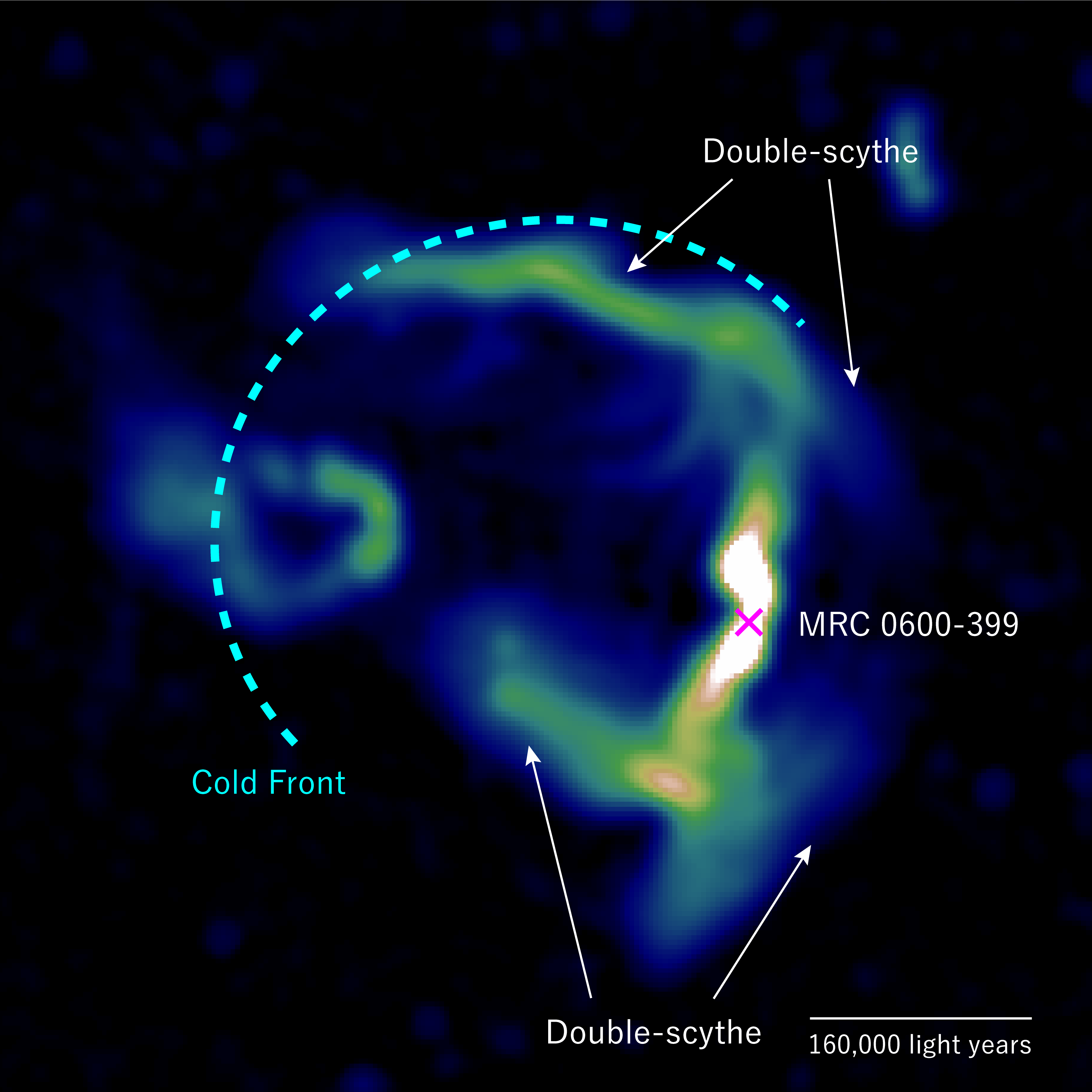
A black hole (marked by the red x) at the centre of galaxy MRC 0600-399 emits a jet of particles that bends into a ‘double-scythe’ T-shape that follows the magnetic field lines at the galaxy subcluster’s boundary.
(Image Credit: Modified from Chibueze, Sakemi, Ohmura et al. (2021) Nature Fig. 1(b))

Radio telescope images enable a new way to study magnetic fields in galaxy clusters millions of light years away. For the first time, researchers have observed plasma jets interacting with magnetic fields in a massive galaxy cluster 600 million light years away, thanks to the help of radio telescopes and supercomputer simulations. The findings, published in the journal Nature, can help clarify how such galaxy clusters evolve.

Galaxy clusters can contain up to thousands of galaxies bound to...

Read More