

Slow Aging tagged posts

The Feeling of Hunger itself may Slow Aging in Flies

fruitfly hunger refrigerator apple orange

From low-carb to intermittent fasting, surgery to Ozempic — people turn to a seemingly never-ending array of diets, procedures and drugs to lose weight. While it has been long understood that limiting the amount of food eaten can promote healthy aging in a wide range of animals, including humans, a new study from University of Michigan has revealed that the feeling of hunger itself may be enough to slow aging.

Previous research has demonstrated that even the taste and smell of food can reverse the beneficial, life-extending effects of diet restriction, even without its consumption.

These intriguing findings drove first author Kristy Weaver, Ph.D., principal investigator Scott Pletcher, Ph.D...

Read More
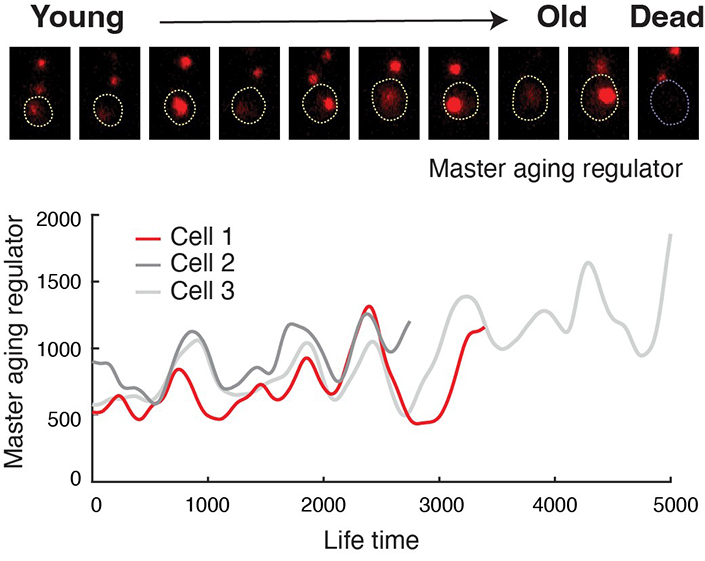
Scientists Slow Aging by Engineering Longevity in Cells

Image of engineered cells showing oscillating abundance of a master aging regulator.
Engineered cells show oscillating abundance of a master aging regulator. Credit: Hao Lab, UC San Diego

Human lifespan is related to the aging of our individual cells. Three years ago a group of University of California San Diego researchers deciphered essential mechanisms behind the aging process. After identifying two distinct directions that cells follow during aging, the researchers genetically manipulated these processes to extend the lifespan of cells.

As described in a new article published April 27, 2023, in Science, the team has now extended this research using synthetic biology to engineer a solution that keeps cells from reaching their normal levels of deterioration associated with aging.

Cells, including those of yeast, plants, animals and humans, all contain gene regu...

Read More