
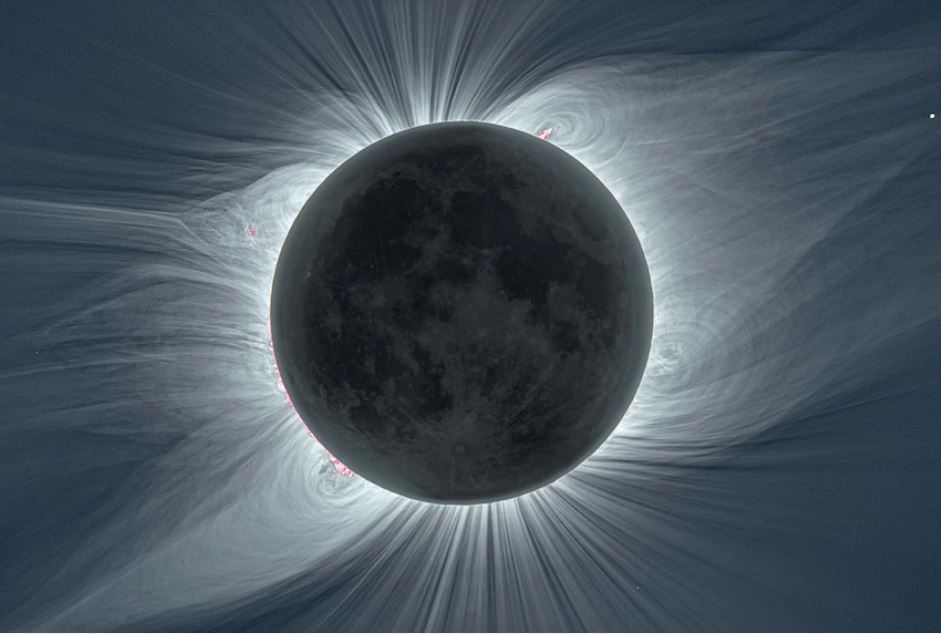
About 17 years ago, J. Martin Laming, an astrophysicist at the U.S. Naval Research Laboratory, theorized why the chemical composition of the Sun’s tenuous outermost layer differs from that lower down...
Read More

March 4, 2021,
 Astronomy/Space
About 17 years ago, J. Martin Laming, an astrophysicist at the U.S. Naval Research Laboratory, theorized why the chemical composition of the Sun’s tenuous outermost layer differs from that lower down...
Read More
February 1, 2021,
Physics, Technology/Electronics

A new type of rocket thruster that could take humankind to Mars and beyond has been proposed by a physicist at the U.S. Department of Energy’s (DOE) Princeton Plasma Physics Laboratory (PPPL).
The device would apply magnetic fields to cause particles of plasma, electrically charged gas also known as the fourth state of matter, to shoot out the back of a rocket and, because of the conservation of momentum, propel the craft forward. Current space-proven plasma thrusters use electric fields to propel the particles.
The new concept would accelerate the particles using magnetic reconnection, a process found throughout the universe, incl...
Read More
August 1, 2020,
Astronomy/Space

Extensive power outages and satellite blackouts that affect air travel and the internet are some of the potential consequences of massive solar storms. These storms are believed to be caused by the release of enormous amounts of stored magnetic energy due to changes in the magnetic field of the sun’s outer atmosphere — something that until now has eluded scientists’ direct measurement. Researchers believe this recent discovery could lead to better “space weather” forecasts in the future.
“We are becoming increasingly dependent on space-based systems that are sensitive to space weather...
Read More
July 10, 2020,
Astronomy/Space
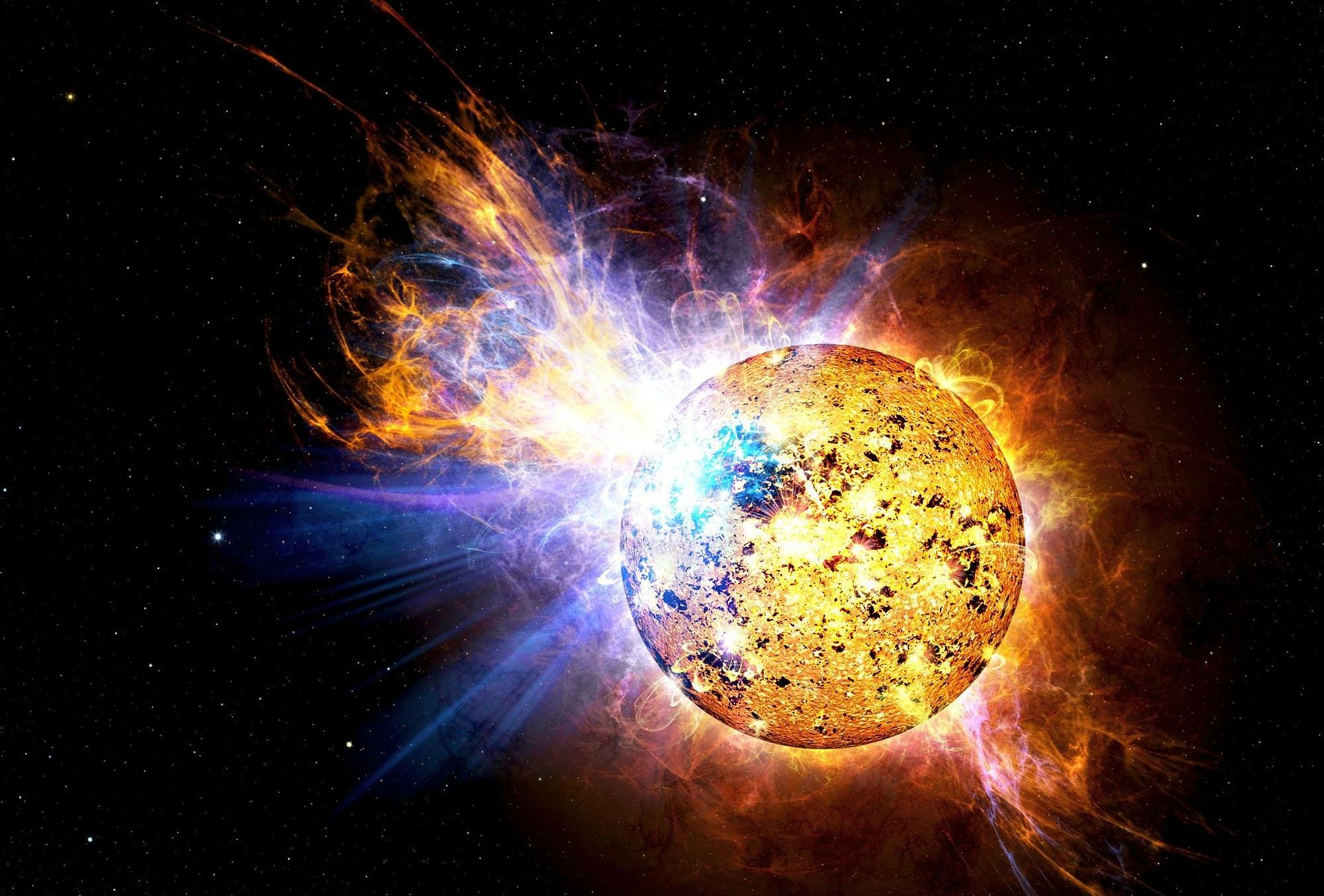
The cold, dark chaos of space is filled with mystery. Fortunately, the ways in which we can peer into the mists of the void are increasing, and now include Kyoto University’s 3.8 meter Seimei telescope.
Using this new instrument—located on a hilltop in Okayama to the west of Kyoto—astronomers from Kyoto University’s Graduate School of Science and the National Astronomical Observatory of Japan have succeeded in detecting 12 stellar flare phenomena on AD Leonis, a red dwarf 16 light years away. In particular, one of these flares was 20 times larger than those emitted by our own sun.
“Solar flares are sudden explosions that emanate from the surfaces of stars, including our own sun,” explains first author Kosuke Namekata.
“On rare occasions, an extrem...
Read More
Recent Comments