
space missions tagged posts

Asteroid Apophis will skim past Earth in 2029, and a new joint mission plans to watch every change

ESA and JAXA team up on planetary defense, Ramses mission to asteroid Apophis
Credit: European Space Agency

The European Space Agency (ESA) and the Japan Aerospace Exploration Agency (JAXA) have signed a Memorandum of Cooperation to deepen collaboration in planetary defense, alongside a dedicated agreement for collaboration on the Rapid Apophis Mission for Space Safety (Ramses) to the near-Earth asteroid Apophis.

The agreements were signed on 7 May by ESA Director General Josef Aschbacher and JAXA President Hiroshi Yamakawa at the Embassy of Italy in Berlin, Germany, in the presence of European and Japanese institutional and industrial leadership. The event was hosted in collaboration with the Italian Space Agency (ASI), in light of ESA’s selection of OHB Italia as prime contractor for the Ramses mission.

The move builds on a joint statement from November ...

Read More
Spaceflight causes astronauts’ brains to shift, stretch and compress in microgravity

iss
Credit: CC0 Public Domain

Spaceflight takes a physical toll on astronauts, causing muscles to atrophy, bones to thin and bodily fluids to shift. According to a new study published in the journal PNAS, we can now add another major change to that list. Being in microgravity causes the brain to change shape.

Here on Earth, gravity helps to keep the brain anchored in place while the cerebrospinal fluid that surrounds it acts as a cushion. Scientists already knew that, without gravity’s steady pull, the brain moves upward, but this new research showed that it is also stretched and compressed in several areas.

Brains on the move
Researchers led by Rachel Seidler at the University of Florida reached this conclusion after studying MRI scans of 26 astronauts taken before and after their mi...

Read More

Moon Rocks with Unique Dust found

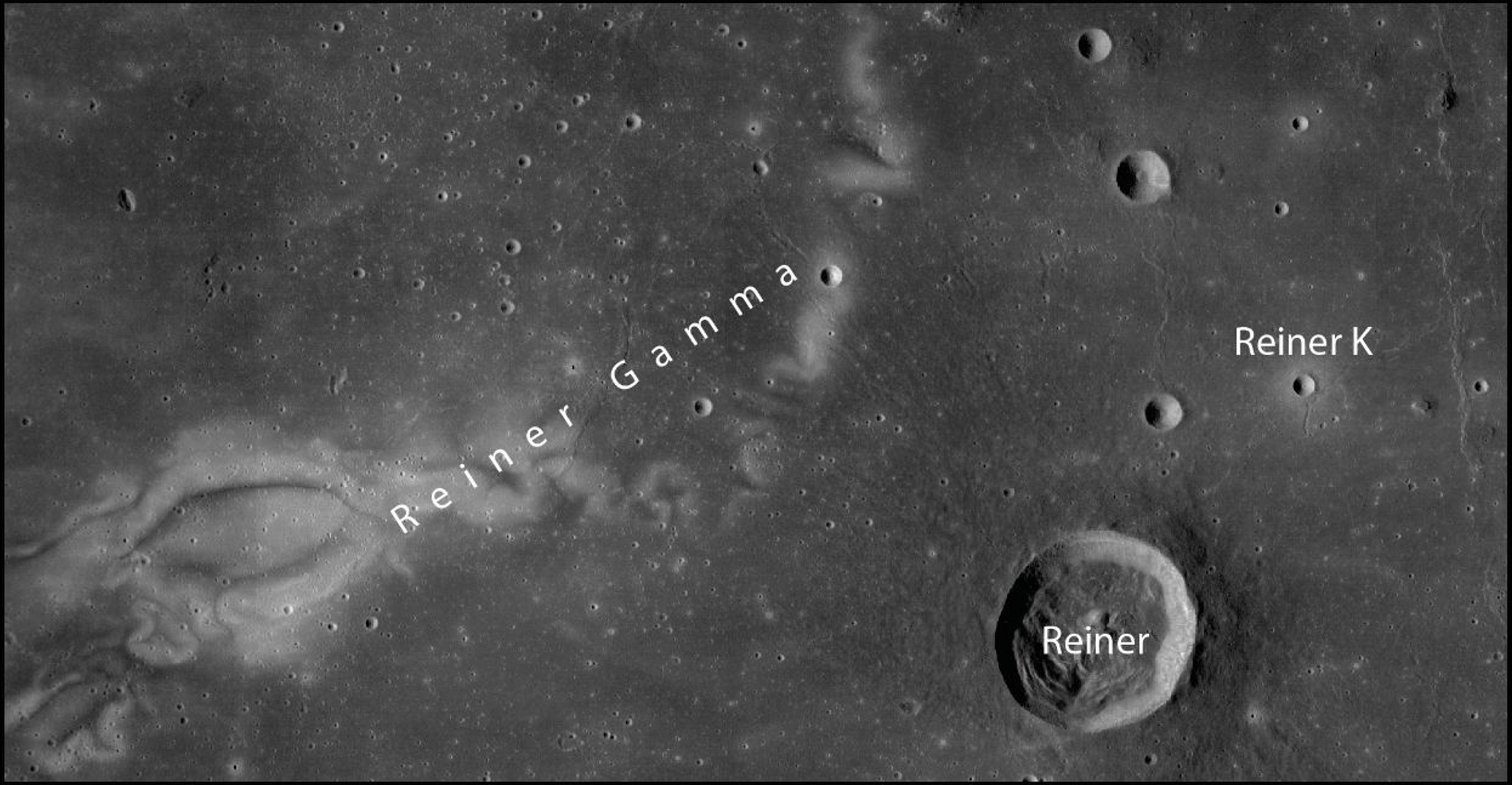
The meter-high rocks discovered in the work are located near the Reiner K crater in the “Reiner Gamma” region, which has a magnetic anomaly.

The moon is almost completely covered in dust. Unlike on Earth, this dust is not smoothed by wind and weather, but is sharp-edged and also electrostatically charged. This dust has been studied since the Apollo era at the end of the 1960s. Now, an international research team led by Dr. Ottaviano Rüsch from the University of Münster has for the first time discovered anomalous meter-sized rocks on the lunar surface that are covered in dust and presumably exhibit unique properties—such as magnetic anomalies.

The scientists’ most important finding is that only very few boulders on the moon have a layer of dust with very special reflective proper...

Read More

Groundbreaking new Rocket-propulsion System

Rocket soaring in space
UCF-developed technology will boost rocket performance.

A University of Central Florida researcher and his team have developed an advanced new rocket-propulsion system once thought to be impossible.

The system, known as a rotating detonation rocket engine, will allow upper stage rockets for space missions to become lighter, travel farther, and burn more cleanly.

The result were published this month in the journal Combustion and Flame. “The study presents, for the first time, experimental evidence of a safe and functioning hydrogen and oxygen propellant detonation in a rotating detonation rocket engine,” said Kareem Ahmed, an assistant professor in UCF’s Department of Mechanical and Aerospace Engineering who led the research.

The rotating detonations are continuous, Mach 5 expl...

Read More