
spaceflight tagged posts

NASA finds Earth microbes could survive on the Moon

Astronaut conducts scientific work aboard the International Space Station, floating in microgravity surrounded by equipment and research tools.
NASA astronaut Kate Rubins on Oct. 14, 2016, collecting microbes in the Japanese Experiment Module aboard the International Space Station.
JAXA/Takuya Onishi

NASA scientists found that microbes brought by astronauts could survive in cold, shadowed niches around the Moon’s South Pole, potentially complicating future searches for pristine lunar chemistry. Some refuges may be no larger than a footprint, while one hardy fungus could even withstand limited exposure to sunlight.

NASA scientists say some microbes carried into space by human explorers may be able to survive in sheltered, shadowed areas near the Moon’s South Pole.

The findings, published on Aug...

Read More
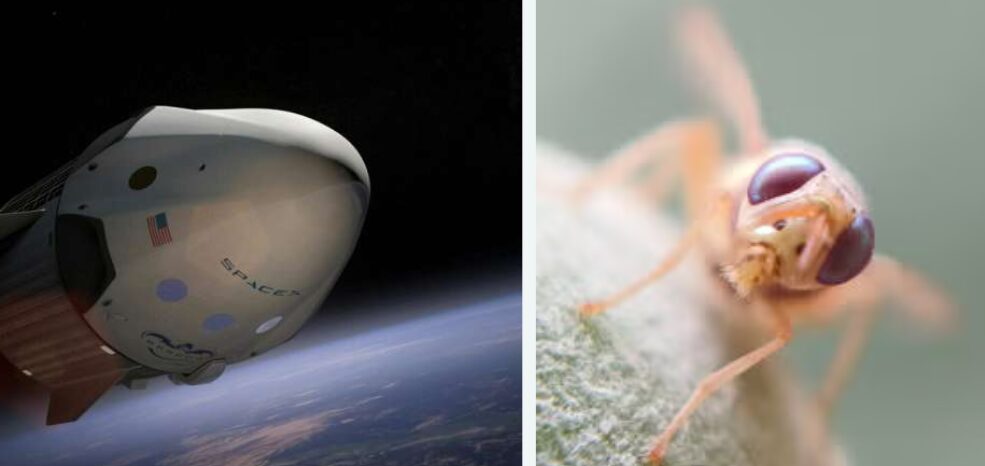
Under crushing hypergravity, fruitflies adapt—and recover

Expose an animal to extreme physical stress, and the expectation is simple: It will break down. But when UC Riverside scientists subjected fruit flies to forces many times stronger than Earth’s gravity—a condition called hypergravity—the insects did something unexpected. They survived. They even mated and reproduced. Their movements and behaviors changed dramatically and then, over time, they recovered.

These findings, detailed in a new paper published in the Journal of Experimental Biology, point to a surprising resilience in how the body responds to high gravitational environments like those experienced by fighter pilots or by astronauts upon reentry to Earth’s atmosphere.

Even after more than six decades of human spaceflight, gaps persist in scientists’ understanding of t...

Read More

Spaceflight causes astronauts’ brains to shift, stretch and compress in microgravity

iss
Credit: CC0 Public Domain

Spaceflight takes a physical toll on astronauts, causing muscles to atrophy, bones to thin and bodily fluids to shift. According to a new study published in the journal PNAS, we can now add another major change to that list. Being in microgravity causes the brain to change shape.

Here on Earth, gravity helps to keep the brain anchored in place while the cerebrospinal fluid that surrounds it acts as a cushion. Scientists already knew that, without gravity’s steady pull, the brain moves upward, but this new research showed that it is also stretched and compressed in several areas.

Brains on the move
Researchers led by Rachel Seidler at the University of Florida reached this conclusion after studying MRI scans of 26 astronauts taken before and after their mi...

Read More