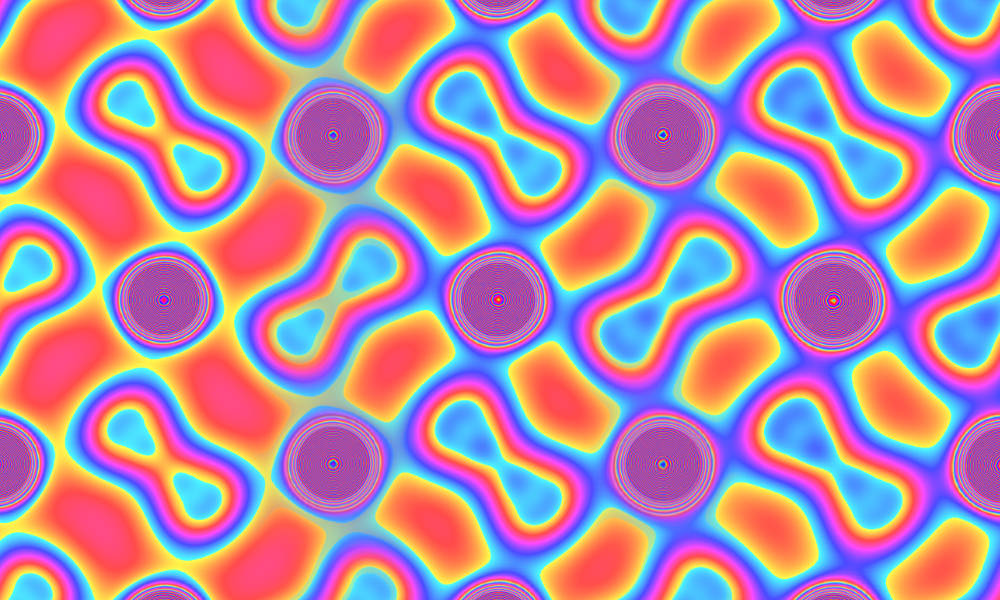
As a compound of manganese sulfide is compressed in a diamond anvil cell, it undergoes dramatic transitions. In this illustration, the interaction between the manganese (Mn) atomic ions (purple circles) and disulfur (S2) molecular ions (figure 8s) increases from left to right until the overlap is significant enough to make the system metallic. (Illustration courtesy of Dean Smith, Argonne National Lab)
Remarkable things happen when a “squishy” compound of manganese and sulfide (MnS2) is compressed in a diamond anvil, say researchers from the University of Rochester and the University of Nevada, Las Vegas (UNLV).
“This is a new type of charge transfer mechanism, and so from a science community point of view this is very, very exciting...
Doctoral students Phillip Dang (left) and Reet Chaudhuri at the National High Magnetic Field Laboratory, where measurements were made on a material structure that concurrently has superconductivity and the quantum Hall effect.
Cornell University scientists have identified a new contender when it comes to quantum materials for computing and low-temperature electronics.
Using nitride-based materials, the researchers created a material structure that simultaneously exhibits superconductivity — in which electrical resistance vanishes completely — and the quantum Hall effect, which produces resistance with extreme precision when a magnetic field is applied.
“This is a beautiful marriage of the two things we know, at the microscale, that give electrons the most startling quantum proper...
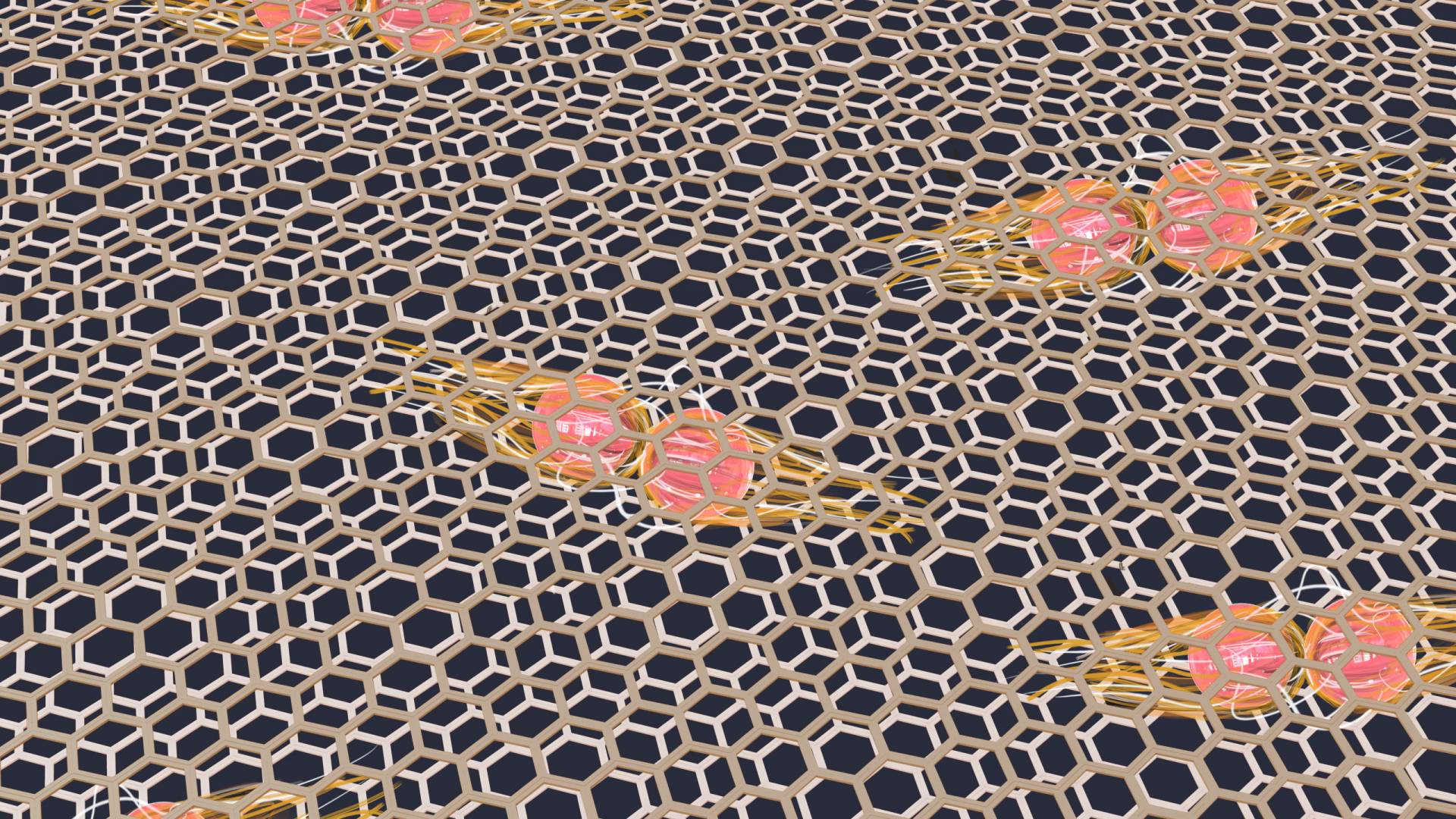
A team led by Princeton physicist Ali Yazdani has shown that strong electron interactions play a key role in the superconductivity that has been discovered in graphene, a material made up of single-layer sheets of carbon atoms. Here, two graphene sheets stacked on each other with a twist make a long-wavelength moiré pattern. Image designed by Kai Fu for the Yazdani Lab, Princeton University
Physicists conducted experiments to explore superconductivity in a groundbreaking new material known as magic-angle twisted graphene. The team imaged electrons on the material’s surface and found that electrons interact with each other in ways that could help explain how superconductivity arises in this material.
In spring 2018, the surprising discovery of superconductivity in a new material s...






Recent Comments