supermassive black hole tagged posts

Astronomers find Largest Radio Galaxy ever

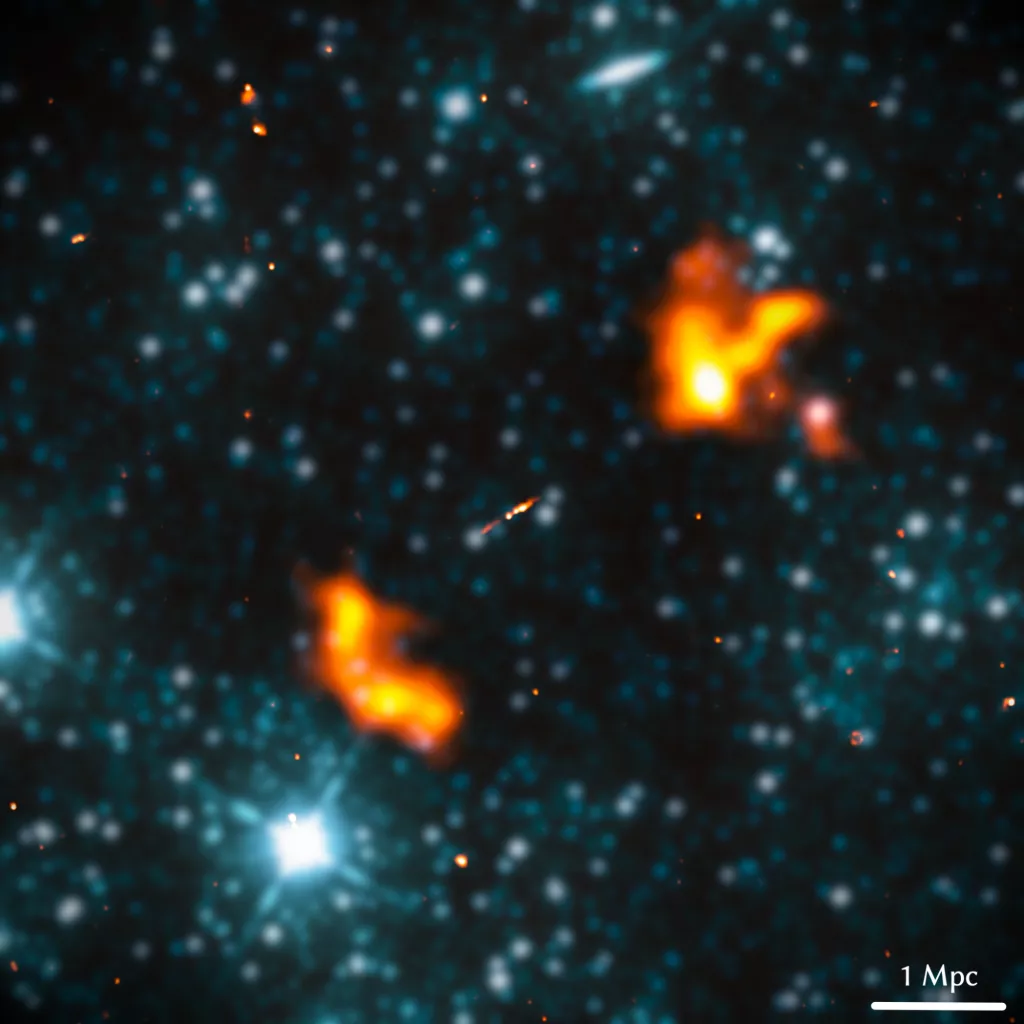
A joint radio-infrared view of Alcyoneus, a radio galaxy with a projected proper length of 5.0 megaparsecs. Researchers superimposed images from the LOFAR Two-meter Sky Survey (LoTSS), shown in orange, with images from the Wide-field Infrared Survey Explorer (WISE), shown in blue. (Image credit: Martijn Oei et al.)

By a stroke of luck, a team led by Dutch Ph.D. student Martijn Oei has discovered a radio galaxy of at least 16 million light-years long. The pair of plasma plumes is the largest structure made by a galaxy known thus far. The finding disproves some long-kept hypotheses about the growth of radio galaxies.

A supermassive black hole lurks in the center of many galaxies, which slows down the birth of new stars and therefore strongly influences the lifecycle of the galaxy as a...

Read More

Supermassive Black Hole Caught Hiding in a Ring of Cosmic Dust

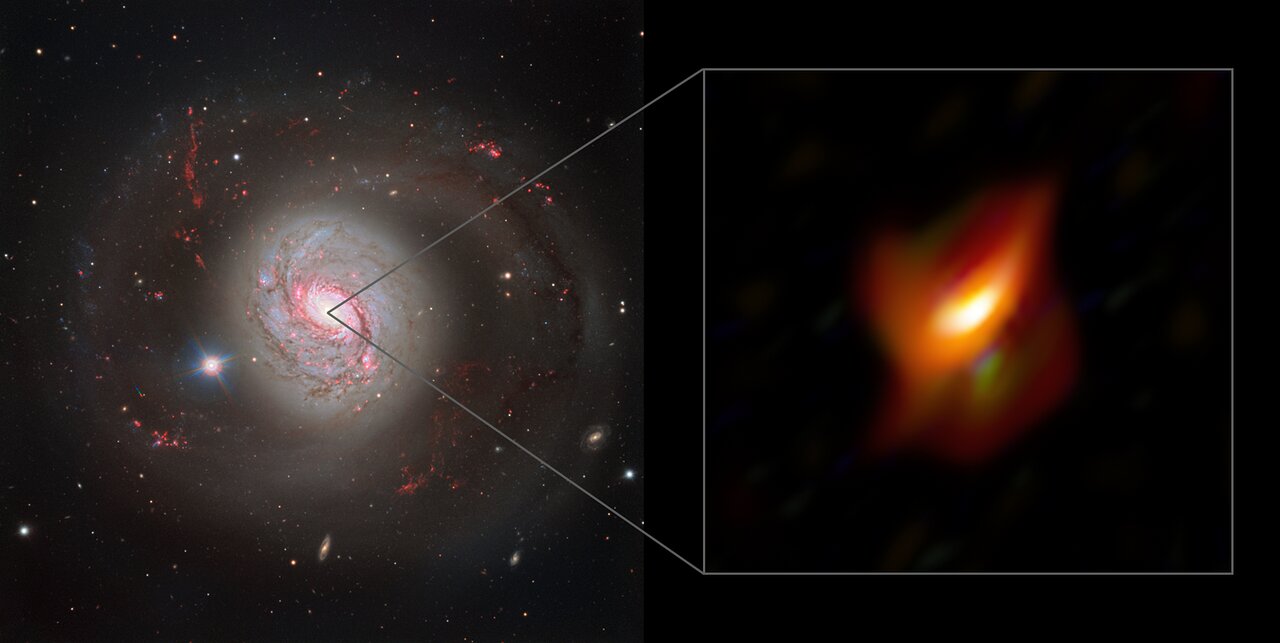
The left panel of this image shows a dazzling view of the active galaxy Messier 77 captured with the FOcal Reducer and low dispersion Spectrograph 2 (FORS2) instrument on ESO’s Very Large Telescope. The right panel shows a blow-up view of the very inner region of this galaxy, its active galactic nucleus, as seen with the MATISSE instrument on ESO’s Very Large Telescope Interferometer.

Active galactic nuclei (AGNs) are extremely energetic sources powered by supermassive black holes and found at the centre of some galaxies. These black holes feed on large volumes of cosmic dust and gas. Before it is eaten up, this material spirals towards the black hole and huge amounts of energy are released in the process, often outshining all the stars in the galaxy.

Astronomers have been curio...

Read More

Newly-found Planets on the Edge of Destruction

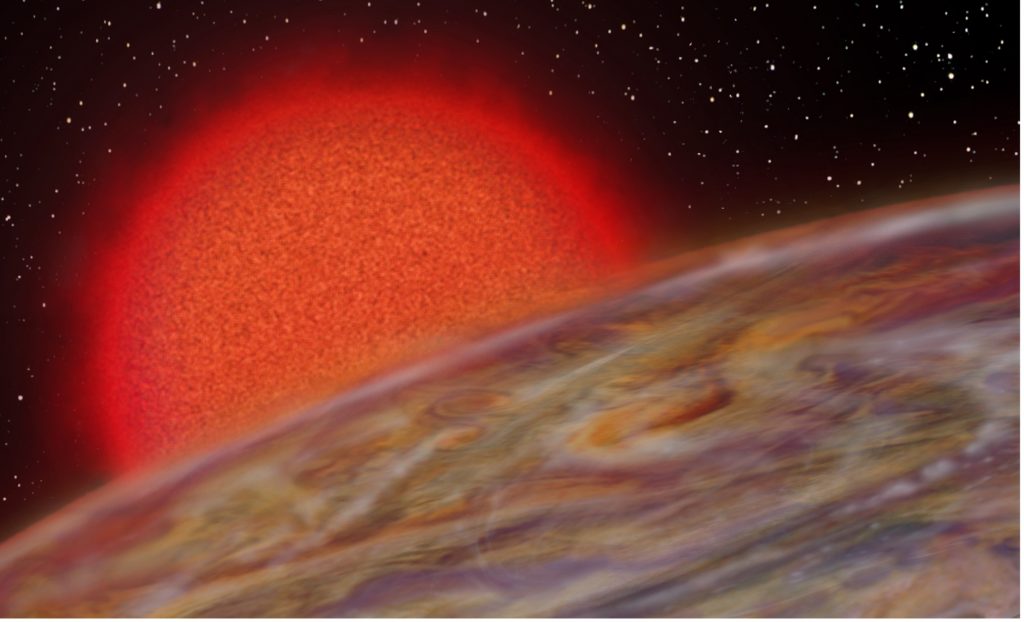
An artist’s rendition of what a planetary system similar to TOI-2337b, TOI-4329b, and TOI-2669b might look like, where a hot Jupiter-like exoplanet orbits an evolved, dying star.
Credit: Karen Teramura/University of Hawaiʻi Institute for Astronomy

Astronomers have found three Jupiter-like exoplanets that are dangerously close to being ‘swallowed up’ by their host stars. The discovery gives new insight into how planetary systems evolve over time, helping to reveal the fate of solar systems like our own.

Three newly-discovered planets have been orbiting dangerously close to stars nearing the end of their lives...

Read More

Gravitational ‘Kick’ may explain the Strange Shape at the Center of Andromeda

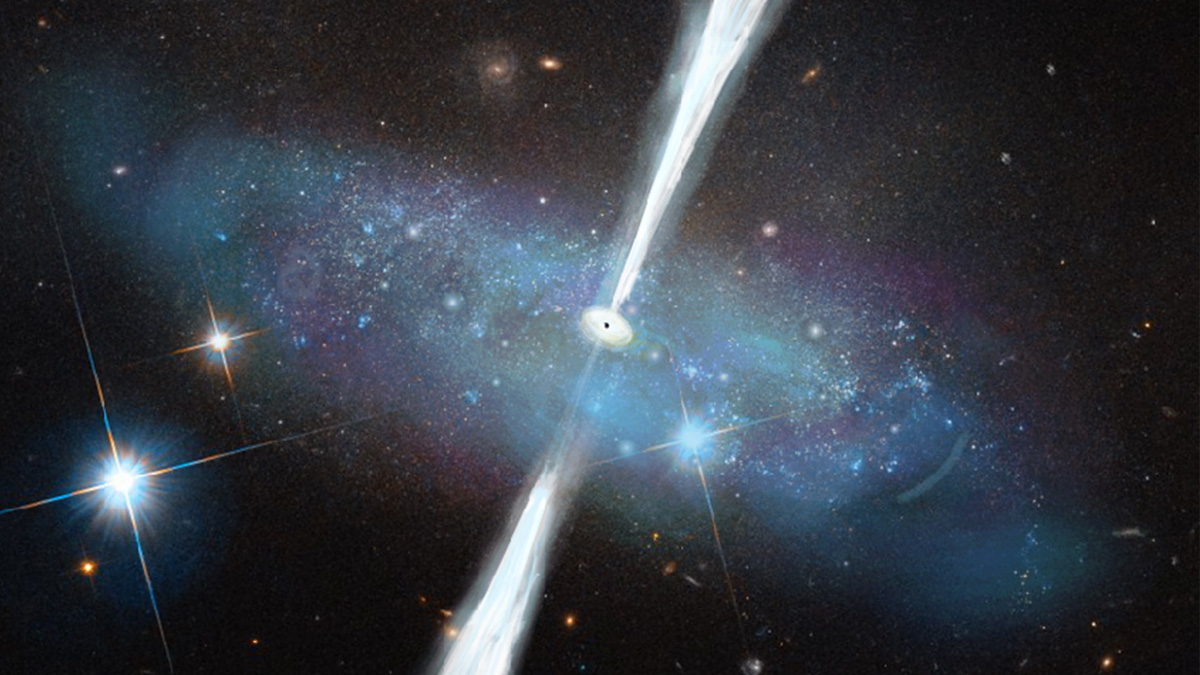
Click to enlarge: Graphic showing the orbit of stars around a supermassive black hole before, left, and after, right, a gravitational “kick.” (Credit: Steven Burrows/JILA)

When two galaxies collide, the supermassive black holes at their cores release a devastating gravitational “kick,” similar to the recoil from a shotgun. New research led by CU Boulder suggests that this kick may be so powerful it can knock millions of stars into wonky orbits.

The research, published Oct. 29 in The Astrophysical Journal Letters, helps solve a decades-old mystery surrounding a strangely-shaped cluster of stars at the heart of the Andromeda Galaxy. It might also help researchers better understand the process of how galaxies grow by feeding on each other.

“When scientists first looked at Andromeda,...

Read More