



supernova tagged posts
Astronomers discover new type of supernova triggered by black hole-star interaction
August 17, 2025,
 Astronomy/Space
Complete Stellar Collapse: Unusual Star System Proves that Stars can Die Quietly
May 22, 2024,
Astronomy/Space
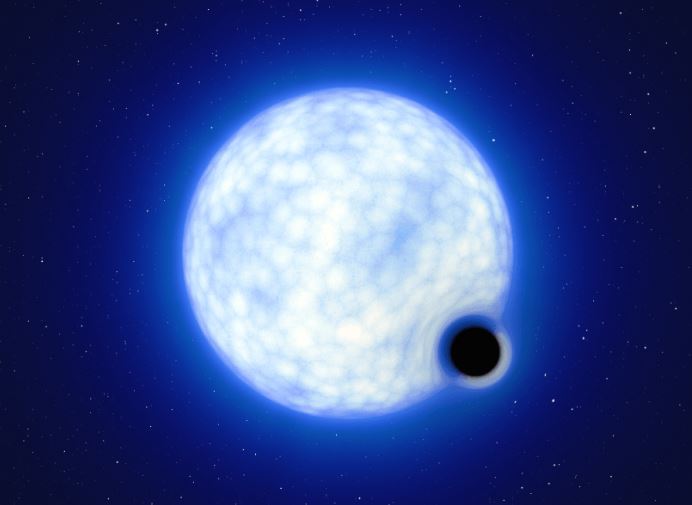
University of Copenhagen astrophysicists help explain a mysterious phenomenon, whereby stars suddenly vanish from the night sky. Their study of an unusual binary star system has resulted in convincing evidence that massive stars can completely collapse and become black holes without a supernova explosion.
One day, the star at the center of our own solar system, the Sun, will begin to expand until it engulfs Earth. It will then become increasingly unstable until it eventually contracts into a small and dense object known as a white dwarf.
However, if the Sun were of a weight class roughly eight times greater or more, it would probably go out with a huge bang — as a supernova...
Read MoreExploding Stars are Rare but Emit Torrents of Radiation—one close enough to Earth could Threaten Life on the Planet
April 2, 2024,
Astronomy/Space
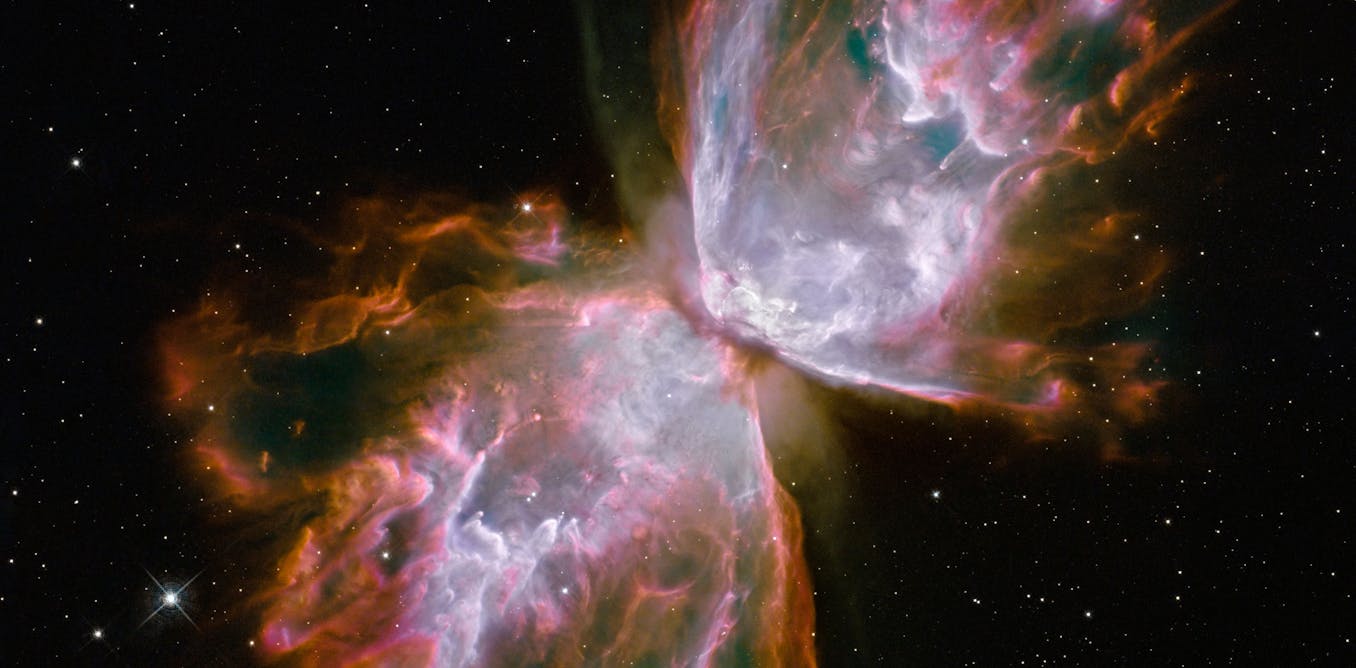
Stars like the sun are remarkably constant. They vary in brightness by only 0.1% over years and decades, thanks to the fusion of hydrogen into helium that powers them. This process will keep the sun shining steadily for about 5 billion more years, but when stars exhaust their nuclear fuel, their deaths can lead to pyrotechnics.
The sun will eventually die by growing large and then condensing into a type of star called a white dwarf. But stars more than eight times more massive than the sun die violently in an explosion called a supernova.
Supernovae happen across the Milky Way only a few times a century, and these violent explosions are usually remote enough that people here on Earth don’t n...
Read MoreHubble finds Bizarre Explosion in Unexpected Place
October 9, 2023,
Astronomy/Space
A very rare, strange burst of extraordinarily bright light in the universe just got even stranger—thanks to the eagle-eye of the NASA/ESA Hubble Space Telescope. The phenomenon, called a Luminous Fast Blue Optical Transient (LFBOT), flashed onto the scene where it wasn't expected to be found, far away from any host galaxy. Only Hubble could pinpoint its location. The Hubble results suggest astronomers know even less about these objects than previously thought by ruling out some possible theories.Read More

Recent Comments