Best fit SED for TOI-1685 from VOSA. Colored points are photometric magnitudes from the Gaia, 2Mass, and WISE surveys, and magnitudes synthesized from spectrophotometrically calibrated Gaia DR3 Bp/Rp spectra into the photometric system of the OAJ JPAS and JPLUS surveys. Gray line depicts the model flux measurements. Credit: arXiv (2024). DOI: 10.48550/arxiv.2405.14895
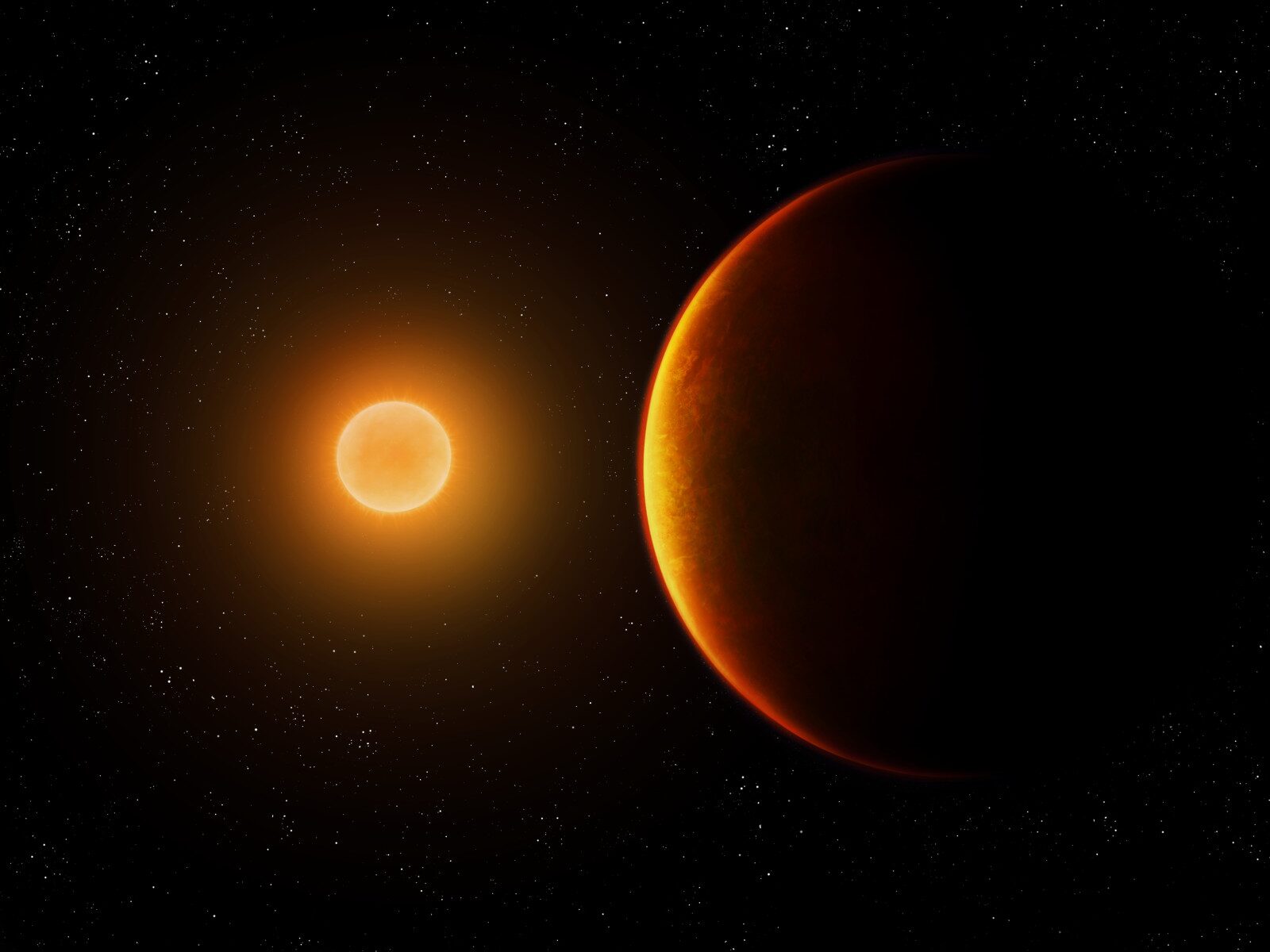
An international team of astronomers has performed follow-up observations of a nearby alien world known as TOI-1685 b. Results of the observations, published May 21 on the pre-print server arXiv, indicate that TOI-1685 b is a hot and rocky alien world with an Earth-like density.
The so-called “super-Earths” are planets more massive than Earth but not exceeding the mass of Neptune...
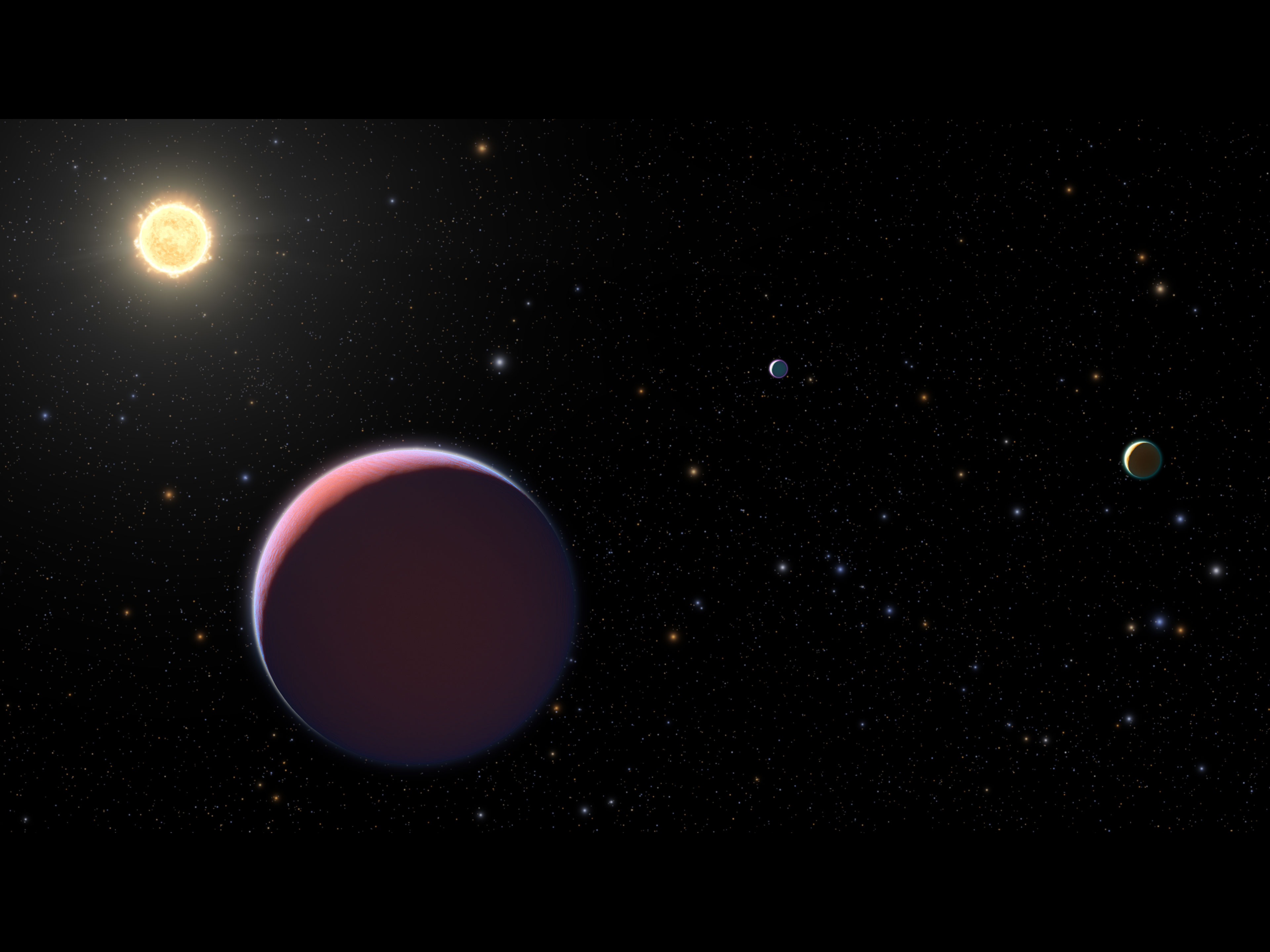
An artist’s interpretation of TOI 4633 c, a Neptune-like exoplanet found orbiting the habitable zone of a sunlike star. The system contains a second star (right) and may also host another exoplanet (left). Credit: Ed Bell for the Simons Foundation
A team of astronomers and citizen scientists has discovered a planet in the habitable zone of an unusual star system, including two stars and potentially another exoplanet.
The planet hunters spotted the Neptune-like planet as it crossed in front of its host star, temporarily dimming the star’s light in a way akin to a solar eclipse on Earth...
Figure 1: The small panel on the top left shows an illustration of NASA’s TESS space telescope, responsible for the first identification of the exoplanets TOI-2141b and TOI-1736b. The background image is a photo of the OHP observatory with the dome of the 1.93 m telescope, where the SOPHIE instrument is installed, responsible for the detection and characterization of the exoplanets TOI-2141b, TOI-1736b, and TOI-1736c. Credit: Eder Martioli.
A study published today (Dec. 15) in the journal Astronomy & Astrophysics reveals the discovery of two new planetary systems orbiting stars similar to our sun, also known as solar analogs.
Recent Comments