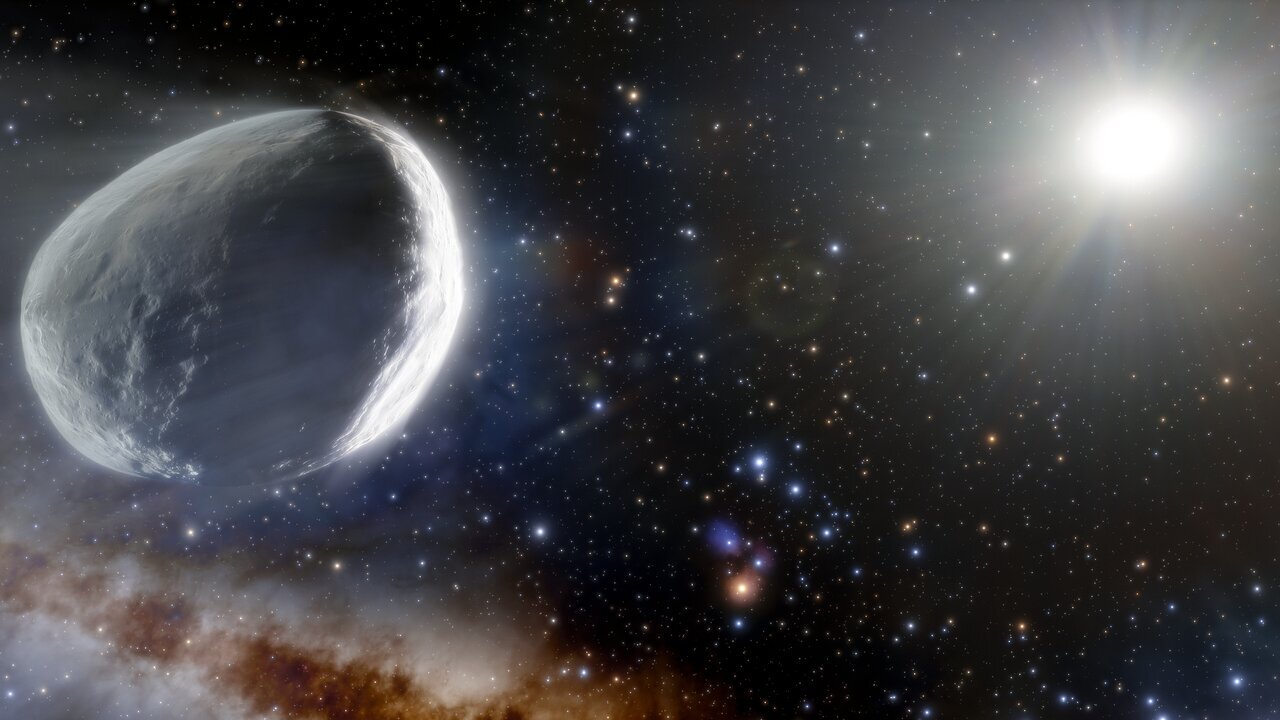
The comet Bernardinelli-Bernstein (BB), represented in this artist rendition as it might look in the outer Solar System, is estimated to be about 1000 times more massive than a typical comet. The largest comet discovered in modern times, it is among the most distant comets to be discovered with a coma, which means ice within the comet is vaporizing and forming an envelope of dust and vapor around the comet’s core. Credit: NOIRLab / NSF / AURA / J. da Silva / Spaceengine
A new study by University of Maryland astronomers shows that comet Bernardinelli-Bernstein (BB), the largest comet ever discovered, was active long before previously thought, meaning the ice within it is vaporizing and forming an envelope of dust and vapor known as a coma...
Brown dwarfs are astronomical objects with masses between those of planets and stars. The question of where exactly the limits of their mass lie remains a matter of debate, especially since their constitution is very similar to that of low-mass stars...
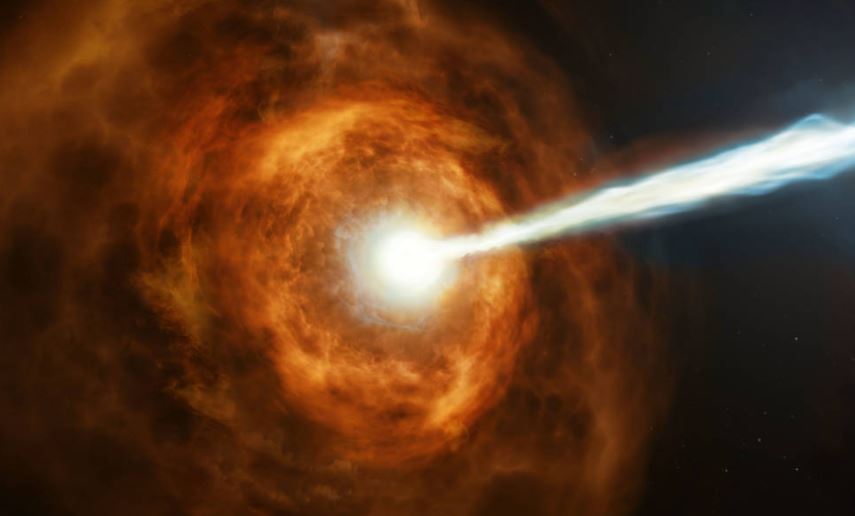
NASA has a long tradition of unexpected discoveries, and the space program’s TESS mission is no different. SMU astrophysicist and her team have discovered a particularly bright gamma-ray burst using a NASA telescope designed to find exoplanets — those occurring outside our solar system — particularly those that might be able to support life.
It’s the first time a gamma-ray burst has been found this way.
Gamma-ray bursts are the brightest explosions in the universe, typically associated with the collapse of a massive star and the birth of a black hole. They can produce as much radioactive energy as the sun will release during its entire 10-billion-year existence.
Krista Lynne Smith, an assistant professor of physics at Southern Methodist Uni...
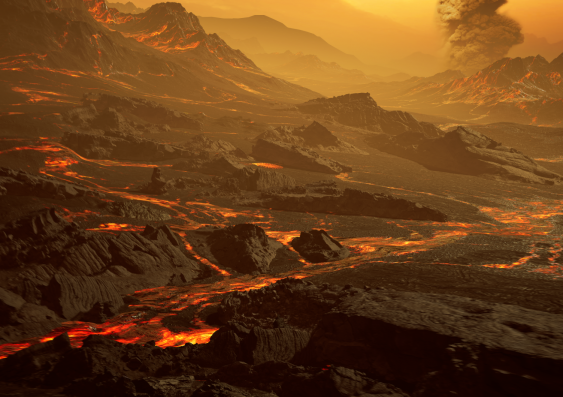
It’s getting hot in here … 430 degrees Celsius hot, that is. Artist’s interpretation: RenderArea
A rocky planet discovered in the Virgo constellation could change how we look for life in the universe. It could be our best chance yet of studying rocky planet atmospheres outside the solar system, a new international study involving UNSW Sydney shows.
The planet, called Gliese 486b (pronounced Glee-seh), is a ‘super-Earth’: that is, a rocky planet bigger than Earth but smaller than ice giants like Neptune and Uranus. It orbits a red dwarf star around 26 light-years away, making it a close neighbour — galactically speaking.
With a piping-hot surface temperature of 430 degrees Celsius, Gliese 486b is too hot to support human life...






Recent Comments