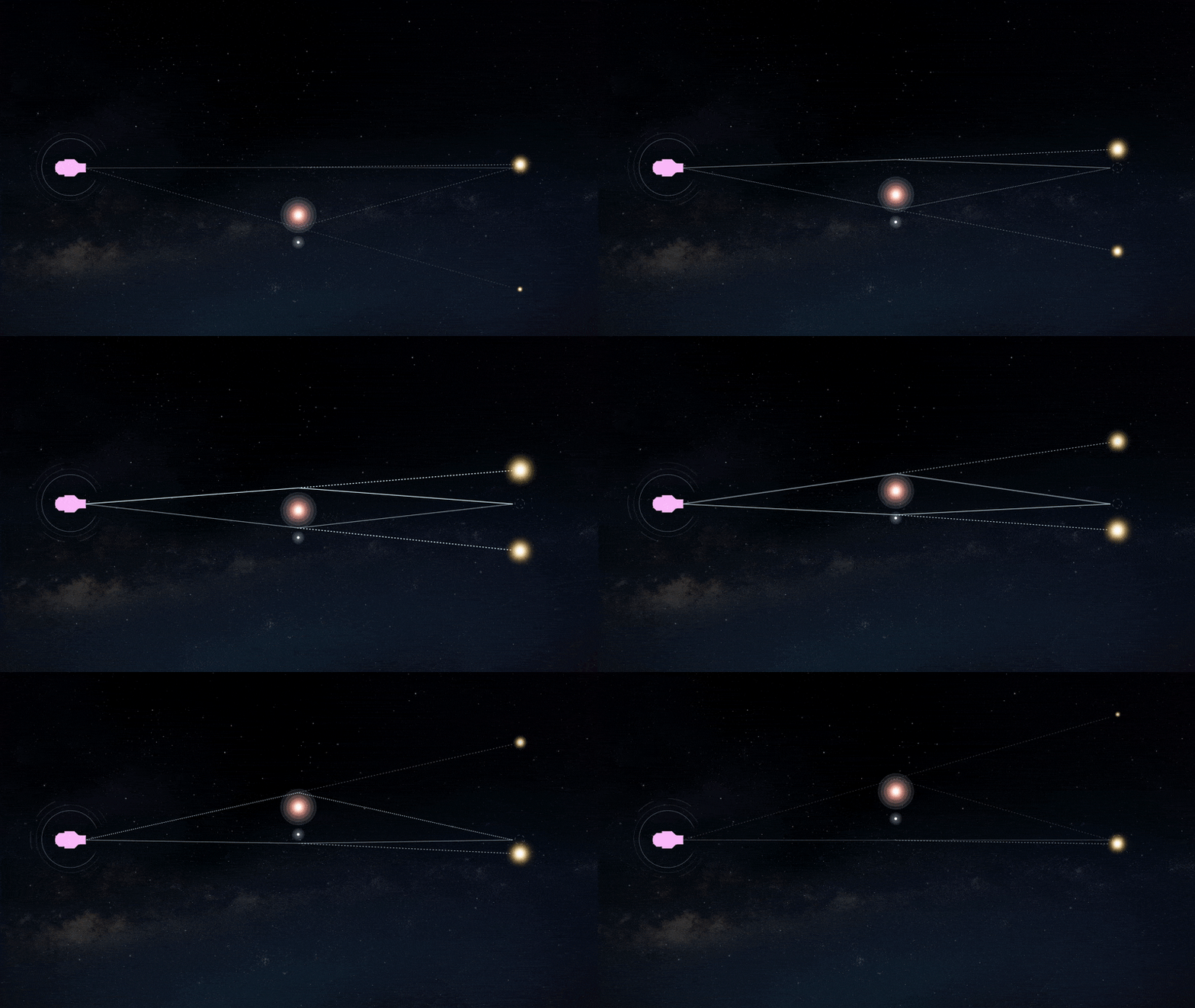
This animation illustrates the concept of gravitational microlensing. When one star in the sky appears to pass nearly in front of another, the light rays of the background source star become bent due to the warped space-time around the foreground star. This star acts like a virtual magnifying glass, amplifying the brightness of the background source star. If the nearer star harbors a planetary system, then those planets can also act as lenses, each one producing a short deviation in the brightness of the source. When astronomers find planets this way, they can measure their mass and orbital distance from their host star. Credit: NASA’s Goddard Space Flight Center/CI Lab
For the first time, NASA’s TESS (Transiting Exoplanet Survey Satellite) mission has identified a planet orbiting a ...



 Astronomy/Space
Recent Comments