

Astronomers from Liverpool John Moores University and the University of Montpellier have devised an ‘early warning’ system to sound the alert when a massive star is about ...
Read More

October 17, 2022,
 Astronomy/Space
Astronomers from Liverpool John Moores University and the University of Montpellier have devised an ‘early warning’ system to sound the alert when a massive star is about ...
Read More
With the help of the European Southern Observatory’s Very Large Telescope (ESO’s VLT), astronomers have discovered and studied in detail the most distant source of radio emission known to date...
Read More
July 24, 2020,
Astronomy/Space

The European Southern Observatory’s Very Large Telescope (ESO’s VLT) has taken the first ever image of a young, Sun-like star accompanied by two giant exoplanets. Images of systems with multiple exoplanets are extremely rare, and – until now – astronomers had never directly observed more than one planet orbiting a star similar to the Sun...
Read More
July 1, 2020,
Astronomy/Space
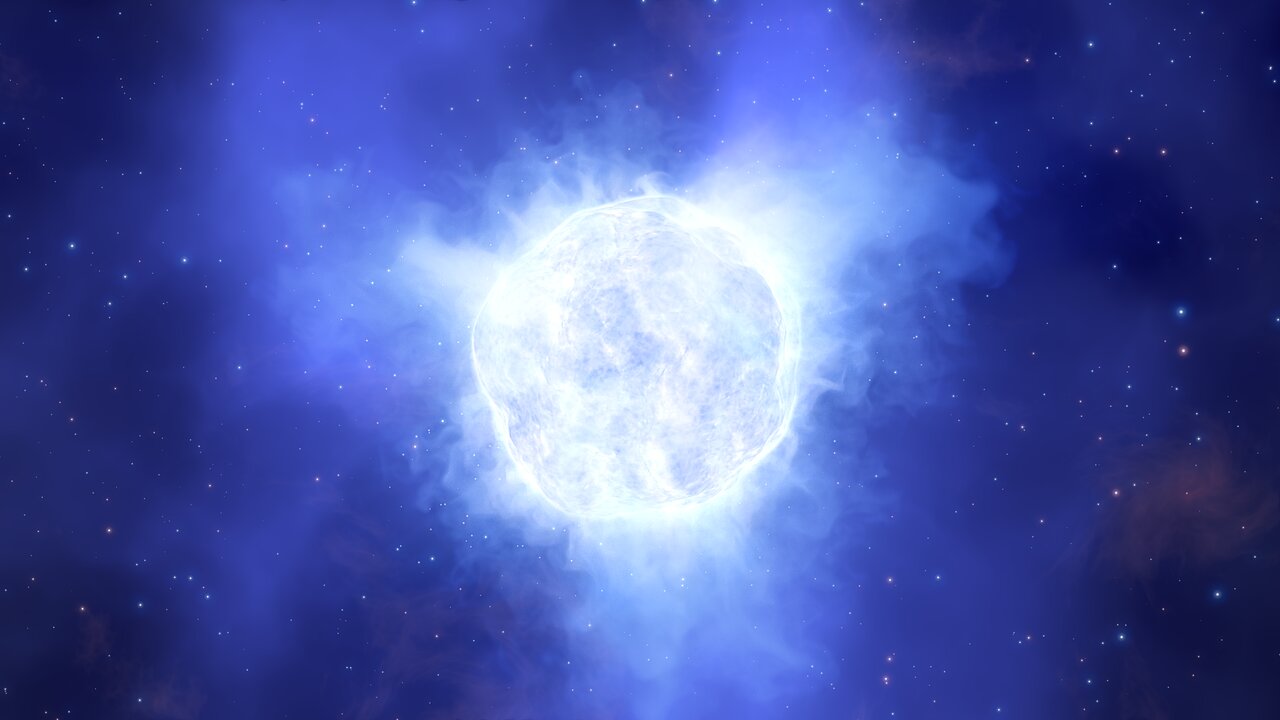
Using the European Southern Observatory’s Very Large Telescope (VLT), astronomers have discovered the absence of an unstable massive star in a dwarf galaxy. Scientists think this could indicate that the star became less bright and partially obscured by dust. An alternative explanation is that the star collapsed into a black hole without producing a supernova. “If true,” says team leader and PhD student Andrew Allan of Trinity College Dublin, Ireland, “this would be the first direct detection of such a monster star ending its life in this manner.”
Between 2001 and 2011, various teams of astronomers studied the myster...
Read More
Recent Comments