
X-rays tagged posts

AI repurposes routine chest X-rays to catch silent bone loss before fracture

AI repurposes routine chest X-rays to catch silent bone loss before fracture
Credit: Shu-Han Chen / St. Paul’s Hospital / National Taiwan University

Osteoporosis is a silent disease where bone loss develops gradually before fractures occur. Current clinical screening recommendations mainly focus on older women and selected high-risk groups, leaving some men, younger adults, and individuals with normal body weight completely outside routine screening pathways.

To close this care gap, researchers from St. Paul’s Hospital and National Taiwan University have demonstrated how AI can leverage routine chest X-rays to detect asymptomatic bone loss, closing critical gaps in screening healthy Asian populations. Their paper is published in the journal npj Digital Medicine.

Strikingly, the study found that more than half of the confirmed abnormal bone-density cases...

Read More
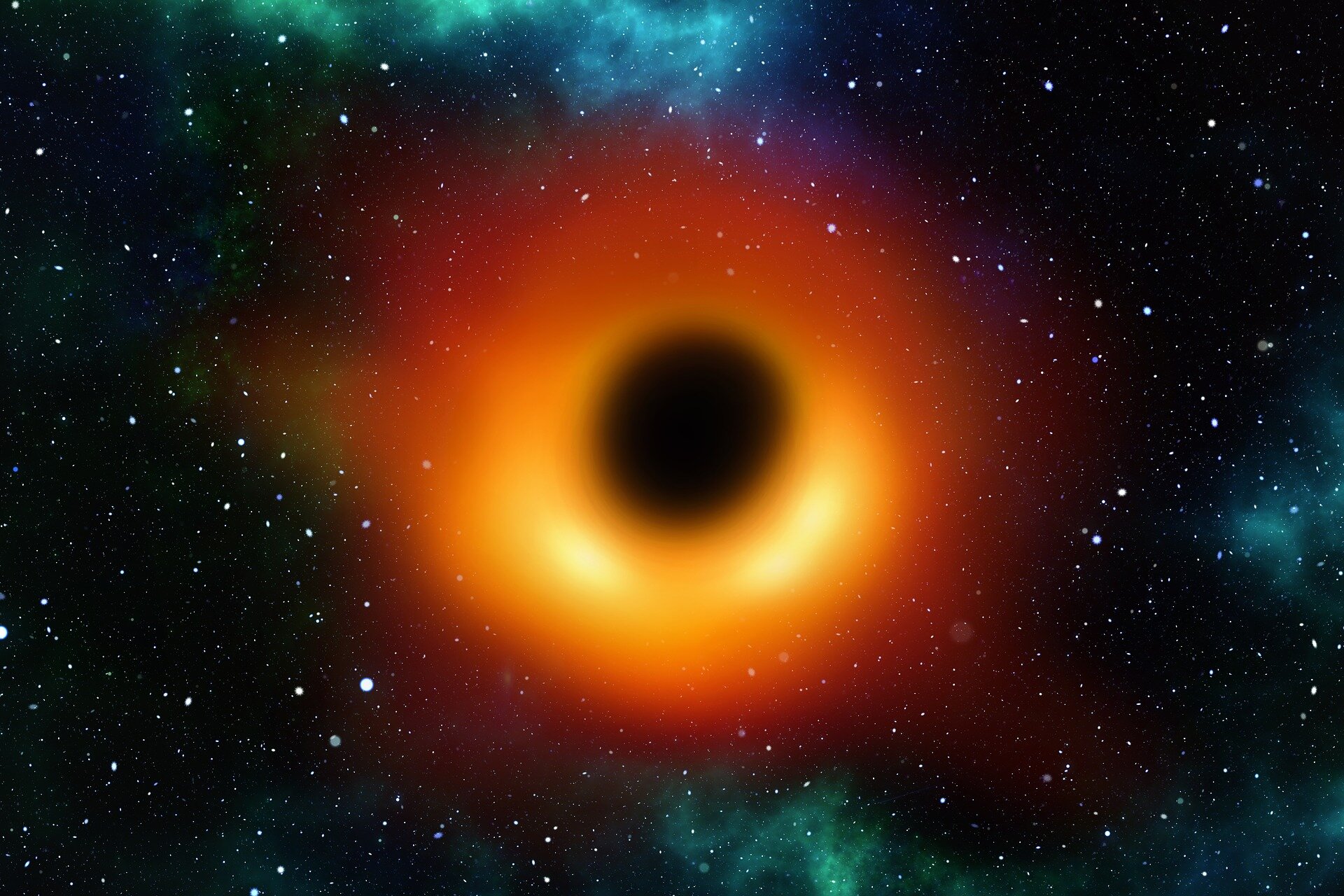
First Detection of Light from behind a Black Hole

black hole
Credit: CC0 Public Domain

Watching X-rays flung out into the universe by the supermassive black hole at the center of a galaxy 800 million light-years away, Stanford University astrophysicist Dan Wilkins noticed an intriguing pattern. He observed a series of bright flares of X-rays—exciting, but not unprecedented—and then, the telescopes recorded something unexpected: additional flashes of X-rays that were smaller, later and of different “colors” than the bright flares.

According to theory, these luminous echoes were consistent with X-rays reflected from behind the black hole—but even a basic understanding of black holes tells us that is a strange place for light to come from.

“Any light that goes into that black hole doesn’t come out, so we shouldn’t be able to see anythin...

Read More

Astronomers spot Bizarre, never-before-seen activity from One of the Strongest Magnets in the Universe

Astronomers spot bizarre, never-before-seen activity from one of the strongest magnets in the Universe
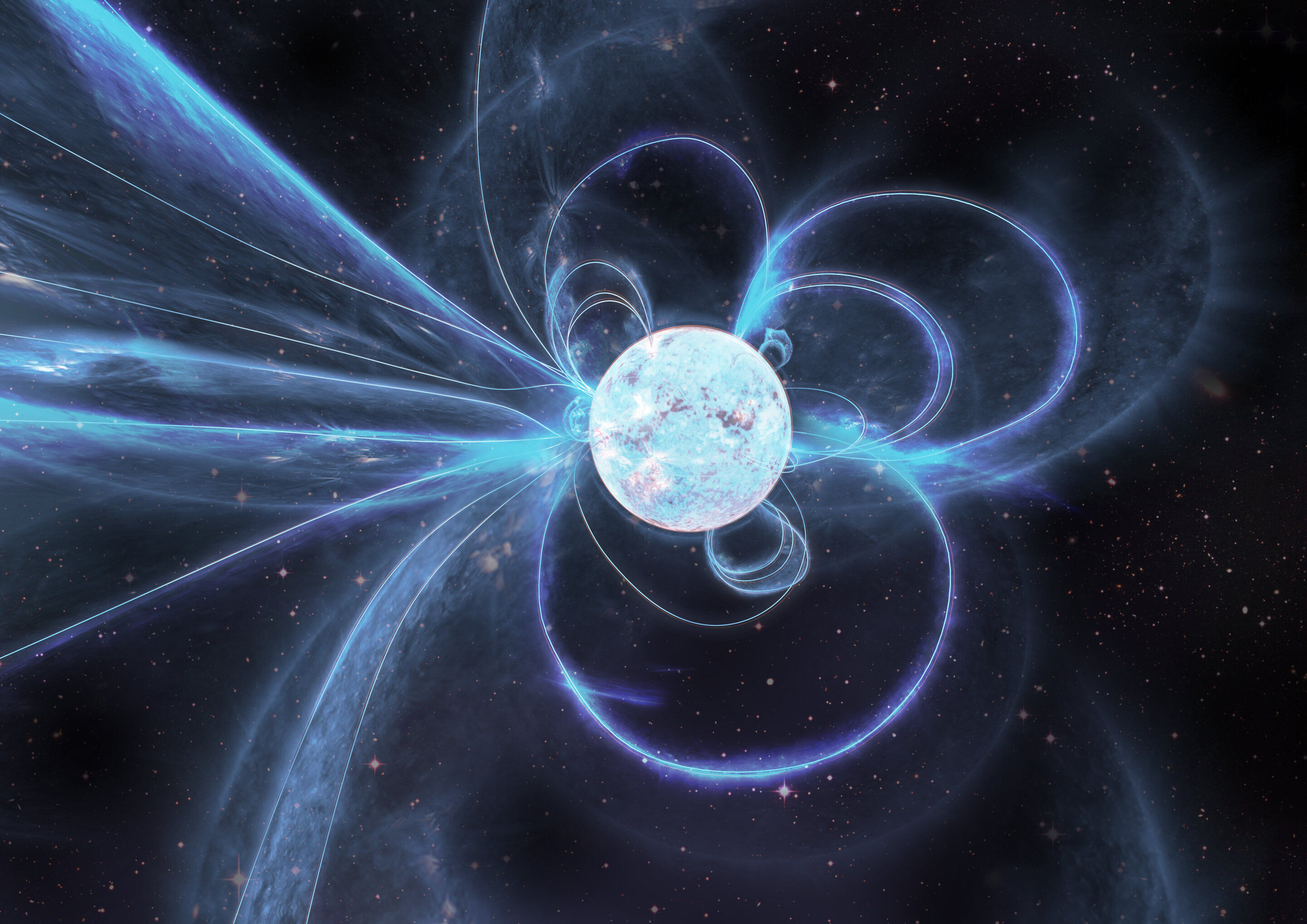
Artist’s impression of the active magnetar Swift J1818.0-1607. Credit: Carl Knox, OzGrav.

Astronomers from the ARC Centre of Excellence for Gravitational Wave Discovery (OzGrav) and CSIRO have just observed bizarre, never-seen-before behavior from a radio-loud magnetar—a rare type of neutron star and one of the strongest magnets in the universe.

Their new findings, published today in the Monthly Notices of the Royal Astronomical Society (MNRAS), suggest magnetars have more complex magnetic fields than previously thought, which may challenge theories of how they are born and evolve over time.

Magnetars are a rare type of rotating neutron star with some of the most powerful magnetic fields in the universe...

Read More

Astronomers find Fastest-Growing Black Hole known in Space

Computer-simulated image of a supermassive black hole. Credit: NASA, ESA, and D. Coe, J. Anderson, and R. van der Marel (STScI) [link]

Computer-simulated image of a supermassive black hole. Credit: NASA, ESA, and D. Coe, J. Anderson, and R. van der Marel (STScI) [link]

Astronomers at ANU have found the fastest-growing black hole known in the Universe, describing it as a monster that devours a mass equivalent to our sun every two days. The astronomers have looked back more than 12 billion years to the early dark ages of the Universe, when this supermassive black hole was estimated to be the size of about 20 billion suns with a 1% growth rate every one million years.

“This black hole is growing so rapidly that it’s shining thousands of times more brightly than an entire galaxy, due to all of the gases it sucks in daily that cause lots of friction and heat,” said Dr Wolf from the ANU Research School of Astronomy and Astrophys...

Read More