



Unlike accidental cell death, some cells can actively decide to die through a controlled process. This is called programmed cell death and can occur in different forms, including apoptosis and necroptosis. Cells use this process when they are damaged, stressed, becoming cancerous, or infected by harmful microbes. This self-destruction mechanism helps to protect the body, but it is also involved in many diseases, such as infections, inflammatory conditions and cancer.
A major problem in cancer is that some tumors and cancer cells learn how to avoid apoptosis, allowing them to survive when they should die. This resistance can make cancer treatments less effective, especially in advanced or spreading (metastatic) cancers.
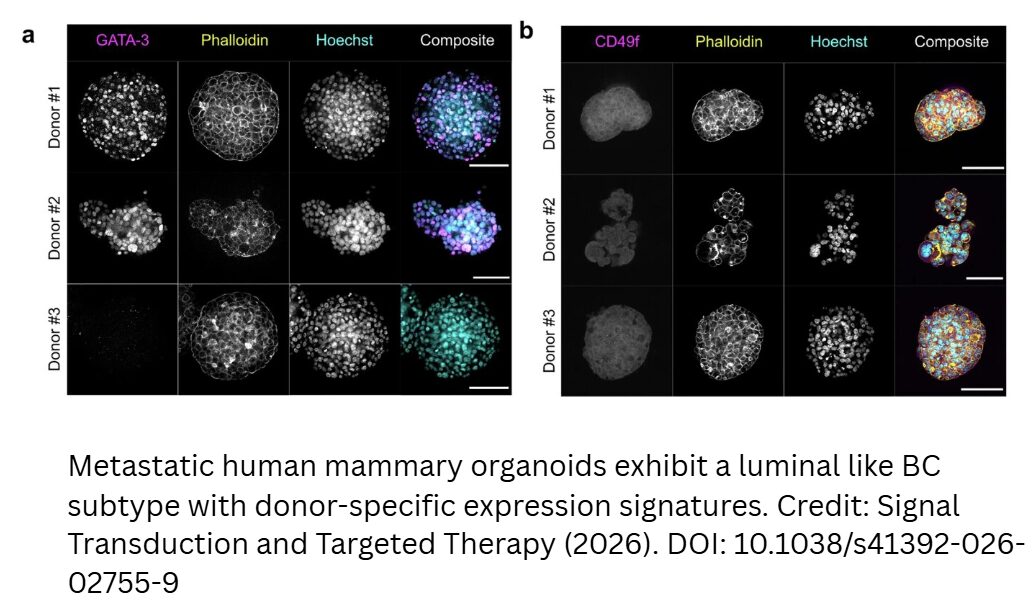
A research team led by Prof. Dr. Sjoerd van Wijk, Professor for Cell Biology at the Institute for Physiology and Cell Biology of the University of Veterinary Medicine (TiHo), and Dr. Francesco Pampaloni of the Goethe University Frankfurt, have studied a type of programmed cell death called necroptosis in advanced breast cancer. The scientists used patient-derived organoids, which are tiny 3D mini-tumors grown in the lab from real patients’ cancer cells. These mini tumors closely resemble the original cancer, making them useful for testing treatments and cell biology experiments.
The researchers found that when they triggered necroptosis in breast cancer cells that were resistant to apoptosis, two important things happened: the cancer cells died and the dying cells sent out distress signals that could activate the body’s immune system. These signals are involved in the stimulation of immune responses, including pathways linked to natural killer (NK) cells, which are immune cells that help find and destroy cancer cells.
In simple terms, the study suggests that forcing hard-to-kill cancer cells to die through necroptosis may not only remove the cancer cells directly but also alert and strengthen the immune system’s attack on the tumor. The work is published in the journal Signal Transduction and Targeted Therapy.
Apoptosis and necroptosis are two types of programmed cell death that happen in very different ways with different effects on neighboring cells and tissues. Apoptosis is often described as a “clean” form of cell death. The cell carefully shuts itself down, shrinks, and breaks apart into small pieces. These pieces are then removed by the body’s cleanup cells. Because the cell stays sealed during the process, nothing leaks out, so it usually does not cause inflammation or alerts the immune system.
Necroptosis, on the other hand, is a “messier” type of cell death. The cell swells up and eventually bursts open, spilling its contents into the surrounding tissue. This acts like a danger signal, causing inflammation and attracting the attention of the immune system. Importantly, necroptosis can serve as a backup plan when apoptosis cannot happen, such as during some viral infections where viruses try to prevent cells from dying in the usual way.
This research also shows that advanced 3D mini tumors (organoids) can help scientists better understand how diseases develop and how treatments might work in humans. Because these models closely resemble natural, complex tissues, they can often provide more realistic results than traditional laboratory methods and may reduce the need for animal testing.
Sjoerd van Wijk and his team now aim to further develop and use these organoid models to study cell stress and damage, cancer and infectious diseases. Their goal is to create complex multicellular organoid-based laboratory models that mimic physiologic human and animal tissues as closely as possible, helping researchers investigate diseases and test potential treatments more effectively. https://medicalxpress.com/news/2026-07-cancer-cells-die-immune-anti.html



Recent Comments