



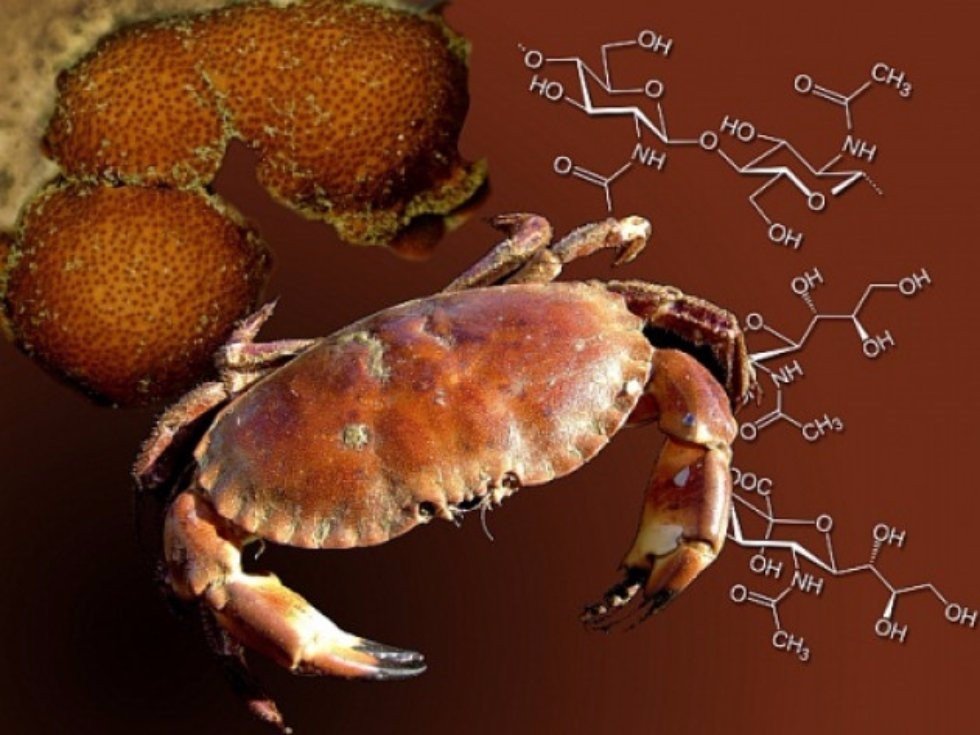
KFU’s researchers in cooperation with the Kazan Research Institute of Epidemiology and Microbiology and the Bioengineering Center of the Russian Academy of Sciences proved the effectiveness of biopolymers against pathogenic microorganisms. Подробности: http://kpfu.ru/eng/news-eng/new-antibacterial-drug-to-be-created-at-kfu-143092.html Любое использование материалов допускается только при наличии гиперссылки на портал КФУ (kpfu.ru)
The study specifically concentrated on chitosan extracted from chitin in the carapaces of insects and crustaceans. “We found that some forms of chitosan are toxic. They can disrupt the membranes of pathogenic microorganisms” explained Associate Professor of the Department of Microbiology Pavel Zelenikhin. “It is currently known that chitosan is effective against Klebsiella, Staphylococcus and Pseudomonas. Some forms of chitosan were also discovered to have antifungal properties.”
The list of diseases caused by the aforementioned pathogens is very long. Klebsiella can cause pneumonia, urogenital infections, conjunctivitis, meningitis, septicemia, and intestinal infections. The same is true for Pseudomonas. Staphylococci (specifically Staphylococcus aureus) are well-known as the causes of many inflammatory infections.
To identify the effectiveness of chitosan on pathogenic microorganisms, the biopolymer was added to a suspension containing bacteria, followed by incubation (ranging between 30 – 120 mins) and supply of a colorant, which selectively marked dead cells; it was then possible to count the death toll cytometrically.
Following in-depth studies on biochemical capabilities of the biopolymer, the authors uncovered that chitosan destroys up to 90% of pathogens in selected cell cultures. It is especially valuable because no toxic effects on healthy cells have been observed. http://kpfu.ru/eng/news-eng/new-antibacterial-drug-to-be-created-at-kfu-143092.html


Recent Comments